

IEC 62271-200 is the IEC standard for AC metal-enclosed switchgear and controlgear rated above 1 kV and up to 52 kV. In short, it defines the rated characteristics, the construction rules, and the tests that a design and a finished panel must pass. This guide focuses on the standard itself: what it covers, which verification points carry the most risk, and how to read the documents a supplier sends with a quotation.
If you are still choosing between air-insulated, gas-insulated, or solid-insulated designs, start with our companion guide to metal-enclosed switchgear types and applications. Instead, this article picks up where that one stops: the verification work.
What IEC 62271-200 Covers (and What It Leaves Out)
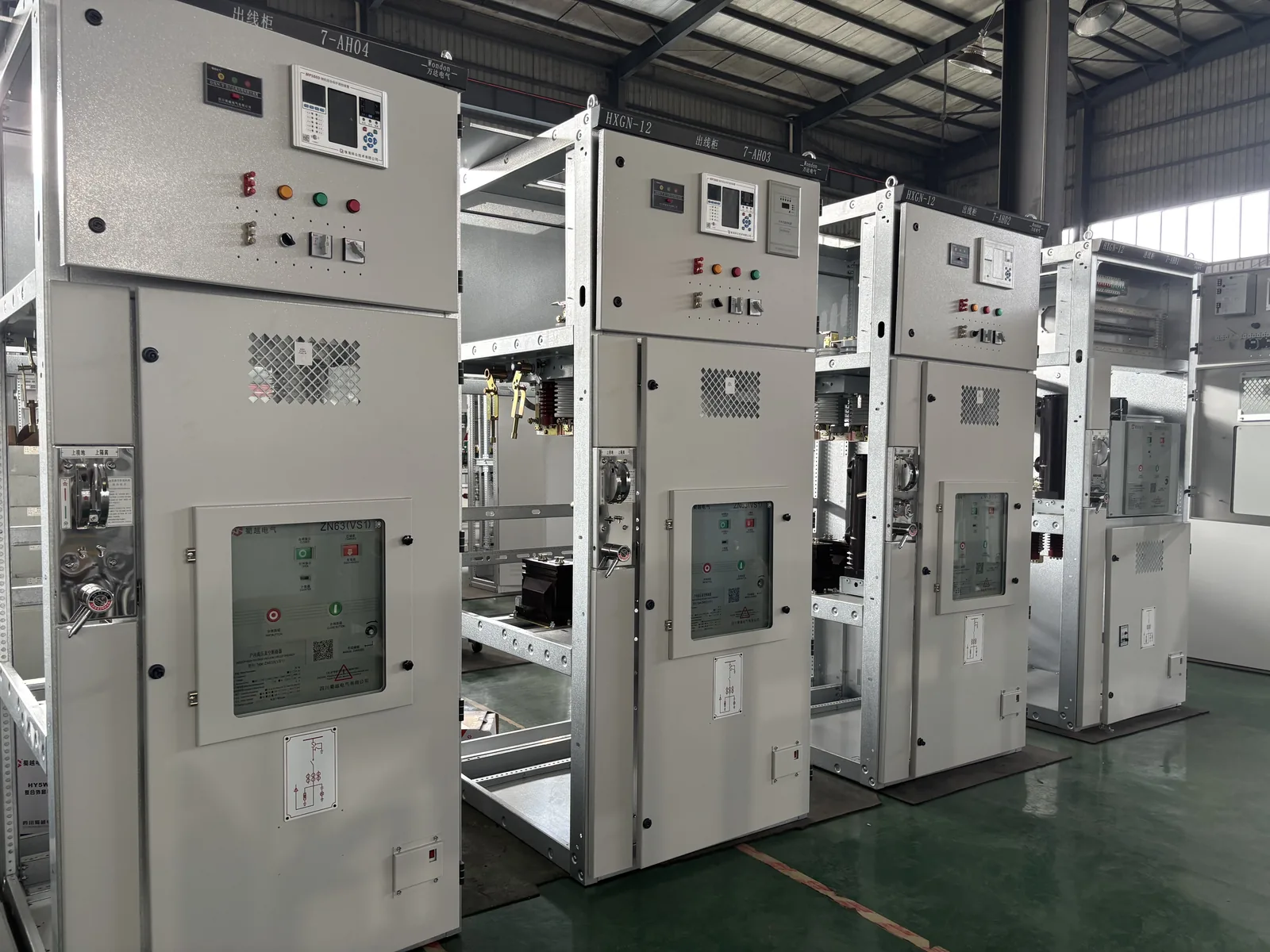
First, IEC 62271-200 applies to three-phase AC metal-enclosed switchgear and controlgear for rated voltages above 1 kV and up to and including 52 kV, indoors or outdoors, at 50 Hz or 60 Hz. The design uses a metal enclosure that ties to earth, so the factory completes the assembly except for external connections. In fact, metal-enclosed gear is one branch of the broader switchgear family, and the standard treats it as an assembled system.
The standard sets out four things: service conditions, rated characteristics, design and construction rules, and the test regime. It also works alongside IEC 62271-1, which holds the common clauses shared by the whole 62271 series. So when you read 62271-200, some definitions and general requirements point back to Part 1.
However, it does not cover everything that looks similar. For example, low-voltage assemblies fall under IEC 61439. In the same way, gas-insulated switchgear above 52 kV falls under IEC 62271-203. Beyond that, prefabricated substations fall under IEC 62271-202. Finally, circuit breakers, disconnectors, and earthing switches have their own parts (62271-100 and 62271-102).
In practice, that boundary matters at the quotation stage. For example, a supplier might claim “IEC 62271-200 compliant” while the circuit breaker inside carries a type test to a different part and a different edition. You want both, and you want the report numbers to agree.
The current edition is IEC 62271-200:2021, with Amendment 1 published in 2024. Ask which edition the test report references. A report against the 2011 edition is not automatically wrong, but it may not cover every clause in the 2021 text. Our MV switchgear complete guide walks through the spec sheet line by line.
The Rated Characteristics IEC 62271-200 Defines
The standard defines the values that must appear on the nameplate and in the type-test report. These are the numbers you compare, line by line, against your single-line diagram and fault study.
- Voltage rating (Ur)
- Insulation level: power-frequency withstand and lightning impulse withstand
- Normal current (Ir) together with the related temperature-rise limits
- Short-time withstand current (Ik) and its duration, usually 1 s or 3 s
- Peak withstand current (Ip)
- Making and breaking current, which depends on the switching device
- Auxiliary and control supply voltage
- Degree of protection (IP)
- Internal arc classification (IAC)
- Loss of service continuity (LSC) and partitioning
- Mechanical endurance class
The table below shows how those values appear on four Wondon metal-enclosed families. Wondon builds the KYN28-12, KYN61-40.5, XGN2-12, and WDSRM6-12 to these published type-test figures.
| Model | Construction | Rated voltage | Rated current | Short-time withstand | Peak withstand | Degree of protection |
|---|---|---|---|---|---|---|
| KYN28-12 | Metal-clad, withdrawable | 12 kV | 1,250 A | 31.5 kA | 80 kA | IP4X (IP2X with door open) |
| KYN61-40.5 | Metal-clad, withdrawable | 40.5 kV | 1,600 A | 31.5 kA | 80 kA | IP4X |
| XGN2-12 | Metal-enclosed, fixed | 12 kV | 1,250 A | 31.5 kA | 80 kA | IP4X |
| WDSRM6-12 | Gas-insulated, sealed | 12 kV | 630 A | 20 kA | 50 kA | IPX7 enclosure, IP67 gas tank |
These figures come from Wondon’s published type-test data for each model. Your project may require different values, so the report has to match the rating you specify.
Type Tests vs Routine Tests: Two Different Proofs
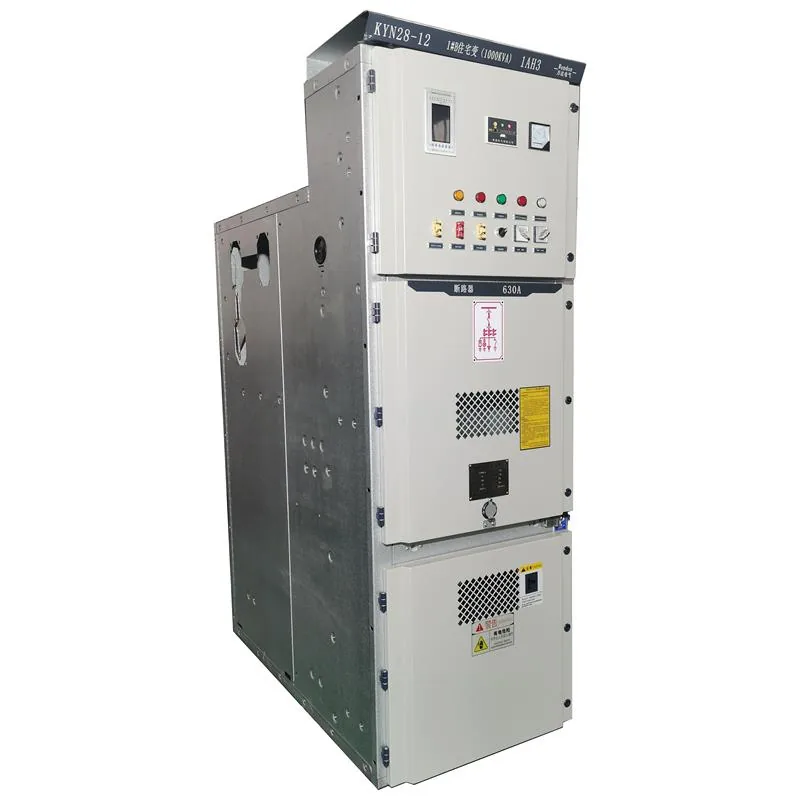
Buyers confuse these two more often than any other part of the standard. A type test proves the design. A routine test, meanwhile, proves the individual unit you receive.
Type tests. An accredited laboratory performs these once on a representative sample. They cover dielectric performance, temperature rise, short-time and peak withstand current, making and breaking, internal arc, degree of protection, and mechanical operation. However, a type-test report belongs to a design, not to a serial number. So the report must describe a test object that matches what you are buying: the same compartment layout, busbar arrangement, barrier material, and ratings.
Routine tests. Then the factory runs these on every panel before shipment. They typically include a power-frequency withstand test on the main circuit and a measurement of main-circuit resistance. The factory also checks the auxiliary and control circuits, operates the mechanism, verifies the interlocks, and pressure-tests gas-filled compartments. So the routine test report carries the serial number. That is how you connect the paper to the panel in front of you.
If a supplier offers only a type-test report, you cannot tell whether the factory actually tested the delivered panel. If they offer only a routine test report, you cannot tell whether the design survived an internal arc. You need both, and then you need to read them against the same ratings.
The Verification Checkpoints That Matter Most
Dielectric Verification
First, the dielectric test confirms that the insulation can take the specified power-frequency and lightning impulse levels. For 12 kV gear, for example, a typical power-frequency withstand is 42 kV for one minute, with a lightning impulse of 75 kV. For 40.5 kV gear, those values rise to 95 kV and 185 kV. The lab applies the voltage to the main circuit, between phases, to earth, and across the isolating distance. A design that passes at one voltage level does not pass at another, so check the report against your rated voltage rather than the model name.
Temperature-Rise Verification
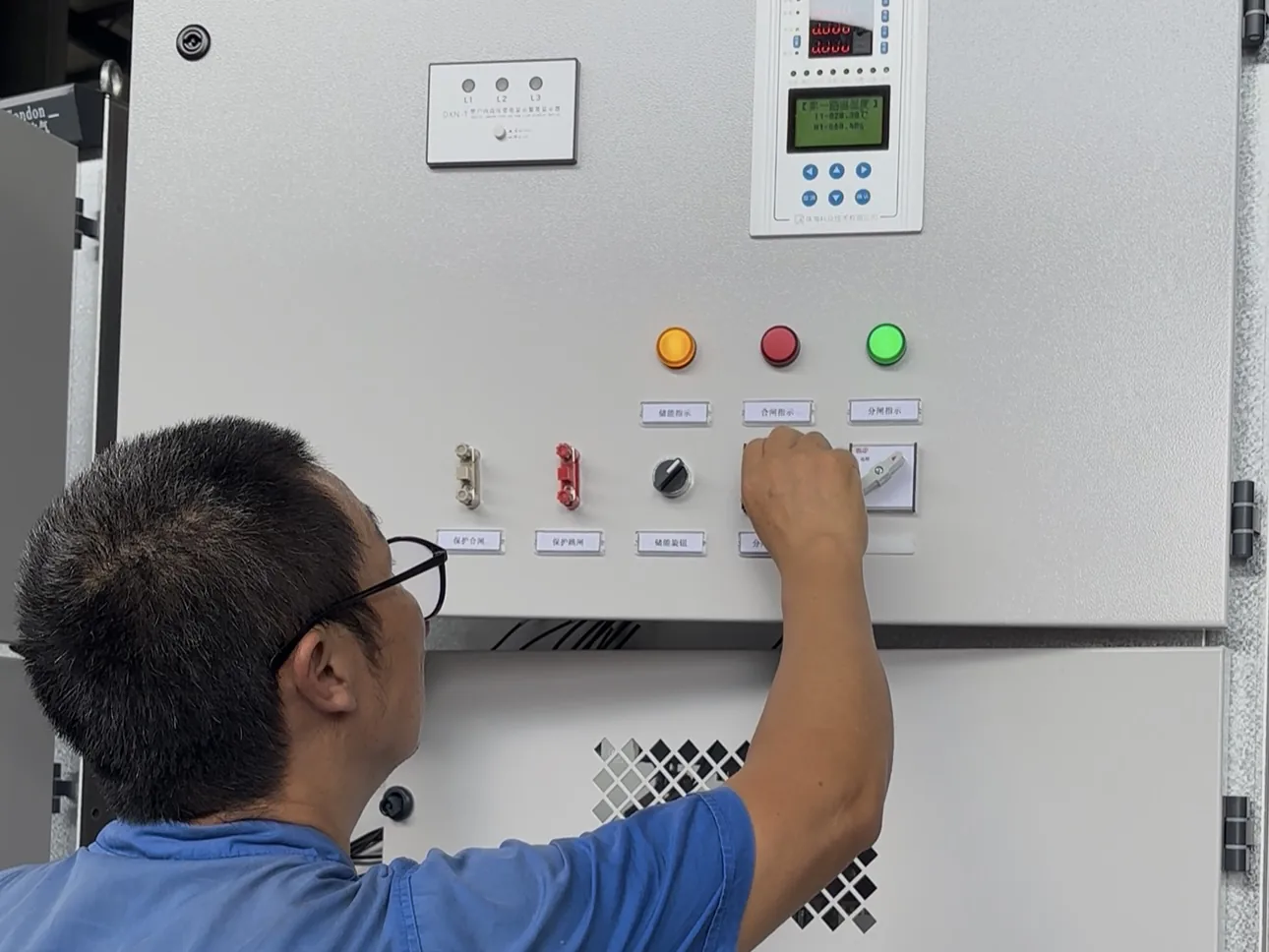
Next, the temperature-rise test loads the assembly at rated current and measures how hot the busbars, contacts, and accessible surfaces become. The standard sets limits by material and by part. For example, a design that runs cool at 630 A may exceed the limits at 1,250 A if the busbar cross-section or the ventilation suits only the lower rating. The report must therefore show the test at the current you specified.
Short-Circuit Withstand Verification
Two numbers work together here. The short-time withstand current (Ik) and its duration describe the thermal duty, while the peak withstand current (Ip) describes the mechanical shock at the instant of the fault. A panel rated 31.5 kA for 1 second is not the same product as one rated 31.5 kA for 3 seconds, and some utilities insist on 3 seconds. The peak value often sits near 2.5 times the short-time value, but read the tested figure rather than assuming the ratio. The test stresses the busbars, the supports, and the breaker connections. If your fault study gives 31.5 kA and the report shows 25 kA, the panel does not cover your site.
Internal Arc Verification (IAC)
The internal arc test is the one that protects people. In this test, the lab creates an arc inside a compartment at a stated current and duration. Then it checks whether the enclosure contains it and directs the hot gas away from the accessible sides. The result comes back as a classification, for example IAC A FLR 25 kA 1 s. Each part matters: the accessibility letter, the tested sides (front, lateral, rear), the current, and the duration. A classification at 25 kA for 1 second does not cover a 31.5 kA site. A classification tested on the front only does not cover a rear-accessible room. So match all four elements to your layout.
Degree of Protection and Mechanical Endurance
The IP test, in contrast, checks the enclosure against solid objects and water. Indoor metal-clad gear commonly carries IP4X, and drops to IP2X when a compartment door opens for work. In addition, outdoor and humid sites need more, often with anti-condensation heaters. Mechanical endurance is a separate class (M1 or M2) and records how many operating cycles the design completed without failure. It matters for frequently switched feeders, such as capacitor banks and arc furnace supplies, where the breaker may operate thousands of times a year.
Reading the IAC and LSC Designations
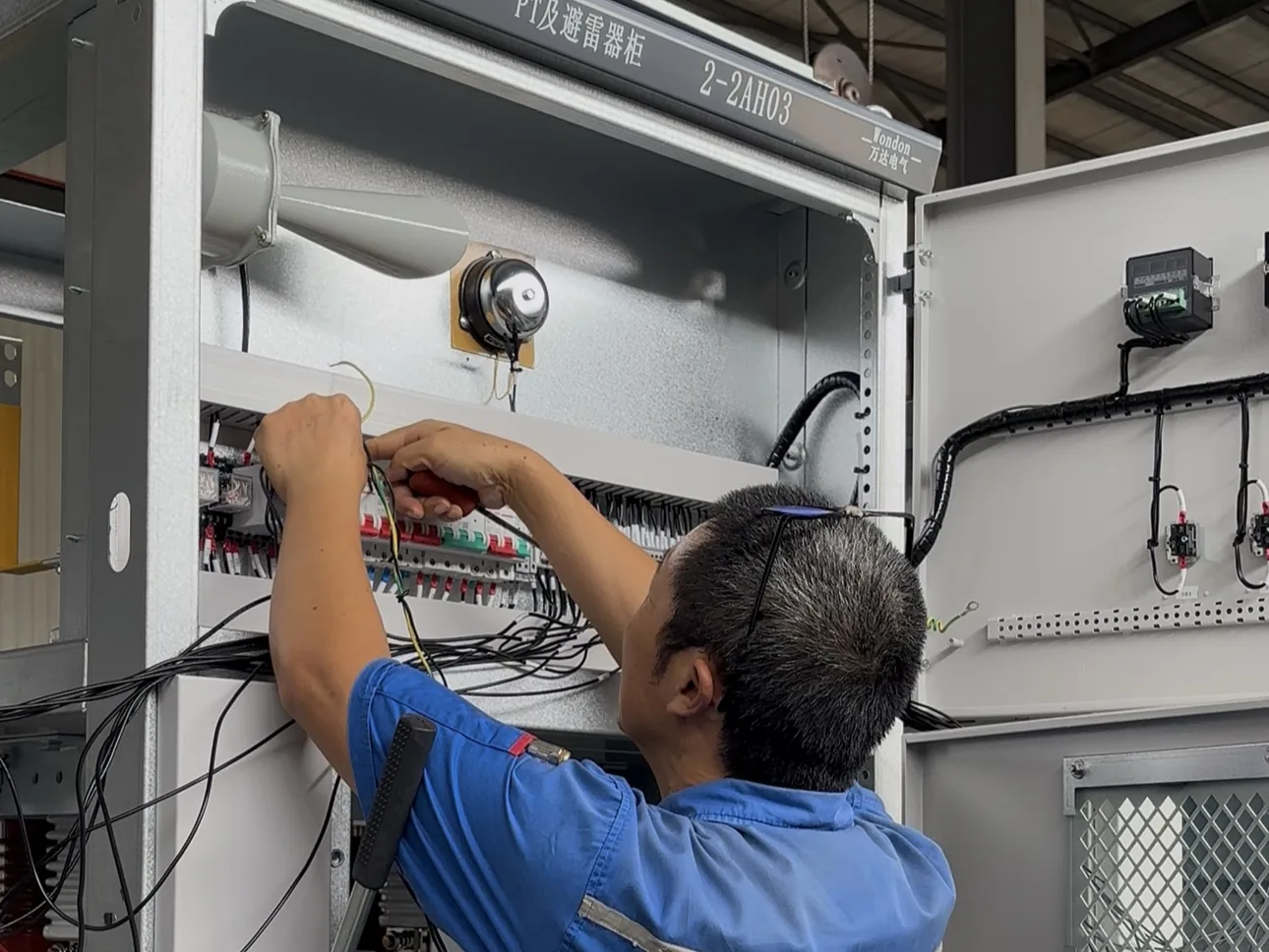
IAC and LSC appear on the nameplate and in tender documents, yet buyers often copy them without decoding them.
Reading the IAC Designation
IAC tells you how the enclosure behaves under an internal arc. The full string combines four pieces: the accessibility letter (A or B), the tested sides (F, L, R), the current, and the duration. So read it as a complete sentence. “IAC A FLR 25 kA 1 s” means the design passed an internal arc test at 25 kA for 1 second, with the front, lateral, and rear sides assessed at the stated accessibility. If your installation allows access from a side the lab did not test, the classification does not cover you.
LSC and Partitioning
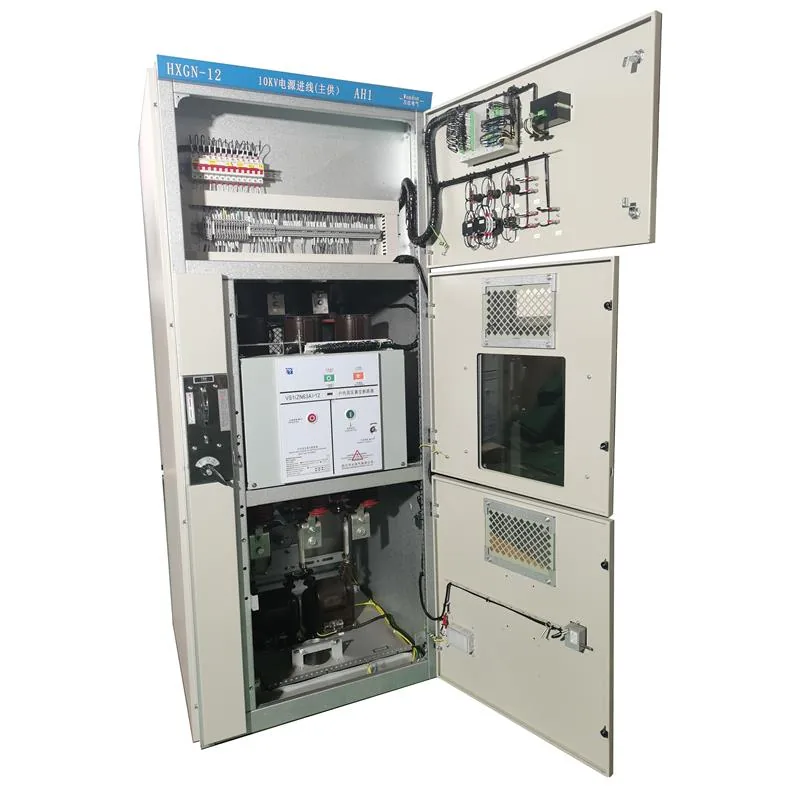
LSC tells you what stays live when you open one compartment or a fault occurs. LSC1 offers the lowest continuity: a fault or maintenance affects the whole board. At the other end, LSC2 separates the functional units, so the busbar can remain energized while you work on one feeder. Within LSC2, the 2A and 2B sub-classes describe how far the separation extends. LSC2B gives the highest continuity, because the design partitions the busbar and cable compartments separately. So you can work on one unit’s cable compartment while the busbar and the other feeders stay live.
In short, partitioning is the physical basis for LSC. Metal-clad switchgear uses earthed metal barriers to separate the compartments, while metal-enclosed switchgear may rely on insulating barriers instead. So the construction affects service continuity and cost, and the standard treats them as different levels, not as marketing labels. If your project needs the higher continuity class, settle it before the tender, because retrofitting partitions after the factory builds the board costs a lot.
How to Review a Supplier’s IEC 62271-200 Documents
In fact, a test report is only useful if you can trace it. Here is how we review one.
The Type-Test Report
First, start with the laboratory. Look for a recognized, accredited high-power test lab, and check that the report carries the lab’s own report number rather than a supplier reference. Then check the test object: model, compartment layout, busbar arrangement, barrier material, and ratings. However, a report for a different internal layout does not prove your design. Next, check the standard and edition cited, the date, and the clauses covered. Finally, check the values: voltage, current, Ik and duration, Ip, IAC current and duration, and IP. If any value sits below your specification, the report does not cover your order, even when the model name matches.
The Routine Test Report
This one is per unit. It should carry the serial number that also appears on the nameplate. It should show the power-frequency withstand test, the main-circuit resistance measurement, the auxiliary-circuit dielectric test, the mechanical operation checks, and the interlock verification. For gas-insulated equipment, it should also show the tightness test. Then read the serial number against the panel, not against the packing list. A routine report with no serial number is a template, not evidence.
Certificates and Declarations
Certificates such as UL, CE, IEC, and CQC support a claim, but they do not replace the test report. A certificate usually names a model family, while the report names the tested object and the values. Finally, match the certificate to the exact model and to the report. A declaration of conformity is a supplier’s statement, useful for the file but not a substitute for third-party test evidence. Ask for the certificate number and the issuing body, then check that the scope covers the product you are buying.
Wondon panels carry UL, CE, IEC, and CQC certification, and we match each certificate to a specific model and test report on request. In practice, that matching step is where most document problems surface.
A Practical Document Checklist
Before you approve a quotation, ask for this set and tick each line:
- Type-test report with the lab report number, test object, standard edition, and all rated values
- Routine test report per serial number, for the panels actually shipped
- Internal arc classification, written out in full (letter, sides, current, duration)
- LSC class and a description of the partitioning
- Degree of protection (IP) and the test reference
- Temperature-rise test at the rated current you specified
- Short-circuit withstand at the Ik and duration your fault study requires
- Certificates (UL, CE, IEC, CQC) matched to the model and the report
- Nameplate drawing, single-line diagram, and O&M manual
- Declaration of conformity
Common Misunderstandings
“IEC 62271-200 compliant” is a specification. It is not. The standard contains many options and ratings, so a compliant panel can still be the wrong panel for your site. Name the edition, the ratings, the IAC class, and the LSC class.
A type test covers every unit. It does not. It covers the design, while the routine test covers the unit.
A higher model number means a higher rating. It does not. Check the report values, not the label.
IAC and IP are the same thing. They are not. IP covers ingress of solids and water. IAC covers internal arc performance. A panel can carry a good IP rating and no internal arc classification at all.
Any test report will do. Only a report that matches your ratings, your layout, and your standard edition will do. So if the layout or the ratings change, the design needs a new type test.
FAQ
Scope and Classification
1. What does IEC 62271-200 cover?
It covers three-phase AC metal-enclosed switchgear and controlgear for rated voltages above 1 kV and up to 52 kV, for indoor and outdoor use at 50 Hz or 60 Hz. It defines service conditions, rated characteristics, construction, and the type and routine tests.
2. Does IEC 62271-200 apply to gas-insulated switchgear?
Yes, for metal-enclosed gas-insulated designs within the 1 kV to 52 kV range. Above 52 kV, GIS falls under IEC 62271-203. So a 12 kV ring-main GIS sits inside 62271-200, while a 145 kV GIS does not.
3. What is the difference between a type test and a routine test?
A type test proves the design once, on a representative sample, at an accredited laboratory. A routine test proves each individual panel before shipment. In short, you need both: the type test for the design, the routine test for the unit.
Ratings, Classes, and Standard Editions
1. What does IAC A FLR 25 kA 1 s mean?
In practice, it means the design passed an internal arc test at 25 kA for 1 second, with the front, lateral, and rear sides assessed at the stated accessibility. If your site has a higher fault level or a longer clearing time, that classification does not cover you.
2. What is LSC 2B?
LSC 2B is the highest loss-of-service-continuity class. The design partitions the busbar and cable compartments separately, so you can work on one functional unit’s cable compartment while the busbar and the other feeders stay energized.
3. Which edition of IEC 62271-200 is current?
The 2021 edition is current, with Amendment 1 published in 2024. Ask the supplier which edition the test report references, and check that it covers the clauses your project requires.
4. Is IEC 62271-200 the same as GB/T 3906?
No. GB/T 3906 is the Chinese national standard for the same family of equipment. International projects usually reference IEC 62271-200, while domestic Chinese projects may require GB/T 3906. Some projects require both, so confirm the applicable list in the tender. Our selection guide covers how these requirements feed into a real purchase decision.
Need Help Checking a Specification?
Send us your single-line diagram, fault level, and the standard edition your project requires. Our engineering team will check the ratings, the IAC and LSC classes, and the document set against your specification before you place the order. You do not need a complete drawing to start. Voltage, current, fault level, and the installation environment are enough for a first review, and our design guide shows how those inputs shape the configuration.