

A vague enquiry is the fastest way to get a slow, expensive, or wrong quote. When you send a switchgear RFQ that leaves the rated voltage, short-circuit level, or site conditions open, every supplier fills the gap with their own assumptions — and those assumptions rarely match your project. This guide gives you a practical switchgear RFQ checklist you can copy into your next enquiry, so suppliers return comparable offers instead of guesswork.
If you specify the items below, you cut the back-and-forth, avoid late change orders, and make it easy for a manufacturer to quote accurately the first time.
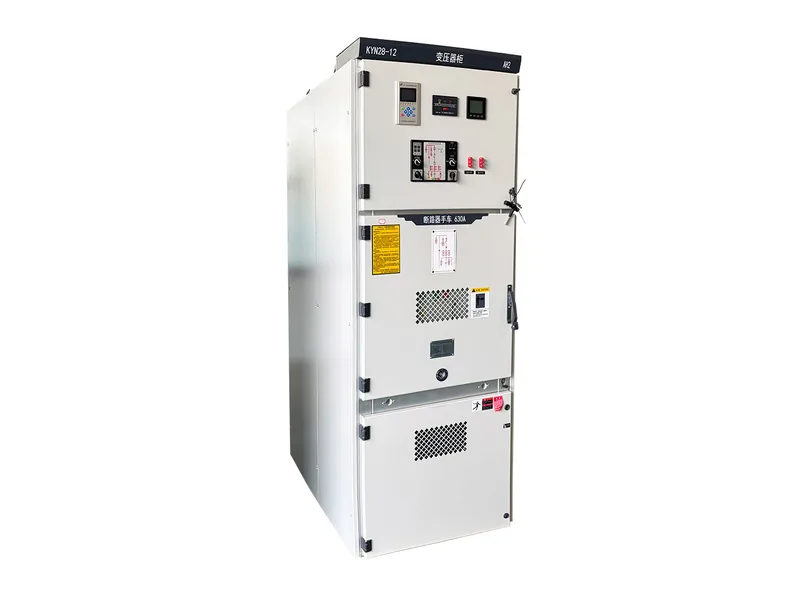
Why a Clear Switchgear RFQ Saves You Time and Money
Most delayed switchgear projects do not stall on price. They stall on missing information. A purchaser asks for “one 11 kV switchboard,” the supplier quotes a standard panel, and six weeks later someone notices the busbar rating, altitude, or protection scheme was never agreed. Rework follows.
A good switchgear RFQ checklist does three things:
- It makes quotes comparable. When every bidder answers the same questions, you can line up offers side by side.
- It protects your budget. Open items become change orders; closed items become fixed prices.
- It shortens the FAT and delivery timeline, because the factory builds to a clear order instead of a moving target.
This article walks through what to put in the enquiry, following the same order as the switchgear RFQ checklist above. If you also need to verify the equipment after it is built, our complete guide to switchgear factory acceptance test explains the witness tests you can request.
The Core Electrical Parameters to Specify
These are the numbers a switchgear manufacturer cannot design around. The first part of any switchgear RFQ checklist is the electrical ratings, so state them explicitly.
Rated Voltage and Insulation Level
Tell the supplier the system voltage and the insulation class you need. In IEC markets this is usually 12 kV, 24 kV, or 40.5 kV for medium voltage; low voltage is 400 V / 690 V. Pair the rated voltage with the required dielectric withstand — power-frequency and lightning impulse — so the insulation coordination is clear. For reference, IEC 62271 defines the rated insulation levels for MV equipment.
For example, a 12 kV class metal-clad panel is commonly specified with a 28 kV power-frequency withstand and 75 kV lightning impulse. If your network has a different coordination study, attach it.
Rated Normal Current (Feeder and Busbar)
State the current each feeder must carry, and separately the busbar continuous rating. They are not the same. A feeder breaker might be 630 A while the main busbar is 2500 A. Real product ranges show the spread: a KYN28-12 type is built around 1250 A rated current, while a 40.5 kV KYN61 class reaches 1600 A, and busbar ratings go higher still.
Put both numbers in the RFQ. Undersizing the busbar is a classic, costly omission.
Short-Circuit Withstand (Ik, Peak, Duration)
This is the value most often left blank, and it is the one that decides the switchgear class. Specify:
- Rated short-time withstand current (Ik), e.g. 25 kA or 31.5 kA
- Duration, normally 1 s, 2 s, or 3 s (verify your protection clearing time)
- Rated peak withstand current (the asymmetric first-peak)
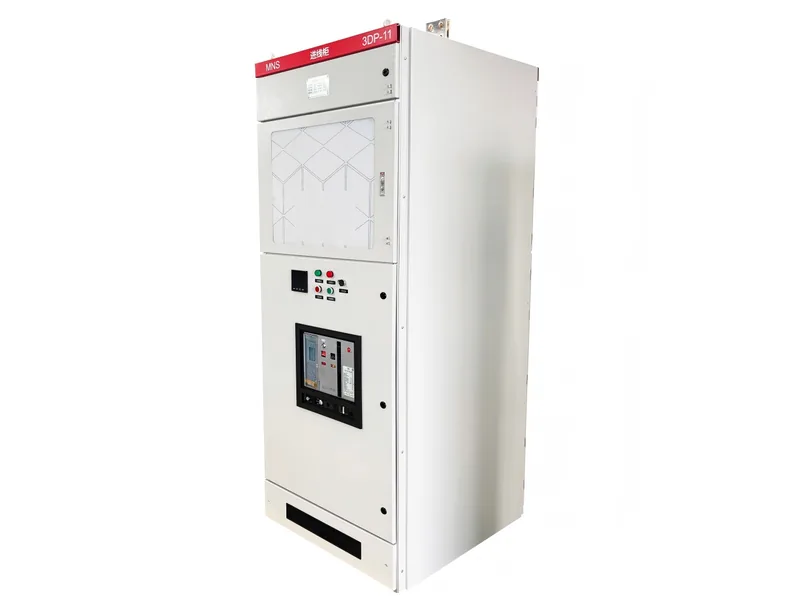
Ring-main and compact units sit lower — an HXGN-12 class is around 20 kA, a gas-insulated WDSRM6-12 around 20 kA as well — while metal-clad drawout boards reach 31.5 kA and above. Naming the figure lets the supplier pick the right breaking device and busbar.
Breaking Rating and Class
State the circuit-breaker breaking capacity and, for medium voltage, whether you need a specific arc-class (AFL/AFC) for personnel safety. If the board feeds motors or capacitors, say so — switching these needs a different rating than a plain feeder.
Installation Environment and Site Conditions
Two identical electrical specs can need completely different enclosures depending on where the switchgear lives. The next part of the switchgear RFQ checklist covers site conditions, so do not assume the supplier knows your site.
Indoor vs Outdoor Enclosure
Say whether the equipment is indoor metal-clad, outdoor kiosk, or a packaged substation. An indoor and outdoor switchgear comparison shows how the envelope, IP rating, and thermal design change. A packaged American-box or compact substation needs its own enclosure spec and foundation notes.
Ambient Temperature, Altitude, Humidity
List the temperature range the equipment must survive and operate in, the site altitude, and the humidity or condensation risk. Standard ratings assume up to 1000 m altitude and about −5 °C to +40 °C; above that, derating applies. If your site is coastal, high-altitude, or desert, state it — derating and tropicalisation are design inputs, not afterthoughts.
Pollution Degree, Seismic Zone, Corrosive Atmosphere
Pollution degree drives creepage distances and insulator choice. A chemical plant, a mine, or a coastal terminal needs different materials than a clean indoor substation. Name the pollution degree (IEC 60850 / 60694) and any corrosive or seismic requirement so the enclosure and insulation are specified correctly.
Standards and Type-Test Requirements
The second half of the switchgear RFQ checklist is about proof: which standards apply and what certificates you will accept before the order is placed.
IEC vs ANSI/IEEE vs GB
State the standard family your project is governed by. Most international tenders use IEC 62271 (MV) and IEC 61439 (LV assemblies); North American projects use IEEE/ANSI; China domestic often references GB 3906 alongside IEC. Mixing them is a frequent source of rejected bids, so name the applicable code early in the RFQ.
Type-Test Certificates vs Routine Test Reports
Decide what proof you require. A type-test certificate (e.g. IEC 62271-200 internal arc and short-circuit verification) shows the design is proven. A routine test report covers the actual unit you receive. Ask for both where critical, and say whether you will witness routine tests at the factory acceptance test.
Configuration and Functional Requirements
The electrical parameters get the board built; the configuration gets it built the way you operate. The final part of the switchgear RFQ checklist is how you actually run the board, so capture it before the order is placed. If you are still narrowing down the type, our guide to choosing medium voltage switchgear helps you fix the scheme first.
Single-Line Diagram and Scheme
Attach the single-line diagram. State the number of incoming, outgoing, and bus-coupler bays, the switching scheme (single busbar, double busbar, ring), and any future expansion bays. A drawing beats a paragraph every time.
Protection, Metering, CT/VT and Relays
List the protection functions (overcurrent, earth fault, differential, distance), the required CT ratios and accuracy classes, VT ratios, and whether you want numerical relays, metering, or communications (IEC 60870 / Modbus / IEC 61850). Leave this blank and the supplier will quote a minimal scheme that may not match your network protection study.
Busbar Arrangement and Earthing
State the busbar material and arrangement, the earthing method (fixed earthing switch vs portable), and any segregation or requirements. Metal-clad, compartmentalised construction with interlocks should be named if required for safety.
Documents You Should Request From the Supplier
A complete switchgear RFQ checklist also says what you expect back from the supplier. Request these in writing:
| Document | Why you need it |
|---|---|
| Datasheet / technical specification | Confirms the rated values match your RFQ |
| Type-test certificate (IEC 62271 etc.) | Proves the design is verified, not just claimed |
| Routine test report | Covers the actual unit shipped |
| GA (general arrangements) drawing | Checks dimensions, cable entry, clearances on site |
| Bill of materials | Lets you compare offers apple-to-apple |
| ITP / Inspection plan | Aligns FAT witness points before production |
| Lead time and ex-works date | Feeds your project schedule |
| Warranty and spares list | Protects O&M cost over the asset life |
Asking for the bill of materials and GA drawing up front is what turns a price-only quote into a real comparison.
The Printable Switchgear RFQ Checklist
Copy this block into your enquiry. Group it the way the sections above are grouped.
Electrical
– [ ] Rated voltage and insulation level (power-frequency + impulse withstand)
– [ ] Rated normal current — feeder and busbar separately
– [ ] Short-circuit withstand: Ik, duration, peak
– [ ] Breaking capacity and arc classification
– [ ] Frequency (50/60 Hz) and number of phases
Environment
– [ ] Indoor / outdoor / packaged substation
– [ ] Ambient temperature range and altitude
– [ ] Pollution degree and humidity or condensation risk
– [ ] Corrosive, seismic, or explosive atmosphere notes
Standards & proof
– [ ] Standard family (IEC / ANSI / GB)
– [ ] Required type-test certificates
– [ ] Routine test and FAT witness requirements
Configuration
– [ ] Single-line diagram attached
– [ ] Incoming / outgoing / coupling bay count and scheme
– [ ] Protection, CT/VT ratios, relays, communications
– [ ] Busbar arrangement and earthing method
Documents to return
– [ ] Datasheet, GA drawing, BOM
– [ ] Type-test + routine test reports
– [ ] ITP, lead time, warranty, spares
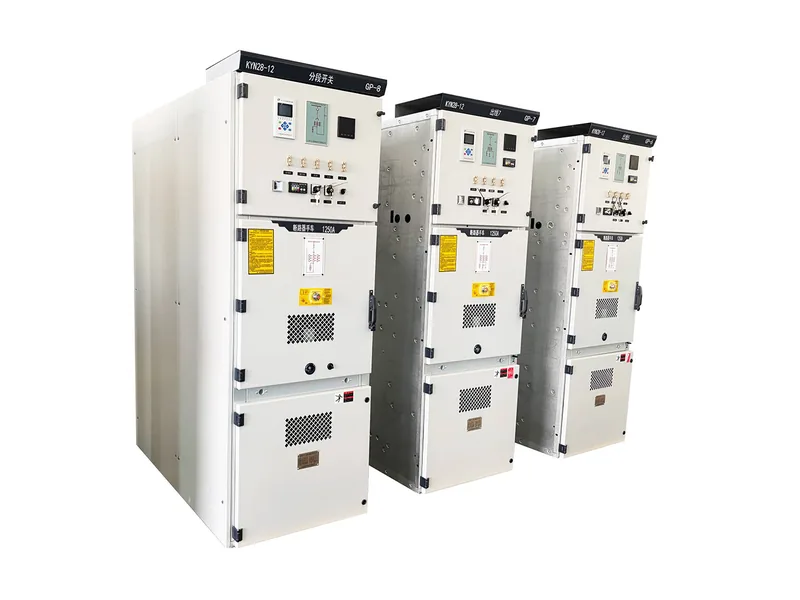
Common RFQ Mistakes That Slow Down Quotes
A few errors show up in almost every weak enquiry, and most are exactly the gaps a switchgear RFQ checklist is meant to catch:
- Only stating system voltage.Without current and short-circuit level, no one can size the board.
- Assuming standard altitude and temperature.Sites above 1000 m or in tropical humidity need derating that changes the price.
- No single-line diagram.Text descriptions of a switching scheme waste a week of clarification.
- Mixing standard families.An IEC board and an IEEE board are not interchangeable; pick one.
- Forgetting the documents.A price without a datasheet and GA drawing is not a comparable offer.
Sample RFQ Wording You Can Reuse
You do not need to write much — just be specific, and follow the switchgear RFQ checklist order. A workable opening:
> “We require a quotation for medium voltage switchgear, 12 kV class, metal-clad, withdrawable. Rated normal current 1250 A feeders, main busbar 2500 A, short-time withstand 31.5 kA for 3 s, peak 80 kA. Indoor installation, altitude 800 m, −10 °C to +40 °C, pollution degree 2. To IEC 62271-200 with valid type-test certificate; routine test with optional FAT witness. Single-line diagram attached. Please return datasheet, GA drawing, BOM, lead time, and warranty.”
That single paragraph removes most of the ambiguity a supplier would otherwise chase.
Frequently Asked Questions
1. What is the most important thing to put in a switchgear RFQ?
The short-circuit withstand current, its duration, and the rated normal current for both feeders and busbar. Those three values decide the switchgear class; without them no two quotes are comparable.
2. Do I need different specs for medium and low voltage switchgear?
Yes. MV switchgear is specified under IEC 62271 with insulation and arc-class requirements; LV assemblies follow IEC 61439 with different test and enclosure rules. Keep the two RFQs separate and quote them to their own standards.
3. Why should I attach a single-line diagram?
It removes ambiguity about bay count, scheme, and protection that a written description cannot capture. Suppliers quote faster and more accurately from a drawing.
4. What documents should the supplier return with the quote?
At minimum a datasheet, a general arrangement drawing, and a bill of materials. For critical assets also ask for the type-test certificate and the routine test report, plus an ITP if you plan a factory acceptance test.
5. How detailed should the environment section be?
Enough to size the enclosure and insulation: indoor/outdoor, temperature range, altitude, pollution degree, and any corrosive, seismic, or explosive-atmosphere note. These drive derating and material choices.
6. Can Wondon help me build the RFQ if I am not sure of the values?
Yes. If you share your network data or a single-line diagram, our engineering team can sanity-check the rated values and propose a specification that matches your project, then quote against it.
Contact Us
If you are preparing a switchgear RFQ and want a second look at the rated values, send us your single-line diagram and site conditions. At Wondon we build MV and LV switchgear in a 12,000 m² manufacturing facility and can return a matched datasheet, GA drawing, and ITP so your enquiry gets accurate quotes without the usual delay. Contact us to discuss your next order.