

A three-phase pad-mounted transformer is a common outdoor distribution device that converts high-voltage electrical power into low-voltage power suitable for commercial, industrial, and public facility applications.
Choosing the right transformer equipment not only affects the reliability of a project’s power supply but also directly impacts long-term operation and maintenance costs. Therefore, engineers and project owners need to understand its structure, operating principle, key advantages, and typical applications before making a selection.
This guide explains the structure, working principle, applications, and key selection factors of three-phase pad-mounted transformers based on real engineering requirements, helping you better understand this widely used outdoor distribution solution.
What Is a Three-Phase Pad-Mounted Transformer?
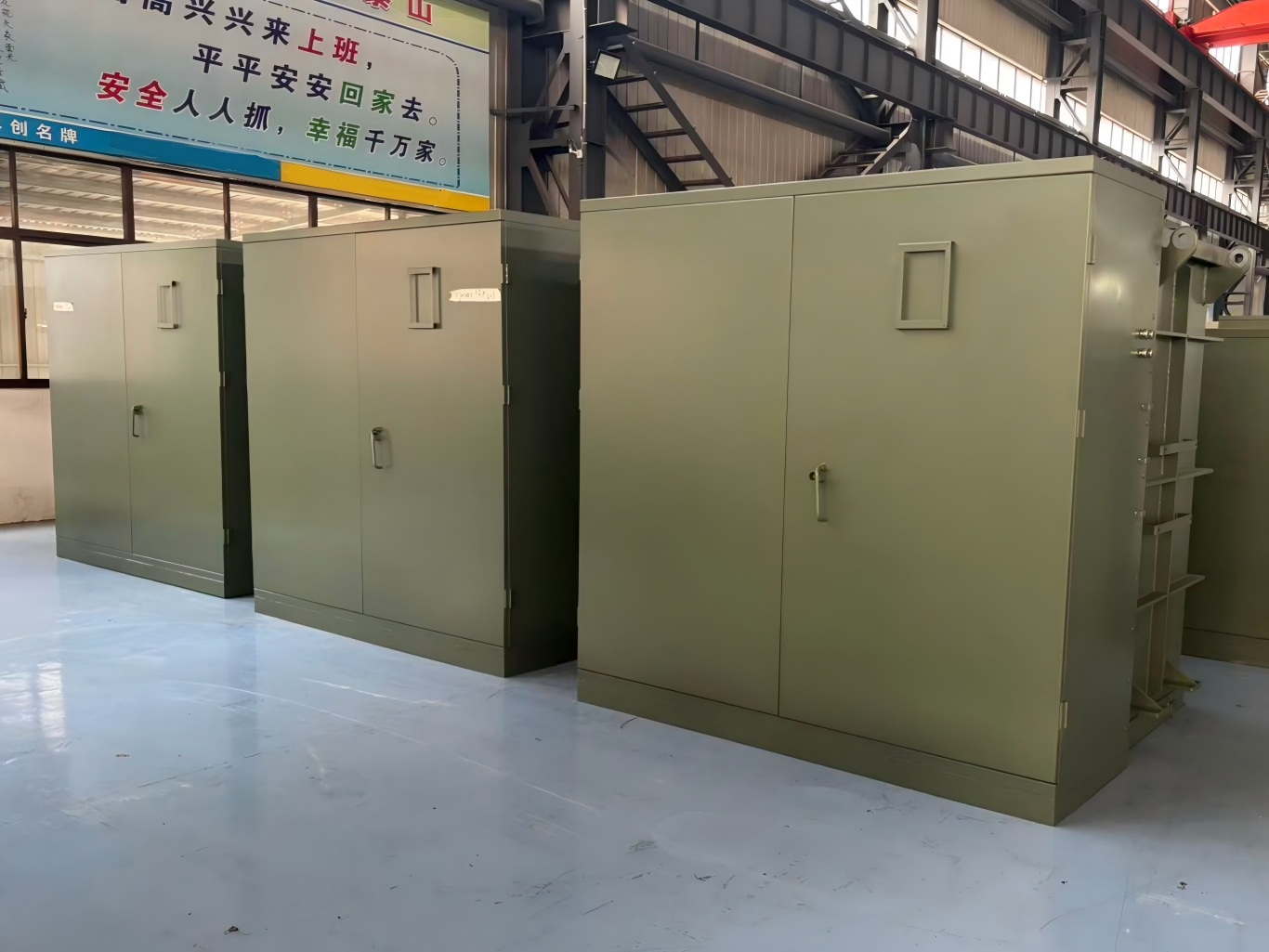
A three-phase pad-mounted transformer is a ground-mounted, integrated power distribution unit that combines a transformer, high-voltage load switching and protection devices, and low-voltage distribution terminals into a single enclosed cabinet.
In operation, the transformer windings inside the unit, it converts high-voltage power from the utility grid, such as 12kV, 24kV, or 35kV, into the low-voltage power required by end users, such as 120V or other customized voltage levels. It is commonly installed at the end of distribution networks to supply power directly to users.
Compared with traditional pole-mounted transformers, a pad-mounted transformer adopts a fully enclosed cabinet design and is installed directly on a concrete foundation or equipment platform.
From an engineering application perspective, a three-phase pad-mounted transformer is often an ideal choice when a project requires:
- A safe and reliable outdoor power distribution solution
- Higher power capacity
- Reduced maintenance requirements
- Better environmental adaptability
Main Features of Three-Phase Pad-Mounted Transformers
Advantages
1. Ground-Mounted Design for Outdoor Distribution Applications
The term “pad” in a three-phase pad-mounted transformer refers to the concrete mounting pad or foundation that supports the equipment.
Unlike pole-mounted transformers, a three-phase pad-mounted transformer sits directly on a ground foundation. As a result, this installation method better matches modern urban and industrial power distribution layouts while simplifying cable routing and electrical connections.
For commercial and industrial projects, this installation method provides greater flexibility in equipment placement, especially in areas where overhead distribution lines are not suitable or preferred.
2. Fully Enclosed and Fully Insulated Structure for Safer Operation
A three-phase pad-mounted transformer features a durable metal enclosure that protects all energized components inside the cabinet. The transformer tank adopts a sealed structure and uses insulating oil to keep live parts fully enclosed.
As a result of this enclosed structure, the transformer can operate reliably with minimal routine inspection and maintenance requirements.
For project owners and operation teams, this design provides several practical benefits:
- Reduces the risk of accidental contact with energized components
- Minimizes the impact of external environmental conditions
- Allows installation closer to user load centers
- Fits projects with limited maintenance resources or distributed power locations
Since these transformers operate outdoors, engineers should consider factors such as enclosure protection, insulation performance, and environmental durability when selecting equipment.
3. Supports Three-Phase Power Systems for Higher Supply Capacity
Three-phase power systems serve as a common solution for industrial and commercial distribution networks.
Compared with single-phase solutions, three-phase pad-mounted transformers handle power conversion across three phases simultaneously. Therefore, they are ideal for applications such as:
- Large commercial facilities
- Industrial production equipment
- Electric vehicle charging infrastructure
- Solar PV and energy storage distribution systems
For projects with higher power demands, a three-phase distribution solution can provide more stable and efficient power delivery.
4. Highly Integrated Structure with a Single Oil Tank Design
A three-phase pad-mounted transformer integrates the transformer body and high-voltage components into a single sealed oil tank.
In contrast to transformer solutions that use separate high-voltage compartments, this integrated structure eliminates the need for an additional high-voltage room. The compact design reduces the number of components, connection points, and potential failure risks.
As a result, the equipment simplifies installation and improves operational convenience.
5. Compact Size and Reduced Installation Space
Thanks to the integrated oil tank structure, pad-mounted transformers feature a compact design that reduces installation space requirements.
In comparison with prefabricated substations of similar capacity, they usually require 30%–50% less installation area.
Such space efficiency makes them suitable for projects with limited land availability, including:
- Urban distribution networks
- Roadside areas
- Residential communities
- Commercial complexes
The smaller footprint helps reduce construction requirements while improving site utilization.
6. Strong Overload and Short-Circuit Withstand Capability
Oil-immersed transformers provide efficient heat dissipation and generally achieve stronger short-term overload performance than dry-type transformers.
Furthermore, combined with internal fuse protection, a three-phase pad-mounted transformer can quickly isolate low-voltage side short-circuit faults, improving system safety and operational reliability.
7. Cost-Effective Distribution Solution
A three-phase pad-mounted transformer uses fewer structural components and requires simpler foundation construction compared with many other outdoor distribution solutions.
Its compact design and integrated structure help reduce equipment investment and installation costs, making it a cost-effective choice for projects that require reliable outdoor power distribution within a controlled budget.
Disadvantages
1. Limited High-Voltage Operating Space
Since three-phase pad-mounted transformers integrate high-voltage components inside the transformer enclosure, maintenance personnel must fully de-energize the equipment before performing internal inspections or repairs.
However, compared with some prefabricated substations, pad-mounted transformers provide less operational flexibility for high-voltage equipment management and maintenance.
2. Not Suitable for Indoor or Strict Fire-Protection Areas
Most three-phase pad-mounted transformers use oil-filled insulation systems.
Because insulating oil may create additional fire safety considerations, engineers generally avoid using these transformers in applications such as:
- Indoor installations
- Underground spaces
- Areas with strict fire protection requirements
- Highly populated enclosed environments
3. Limited Expansion Capability
Compared with prefabricated substations, pad-mounted transformers provide less flexibility for future capacity expansion or circuit modification.
If a project expects significant load growth in the future, engineers should evaluate expansion requirements during the initial system design stage.
4. Potential Oil Leakage Concerns
Although modern three-phase pad-mounted transformers feature reliable sealing structures and improved manufacturing processes, long-term outdoor operation still requires attention to oil leakage prevention and environmental protection requirements.
Regular inspections and proper maintenance help maintain transformer reliability and extend service life.
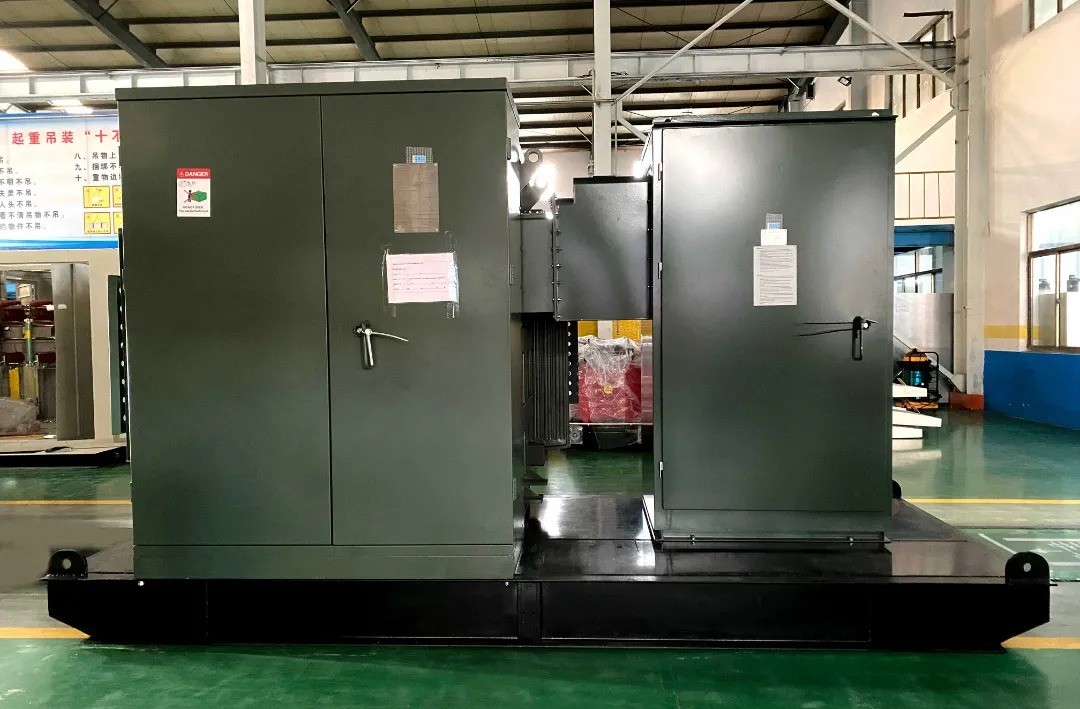
Three-Phase Pad-Mounted Transformer vs. Prefabricated Substation
| Comparison | Three-Phase Pad-Mounted Transformer | Prefabricated Substation |
|---|---|---|
| Structure | Transformer and high-voltage components are integrated into one tank | high-voltage, low-voltage, and transformer compartments are separated |
| Size | Compact design with smaller footprint | Larger overall size |
| Maintenance | Requires limited routine maintenance | Each compartment can be independently inspected and maintained |
| Transformer Type | Mainly oil-immersed transformer | Oil-immersed or dry-type transformer options available |
| Cost | Lower overall cost | Higher investment cost |
| Expansion Capability | Limited flexibility for future expansion | Better adaptability for system upgrades |
| Application | Outdoor, distributed, and low-maintenance power supply applications | Indoor, high-load, and projects requiring future expansion |
How Does a Three-Phase Pad-Mounted Transformer Work?
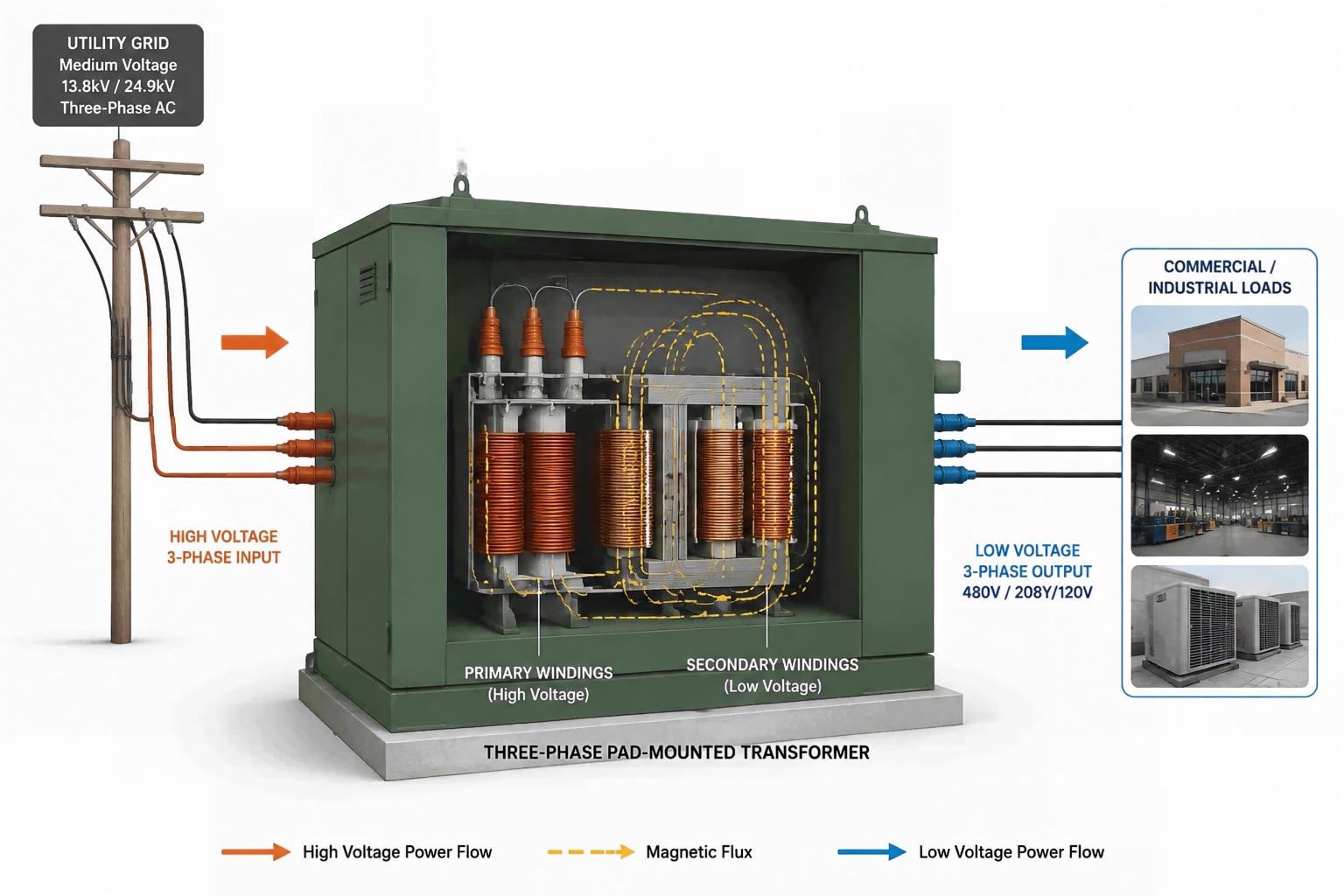
Simply speaking, the primary function of a three-phase pad-mounted transformer is to convert high-voltage electricity into low-voltage power for end users.
The typical working process includes the following steps:
- High-voltage power from the utility grid enters the transformer through the high-voltage cable connection.
- Inside the transformer, electromagnetic induction occurs between the primary and secondary windings, reducing the voltage level.
- After conversion, low-voltage electricity flows through the output terminals and connects to downstream distribution systems.
- Finally, the converted power supplies industrial equipment, commercial buildings, and other electrical loads.
For example, in a typical distribution application, the utility grid may provide a 13.8kV high-voltage power supply. After voltage conversion through a three-phase pad-mounted transformer, the output can become 480V or another low-voltage level required by the project, providing stable power for customer equipment.
Main Components of a Three-Phase Pad-Mounted Transformer
External Structure and Layout
1. Overall Layout
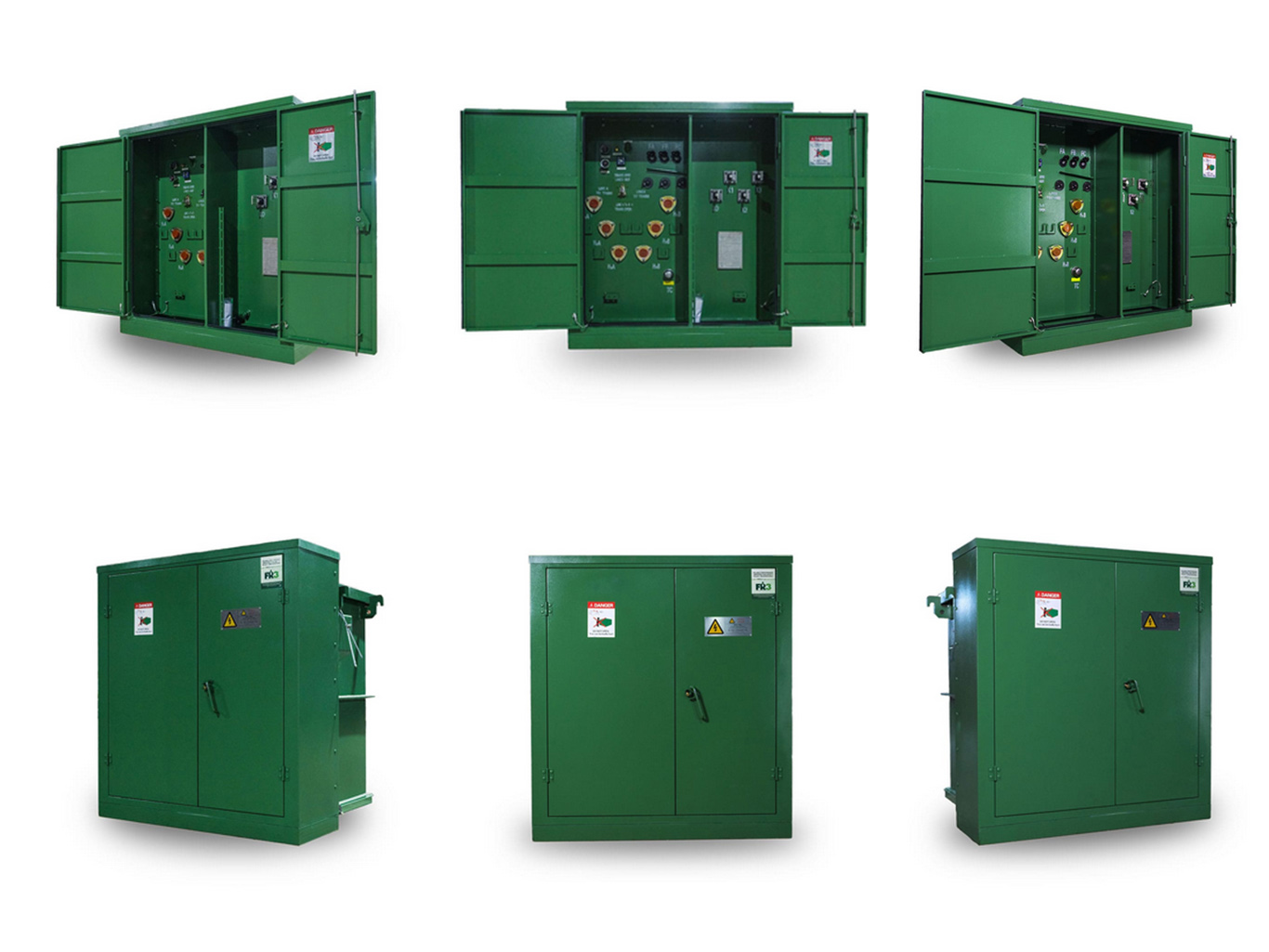
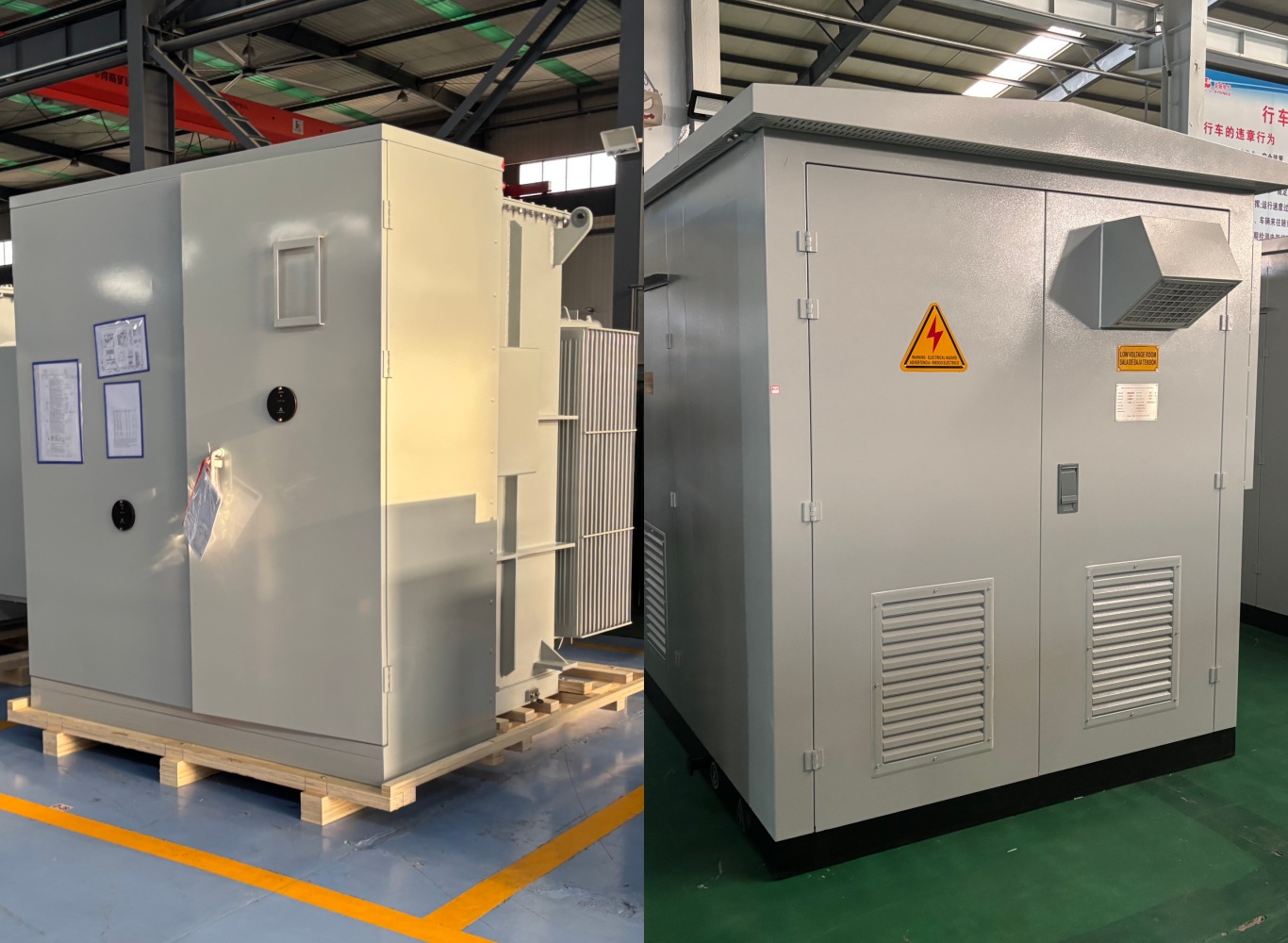
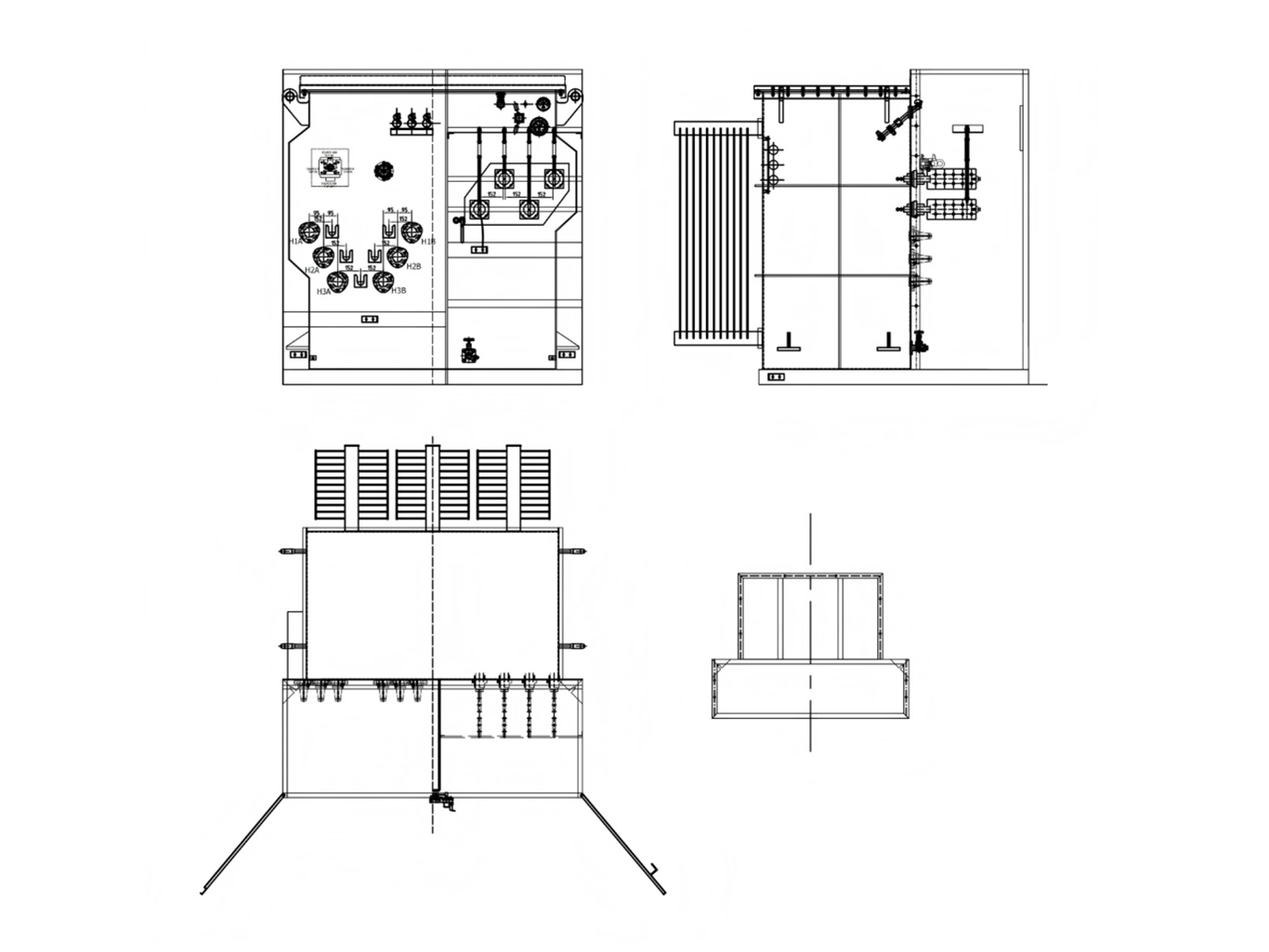
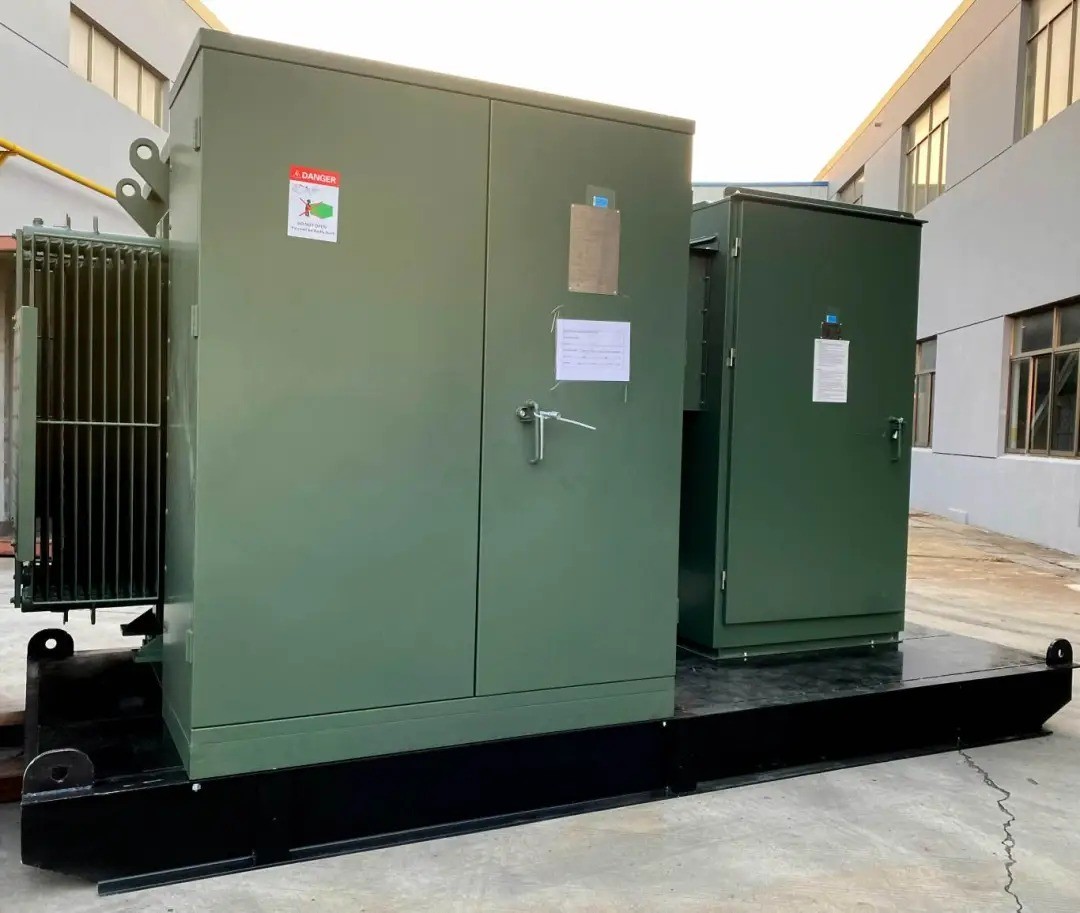
A standard pad-mounted transformer usually consists of two main sections: the front compartment and the rear compartment.
The front compartment contains the high-voltage and low-voltage operating components, while the rear compartment houses the transformer tank and cooling fins.
The two sections are separated by the transformer tank wall. The front compartment provides access to operating devices, while the rear compartment contains the main energized transformer components.
This layout allows operators to perform necessary switching and cable connections while keeping the transformer core components fully enclosed.
2. Enclosure Structure
The enclosure of a three-phase pad-mounted transformer adopts a fully sealed and insulated steel structure.
The external surface usually receives anti-corrosion treatment and special coating processes, providing protection against:
- Moisture
- Dust
- Corrosion
- Outdoor environmental conditions
The robust enclosure design improves equipment durability and allows reliable operation in various outdoor environments.
3. Front Compartment Layout
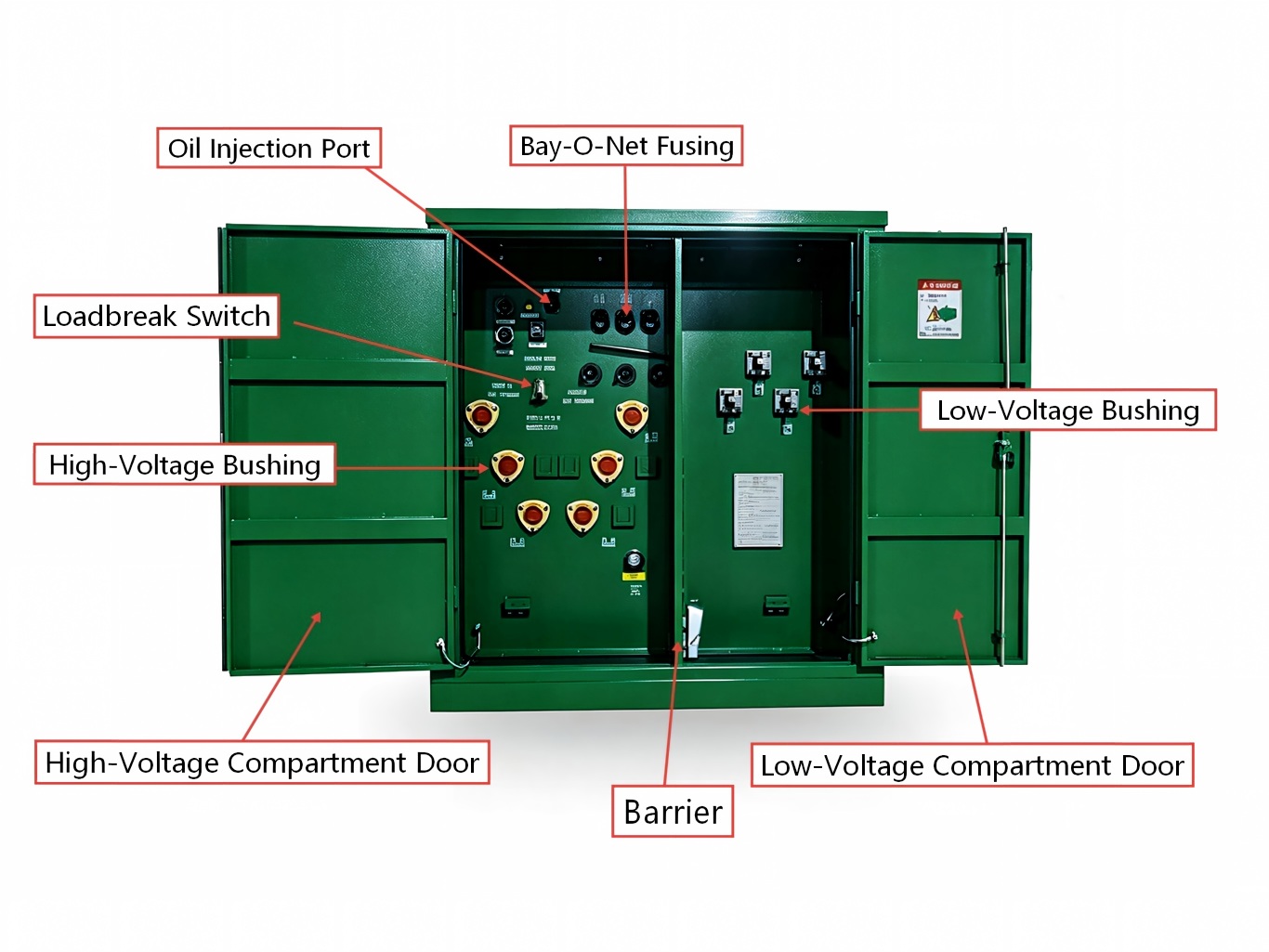
The front compartment contains the operating components on both the high-voltage and low-voltage sides.
Typical components include:
- High-voltage load switch operating handle
- No-load tap changer operating handle
- Low-voltage cable terminals
The front door usually incorporates an interlocking mechanism. Operators must follow the correct opening sequence, helping prevent unsafe operation and improving personnel protection.
Internal Structure
1. Transformer Section — The Core of the Rear Compartment
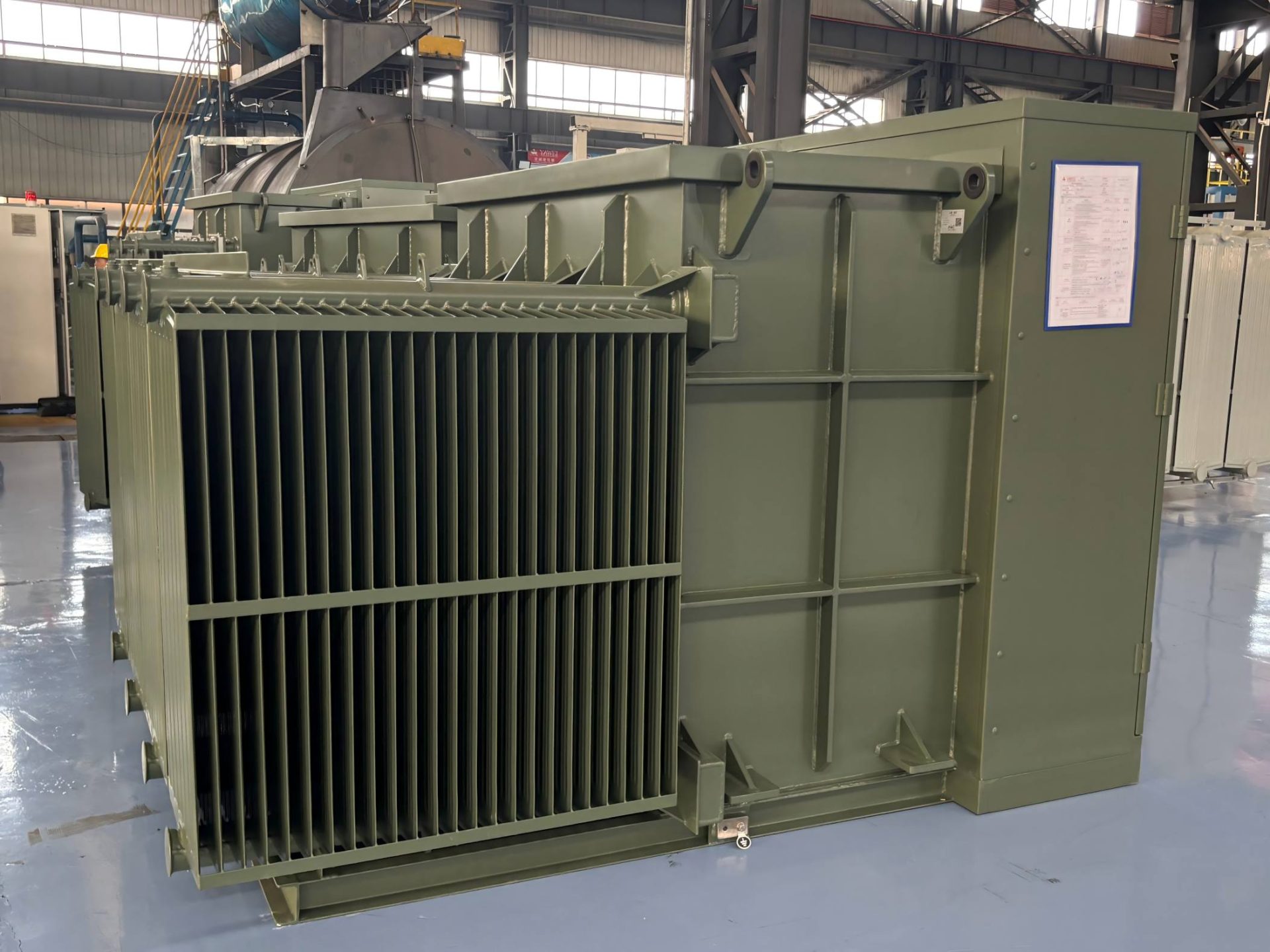
Transformer Body
The transformer body uses an oil-immersed design, typically filled with insulating oil such as high fire point fluid (for example, FR3 fluid).
Meanwhile, the transformer windings and iron core are directly immersed in insulating oil inside the sealed tank, creating a fully enclosed and insulated structure.
Cooling Fins
The cooling fins are directly installed on the outside of the transformer tank and exposed to surrounding air.
Unlike traditional transformers with separate oil conservators, pad-mounted transformers usually rely on natural air circulation for heat dissipation, providing effective cooling performance.
Transformer Accessories
The transformer is equipped with various monitoring and protection accessories, including:
- Oil level indicator
- Oil temperature gauge
- Pressure relief valve
- Oil filling port
- Drain valve
These components help monitor operating conditions and release internal pressure when necessary.
2. High-Voltage Section — Front Compartment and Tank Connection Area
High-Voltage Load Switch
The high-voltage load switch is usually an oil-immersed two-position or four-position switch installed inside the transformer tank.
It uses transformer oil as both insulation and arc-extinguishing medium, allowing the equipment to safely connect or disconnect load current.
High-Voltage Fuse Protection
A three-phase pad-mounted transformer commonly uses dual fuse protection, including:
- Bayonet fuse
- Current-limiting backup fuse
Both fuses are connected in series within the high-voltage circuit to provide effective fault protection.
High-Voltage Terminals and Bushings
The high-voltage side is equipped with high-voltage bushings for connecting:
- Elbow cable connectors
- Elbow surge arresters
This design provides a fully insulated and sealed connection system while supporting safe cable installation and operation.
De-energized Tap Changer
The no-load tap changer adjusts the number of turns in the primary winding to regulate the secondary voltage.
Operators must perform tap adjustments only when the transformer is completely de-energized.
3. Low-Voltage Section — Front Compartment
Low-Voltage Terminals
Low-voltage output terminals extend directly from the transformer tank wall and connect to the low-voltage cables.
They provide a reliable connection between the transformer and downstream distribution systems.
Low-Voltage Protection and Monitoring
The low-voltage section usually includes:
- Molded case circuit breakers (MCCB)
- Overload protection devices
- Short-circuit protection devices
Depending on project requirements, some units may also include:
- Low-voltage metering equipment
- Capacitor compensation devices
- Monitoring systems
These components improve system control, energy management, and operational reliability.
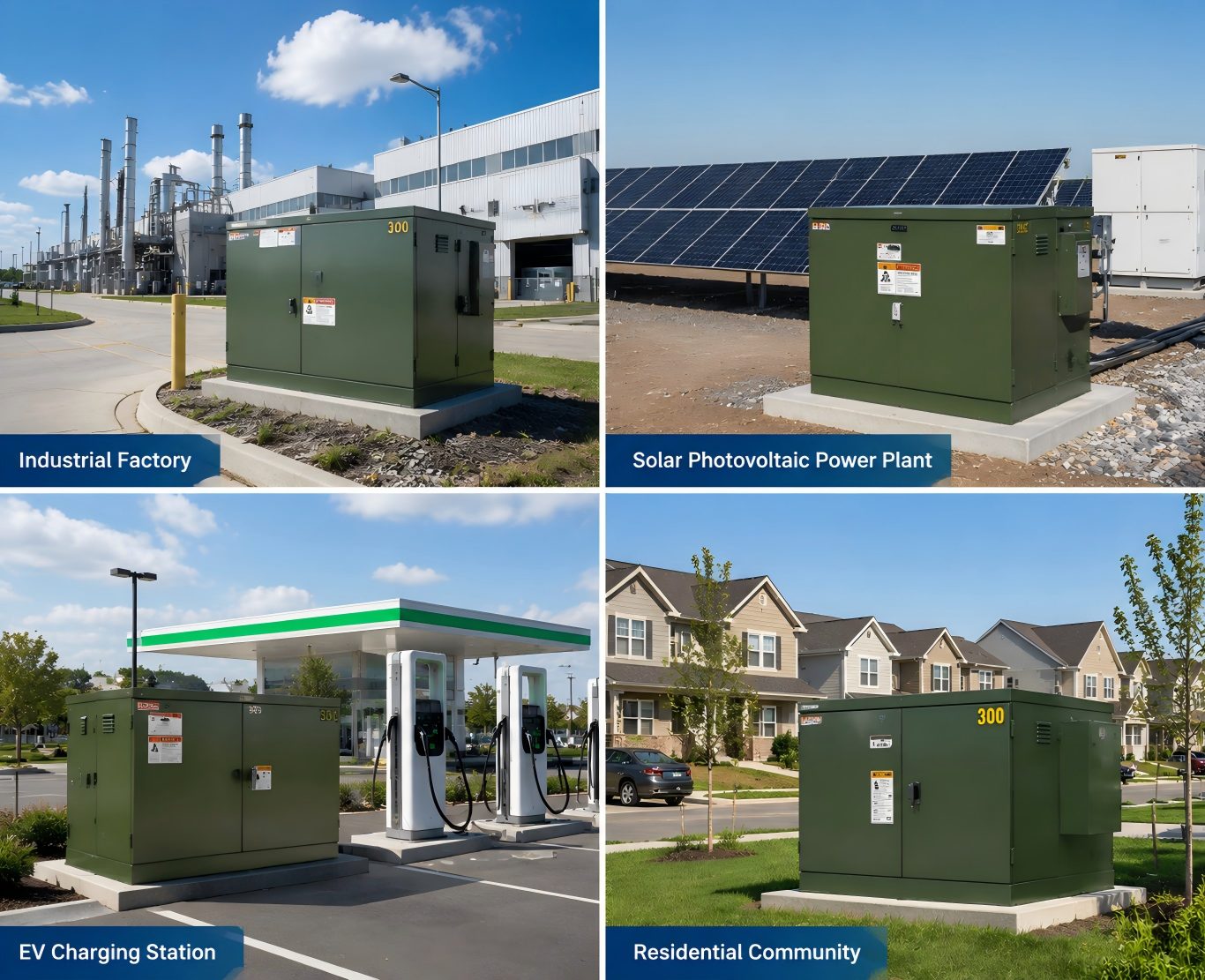
Applications of Three-Phase Pad-Mounted Transformers
In practical engineering projects, three-phase pad-mounted transformers are mainly used in applications that require reliable outdoor power distribution.
1. Industrial Power Distribution Projects
Factories and industrial parks usually operate numerous motors, production machines, and automation systems that require stable and high-capacity power supply.
Acting as a connection point between the utility grid and industrial distribution network, a three-phase pad-mounted transformer provides reliable voltage conversion for various industrial loads.
2. Utility Distribution Networks
Electric utilities also widely use pad-mounted transformers for power distribution in urban and community electrical networks.
Thanks to their compact structure and outdoor installation capability, three-phase pad-mounted transformers are well suited for applications where installation space is limited, such as urban areas, residential communities, and public infrastructure projects.
3. Renewable Energy Projects
With the rapid development of solar PV and energy storage projects, more renewable energy systems require dedicated voltage conversion equipment for grid connection.
In these applications, three-phase pad-mounted transformers are commonly used to connect solar PV inverters, battery energy storage systems, and high-voltage power grids, enabling efficient and reliable energy transmission.
What Parameters Should You Consider When Selecting a Three-Phase Pad-Mounted Transformer?
For purchasing teams and engineering designers, selecting a transformer should not only focus on equipment price. The transformer must also match the project’s electrical requirements, installation conditions, and operating environment.
The following parameters are especially important:
| Parameter | Description |
|---|---|
| Rated capacity | Determines the maximum load the transformer can support |
| Rated voltage | Must match the local utility voltage level |
| Frequency | Usually selected according to regional power standards, such as 50Hz or 60Hz |
| Insulation level | Affects safe operation under different voltage conditions |
| Protection rating | Determines outdoor environmental resistance |
| Applicable standards | Must comply with project location requirements and industry standards |
At Wondon, we usually recommend customers provide project details during the quotation stage, including voltage level, capacity requirements, installation environment, and application scenario.
With this information, our engineering team can help develop a more suitable solution for each project.
Wondon Three-Phase Pad-Mounted Transformer Specifications
| Rated Capacity(kVA) | Rated Voltage and Tapping Range | Efficiency | ||
| HV | LV | DOE(2016) | CSA(2023) | |
| 75 | 35kV 25kV 15kV |
240V 480V 480YV 277V 600YV 347V |
99.03 | 98.95 |
| 112.5 | 99.11 | 99.04 | ||
| 150 | 9916 | 99.09 | ||
| 225 | 99.23 | 99.17 | ||
| 300 | 99.27 | 99.21 | ||
| 500 | 99.35 | 99.3 | ||
| 750 | 99.4 | 99.35 | ||
| 1000 | 99.43 | 99.38 | ||
| 1500 | 99.48 | 99.44 | ||
| 2000 | 99.51 | 99.47 | ||
| 2500 | 99.53 | 99.49 | ||
Why Are More Projects Choosing Three-Phase Pad-Mounted Transformers?
From an engineering application perspective, the main advantages of three-phase pad-mounted transformers include:
Reliable protection design: The enclosure provides effective protection against various environmental factors, making the transformer suitable for outdoor installation.
1. Compact Structure
The small footprint reduces installation space requirements and helps save valuable land resources.
2. Easy Installation and Operation
The equipment features a convenient installation process, simple operation, and easy maintenance.
3. Short Construction Period
The integrated design helps simplify project installation and reduce overall construction time.
4. Flexible Power Conversion
It provides convenient voltage conversion between high-voltage networks and low-voltage user systems.
5. Safe and Reliable Operation
The enclosed structure and protection components improve operational safety and system reliability.
6. Low Energy Loss and High Efficiency
Optimized design helps reduce power losses and supports energy-efficient operation.
7. Wide Range of Applications
Suitable for various commercial and industrial power distribution scenarios.
However, different projects have different grid conditions, environmental requirements, and technical standards. Therefore, selecting the right three-phase pad-mounted transformer requires a comprehensive evaluation based on actual engineering conditions, including load requirements, installation environment, and application needs.
FAQs
1. What is a three-phase pad-mounted transformer?
A three-phase pad-mounted transformer is an outdoor distribution transformer that converts high voltage power into low voltage electricity for commercial, industrial, and utility applications.
2. Where are three-phase pad-mounted transformers used?
They are commonly used in industrial facilities, utility distribution networks, solar PV projects, energy storage systems, and other outdoor power distribution applications.
3. What are the advantages of a three-phase pad-mounted transformer?
Key advantages include compact design, safe operation, low maintenance requirements, reliable performance, and suitability for limited-space outdoor installations.
4. How does a three-phase pad-mounted transformer work?
It uses electromagnetic induction to convert medium voltage electricity from the grid into the low voltage power required by end users.
5. How do I choose the right three-phase pad-mounted transformer?
Selection depends on factors such as rated capacity, voltage level, frequency, insulation requirements, protection rating, installation environment, and project standards.
Conclusion
A three-phase pad-mounted transformer provides a reliable, compact, and efficient solution for outdoor power distribution in industrial, commercial, utility, and renewable energy projects. With advantages such as safe operation, low maintenance, and flexible installation, it helps ensure stable power supply and long-term system performance.
Therefore, selecting the right transformer is essential because each project has different voltage, capacity, and environmental requirements. Wondon offers customized three-phase pad-mounted transformer solutions and professional technical support to help customers achieve reliable power distribution. Contact us today to discuss your project requirements.