

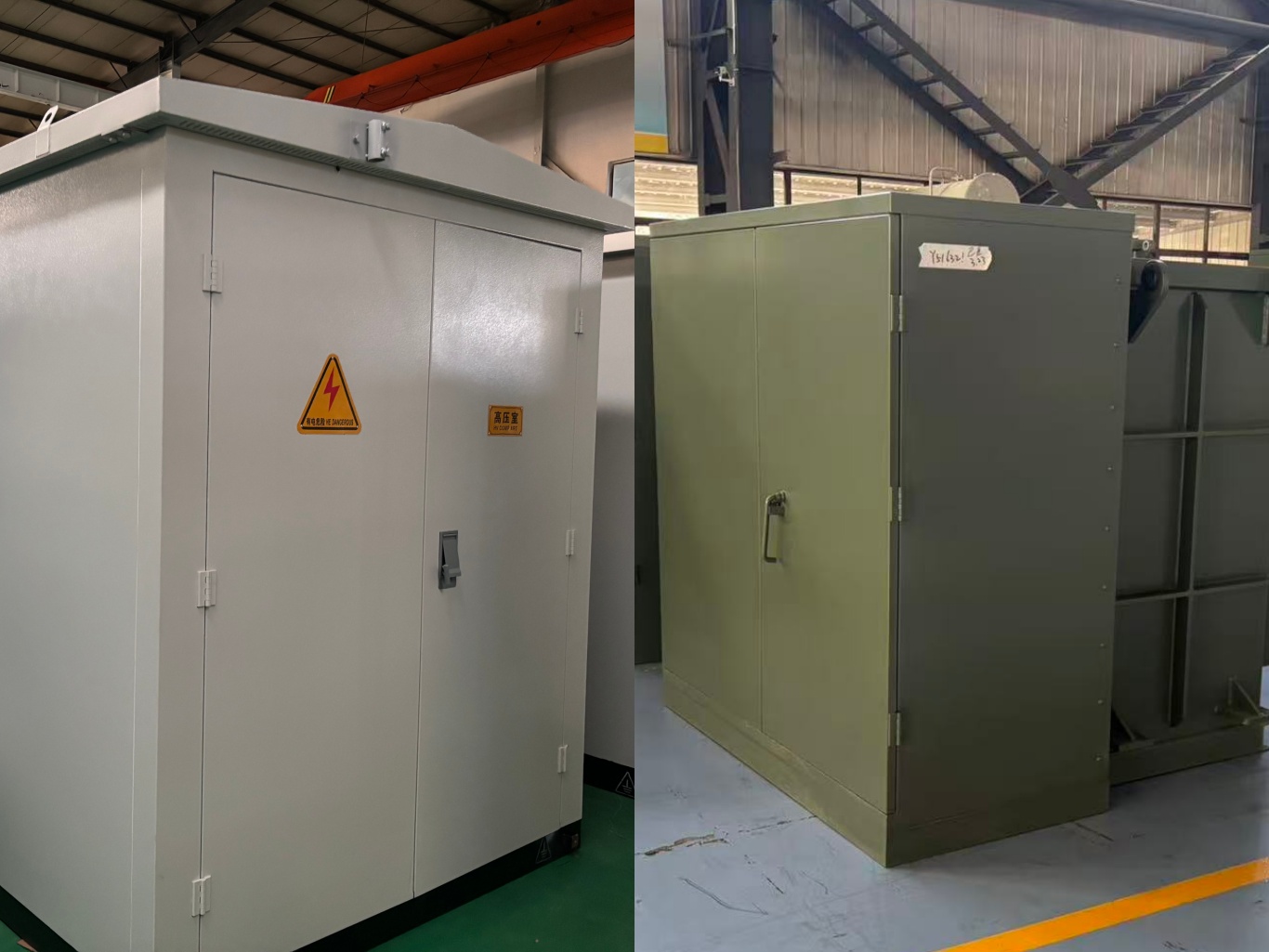
In the planning of a new project, the power distribution solution is one of the key factors that determine project performance and long-term reliability. When choosing between the two mainstream distribution solutions on the market — prefabricated substations and pad-mounted transformers (commonly known as European-style box-type substations and American-style box-type substations), how can you make the right decision? This article provides a detailed selection guide to help you better understand the differences between prefabricated substations vs pad-mounted transformers.
When people talk about box-type substations, the first image that often comes to mind is simply a large metal enclosure. However, although both solutions look like “boxes”, their internal designs, functions, and application scenarios are quite different.
What is a Prefabricated Substation?
A prefabricated substation, also known as a European-style box-type substation, adopts a design concept based on separation and independent operation. The entire substation consists of three main functional compartments: the high-voltage compartment, transformer compartment, and low-voltage compartment.
The enclosure is usually made of aluminum-zinc coated steel plates combined with composite insulation materials. With a protection rating of up to IP54, it not only provides daily protection against water and dust but also effectively withstands harsh environmental conditions such as heavy rain and extreme weather.
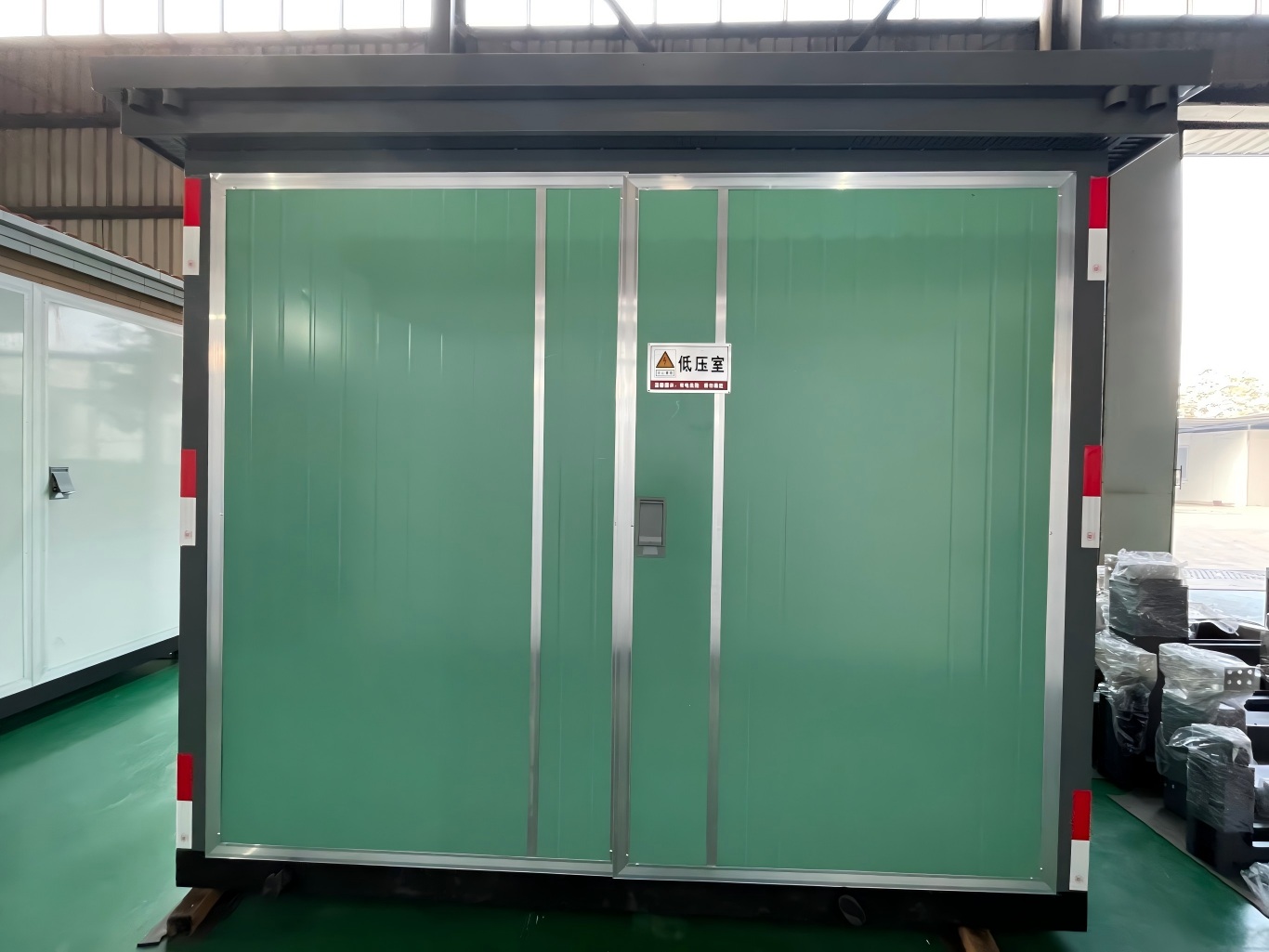
Structural Features
Each functional compartment of the prefabricated substation is strictly separated by metal partitions, creating independent operating spaces. This design prevents interference between different sections and improves overall operational safety.
Key Advantages
A prefabricated substation offers strong expandability and supports high-capacity configurations. It can integrate microcomputer-based protection systems, capacitor compensation units, and remote monitoring terminals to achieve functions such as remote measurement, remote signaling, remote control, and remote adjustment.
The physical separation between compartments provides enhanced safety. During maintenance and inspection, each unit can operate independently without affecting other sections, making operation and maintenance more convenient.
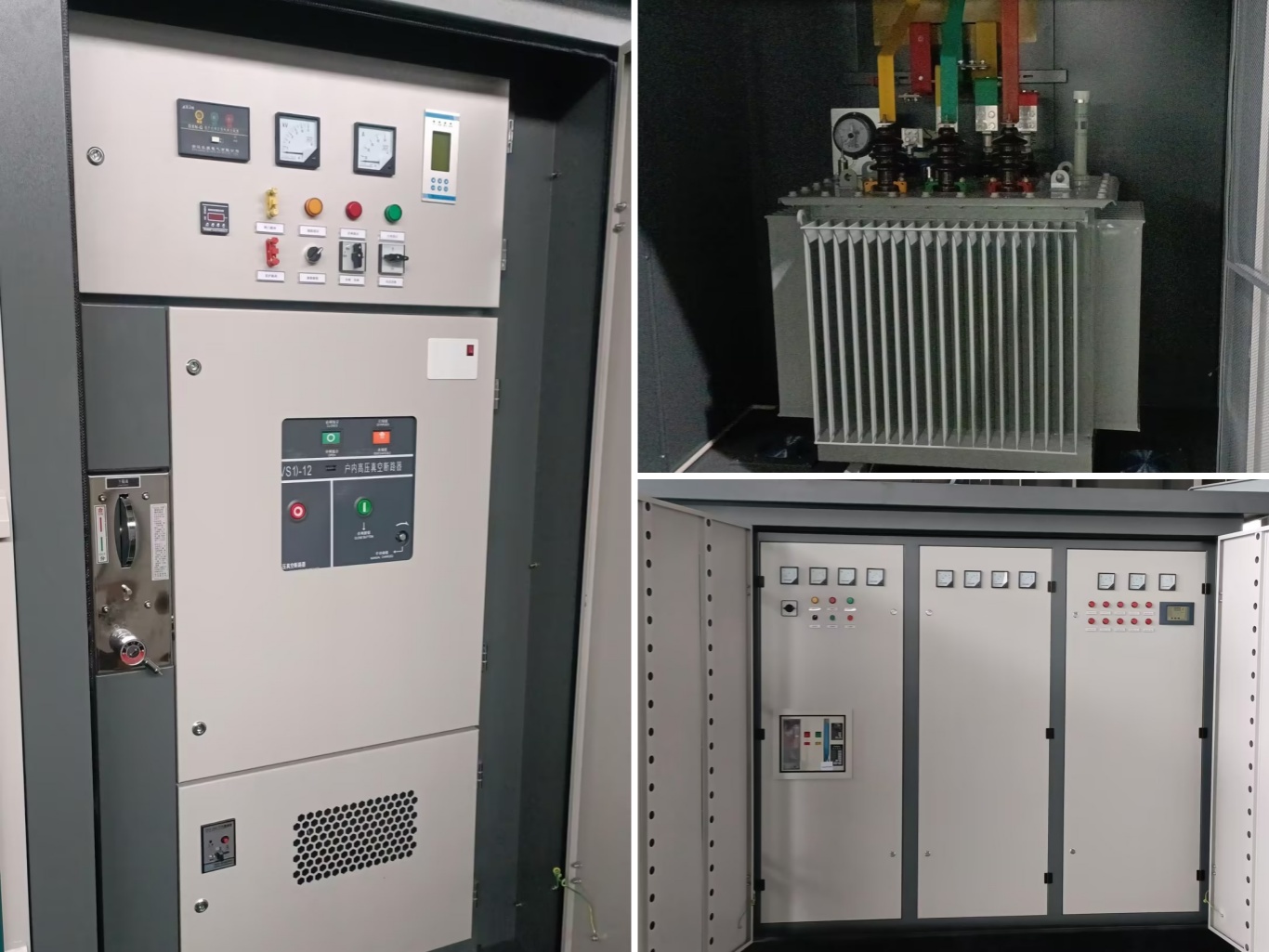
Wondon Prefabricated Substation Standard Parameters
| Unit | Parameter | Unit | Value |
| High Voltage Unit | Rated Frequency | Hz | 50 |
| Rated Voltage | kV | 12 | |
| Rated Power Frequency Withstand Voltage | kV | 42 | |
| Rated Lightning Impulse Withstand Voltage | kV | 75 | |
| Rated Current | A | 630 | |
| Rated Short-Time Withstand Current | kA | 20 | |
| Rated Peak Withstand Current | kA | 50 | |
| Rated Short-Time Withstand Current Duration | s | 2 | |
| Low Voltage Unit | Rated Voltage | V | 400 |
| Rated Main Circuit Current | A | 100–2000 | |
| Rated Short-Time Withstand Current (Grounding Circuit) | kA | 12.5 | |
| Rated Peak Withstand Current (Grounding Circuit) | kA | 31.5 | |
| Feeder Circuit Current | A | 10–630 | |
| Number of Feeder Circuits | circuits | 1–12 | |
| Compensation Capacity | kVar | 0–240 | |
| Transformer Unit | Rated Capacity | kVA | 50–280 |
| Impedance Voltage | % | ±4% or 4.5% | |
| Tap Range | ±2×2.5% | ||
| Connection Group | D, yn11 | ||
| Enclosure | Enclosure Protection Rating | IP54 | |
| Sound Level | dB | ≤55 |
What is a Pad-Mounted Transformer?
If a prefabricated substation can be compared to a well-designed townhouse with clearly separated functional areas, a pad-mounted transformer is more like a compact and efficient studio apartment.
A pad-mounted transformer focuses on integration and compact design. It usually adopts a fully integrated oil-filled tank structure, combining key components such as the high-voltage load switch, transformer body, and low-voltage outgoing circuit breakers inside a sealed tank.
Compared with a prefabricated substation of the same capacity, a pad-mounted transformer usually occupies only around one-third to one-fifth of the space. Its protection rating generally ranges from IP33 to IP43.
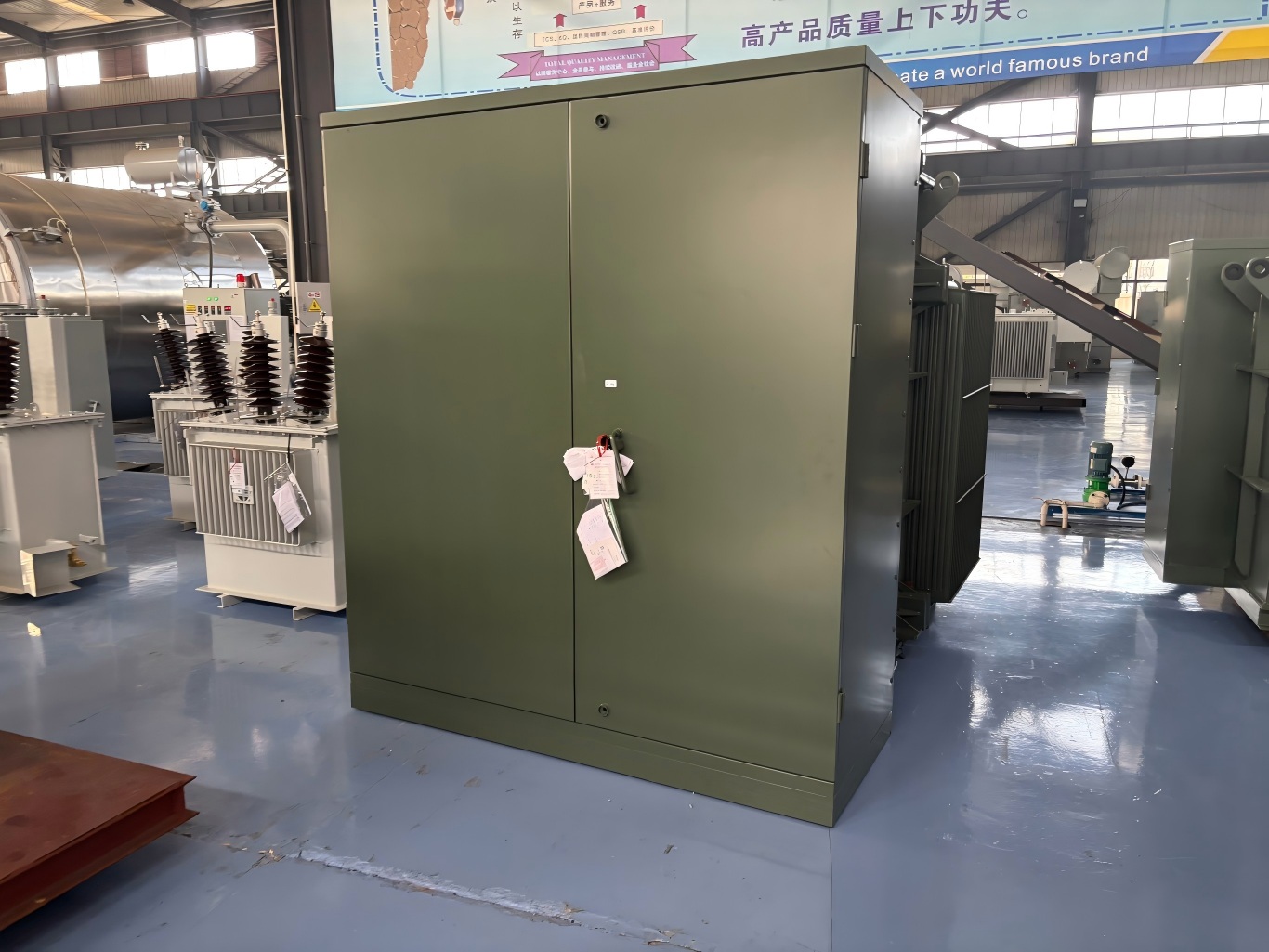
Structural Features
The main structural characteristics of a pad-mounted transformer include a compact design, small footprint, and highly integrated construction.
Key Advantages
The major advantages of a pad-mounted transformer are its compact structure and cost efficiency.
These transformers typically use FR3 natural ester insulating fluid with a high fire point (up to 312℃), providing excellent environmental performance and safety. They are also equipped with a dual-fuse protection system, including plug-in fuses and backup current-limiting fuses.
This protection design allows the transformer to withstand 2 times overload operation for up to 2 hours, making it particularly suitable for projects requiring fast deployment, such as temporary construction power supply and road lighting applications.
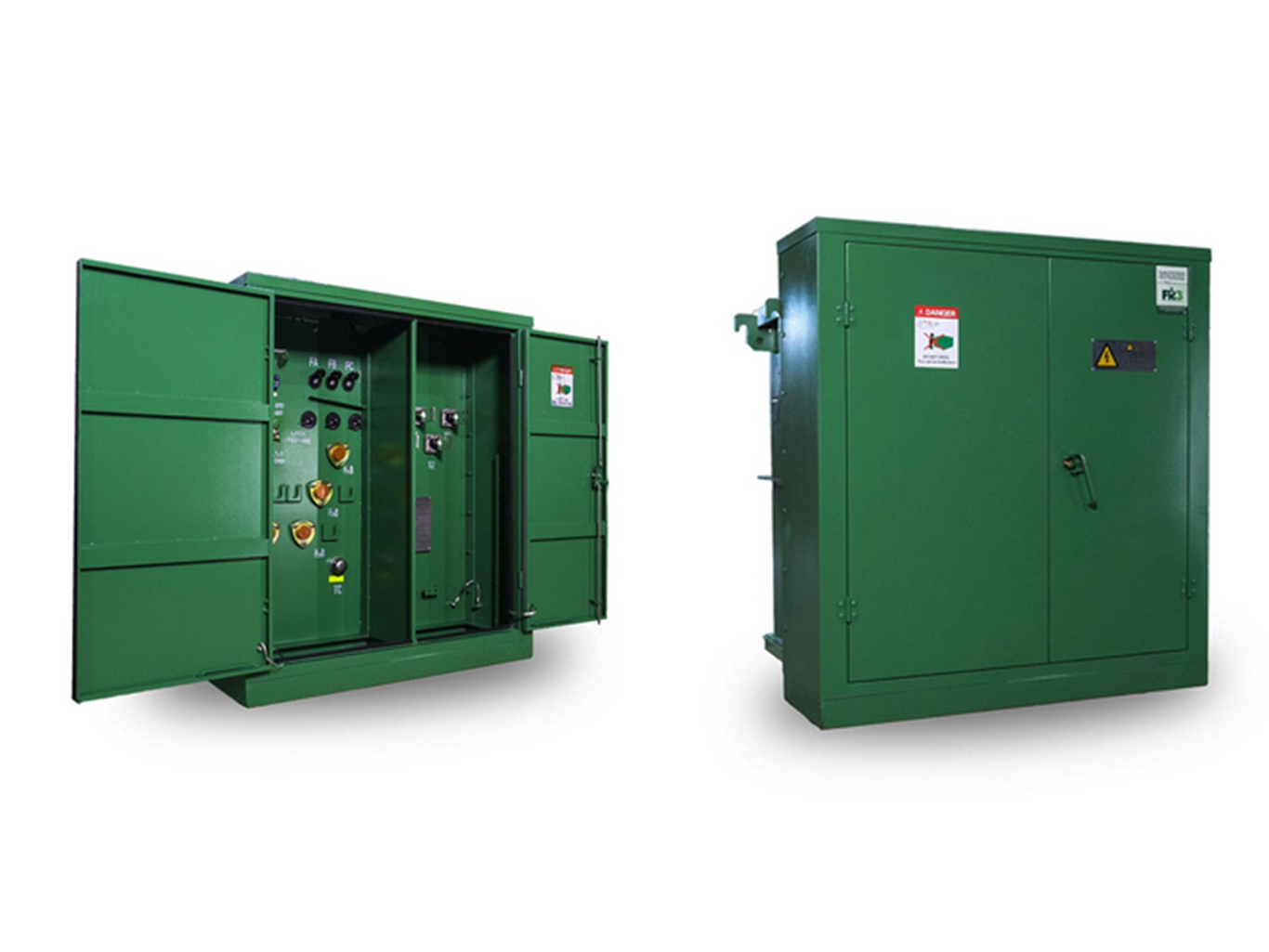
Wondon Pad-Mounted Transformer Standard Parameters
| Rated Capacity(kVA) | Rated Voltage and Tapping Range | Efficiency | ||
| HV | LV | DOE(2016) | CSA(2023) | |
| 75 | 35kV 25kV 15kV |
240V 480V 480YV 277V 600YV 347V |
99.03 | 98.95 |
| 112.5 | 99.11 | 99.04 | ||
| 150 | 9916 | 99.09 | ||
| 225 | 99.23 | 99.17 | ||
| 300 | 99.27 | 99.21 | ||
| 500 | 99.35 | 99.3 | ||
| 750 | 99.4 | 99.35 | ||
| 1000 | 99.43 | 99.38 | ||
| 1500 | 99.48 | 99.44 | ||
| 2000 | 99.51 | 99.47 | ||
| 2500 | 99.53 | 99.49 | ||
Prefabricated Substations vs Pad-Mounted Transformers
After understanding the basic structures of these two types of equipment, let’s compare prefabricated substations vs pad-mounted transformers from six key aspects that project decision-makers care about most.
| Comparison Aspect | Prefabricated Substations | Pad-Mounted Transformers |
|---|---|---|
| Safety | Physical separation with spacious operating areas. The high-voltage section, transformer section, and low-voltage section are completely separated. This design reduces the risk of maintenance personnel contacting live components and provides a higher level of operational safety. |
Integrated protection design. Core components are immersed in insulating oil, providing reliable protection. However, due to the compact structure, operation and maintenance require higher professional skills. |
| Capacity Range | Wide capacity range. Typically available from 630kVA to 2500kVA or higher, making them suitable for projects with high power demand. |
Relatively smaller capacity range. Usually below 2500kVA, making them more suitable for small and medium-sized loads. |
| Footprint | Larger footprint. Due to the separated functional compartments, prefabricated substations generally require more installation space. |
Smaller footprint. Compared with a prefabricated substation of the same capacity, a pad-mounted transformer can save approximately 30%-50% of installation space, making it an ideal choice for densely populated urban areas. |
| Cost | Higher initial investment. The more complex structure and additional materials usually result in higher manufacturing costs and greater requirements for supporting civil construction. |
Cost-effective solution. The simpler structure reduces manufacturing costs and provides advantages in terms of initial investment. |
| Operation & Maintenance | Easier maintenance. Each functional compartment operates independently, allowing individual inspection, maintenance, or component replacement. This helps reduce maintenance costs and lowers skill requirements for operators. |
Highly integrated design. During maintenance or troubleshooting, some components may require overall replacement, which can increase the complexity and cost of long-term operation and maintenance. |
| Environmental Adaptability | Excellent heat dissipation and strong adaptability. Each compartment has independent ventilation, providing better heat dissipation performance and allowing the equipment to operate reliably in harsh environments such as high temperatures and high humidity. |
Fully sealed structure with high protection performance. The sealed design provides strong resistance to dust, moisture, and corrosion, making pad-mounted transformers suitable for various complex environments, especially urban applications. |
Application Guide: Which Product Should I Choose for My Project?
Choosing between a prefabricated substation and a pad-mounted transformer depends on factors such as project requirements, installation environment, power demand, and investment considerations.
Applications Where Prefabricated Substations Are Preferred
- Long-term operation projects, such as municipal infrastructure projects and hospitals.
- Complex grid environments, such as wind farms and solar PV power plants.
- Projects requiring intelligent management, such as distribution automation systems and power quality monitoring applications.
Applications Where Pad-Mounted Transformers Are Preferred
- Space-limited projects, such as urban residential areas and commercial pedestrian streets.
- Temporary power supply requirements, such as exhibitions and construction sites.
- Budget-sensitive projects, such as agricultural irrigation systems and tourism facilities.
FAQs
1. What is the difference between a prefabricated substation and a pad-mounted transformer?
A prefabricated substation features separate high-voltage, transformer, and low-voltage compartments, offering higher flexibility and easier maintenance. A pad-mounted transformer integrates key components into a compact sealed tank, making it ideal for space-limited applications.
2. Which is better, a prefabricated substation or a pad-mounted transformer?
The better choice depends on project requirements. Prefabricated substations are suitable for large-capacity systems, complex grid environments, and projects requiring intelligent monitoring. Pad-mounted transformers are better for compact installations and cost-sensitive projects.
3. What are the main applications of prefabricated substations?
Prefabricated substations are widely used in solar PV plants, wind farms, industrial facilities, hospitals, and municipal power projects where reliable power distribution and long-term operation are required.
4. Why choose a pad-mounted transformer for power distribution projects?
Pad-mounted transformers provide a compact, cost-effective solution with strong protection performance. They are commonly used in urban areas, temporary power supply projects, commercial developments, and applications with limited installation space.
5. How do I choose between a prefabricated substation and a pad-mounted transformer?
The selection should consider capacity requirements, installation space, environmental conditions, maintenance needs, and project budget. A professional assessment can help determine the most suitable power distribution solution.
Conclusion
In general, selecting the right box-type substation solution requires comprehensive consideration of project positioning, power requirements, environmental conditions, and investment budget. The right choice not only ensures reliable power distribution but also helps reduce future modification and upgrade costs.
As a professional manufacturer specializing in high- and low-voltage power distribution equipment for many years, Wondon has extensive experience in designing and manufacturing box-type substations. If you need professional support for your project, please contact our technical team for more detailed consultation and customized selection recommendations.