

Vacuum circuit breakers in medium voltage switchgear are widely used because they provide fast arc extinction, reliable fault interruption, long service life, and relatively low maintenance requirements. If you are new to medium voltage switchgear, you may have seen this configuration described as a VCB, or Vacuum Circuit Breaker.
But what does a VCB actually do, and why is it important?
Medium voltage switchgear receives, distributes, controls, and protects electrical power. Within this system, the circuit breaker serves as a critical switching and protection device.
Under normal operating conditions, it allows current to flow. When a short circuit or another electrical fault occurs, it must interrupt the current quickly and safely.
A VCB performs this task by separating its contacts and extinguishing the resulting electrical arc inside a sealed vacuum interrupter. This isolates the faulted circuit and helps limit the impact on transformers, cables, busbars, motors, and other connected equipment.
That is why vacuum circuit breakers have become a common choice for medium voltage power distribution systems.
In this guide, we will explain how VCBs work and examine their key advantages, selection criteria, maintenance requirements, and project considerations before you purchase an MV switchgear system.
What Is a Vacuum Circuit Breaker in Medium Voltage Switchgear?
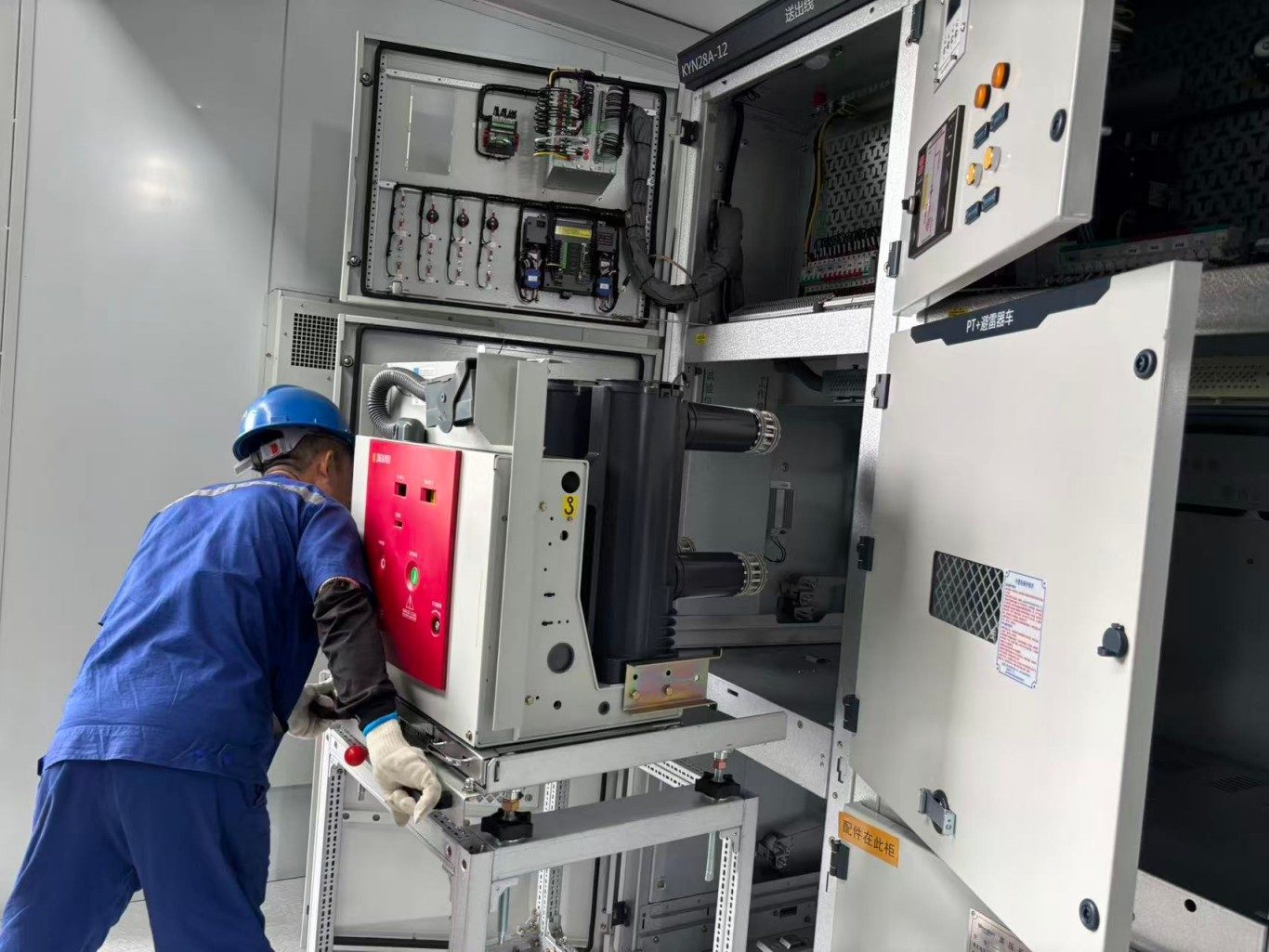
A vacuum circuit breaker is a medium voltage circuit breaker that uses a vacuum as the arc-quenching medium. When its contacts separate, the vacuum interrupter quickly extinguishes the arc and allows the breaker to interrupt the current.
For someone new to electrical equipment, one question usually comes first:
Why does a circuit breaker need to extinguish an arc?
When a circuit breaker opens while current is flowing, its contacts do not simply stop conducting at the exact moment they begin to separate.
An electrical arc can form between the contacts as they move apart.
If the arc continues, the circuit breaker cannot properly interrupt the current.
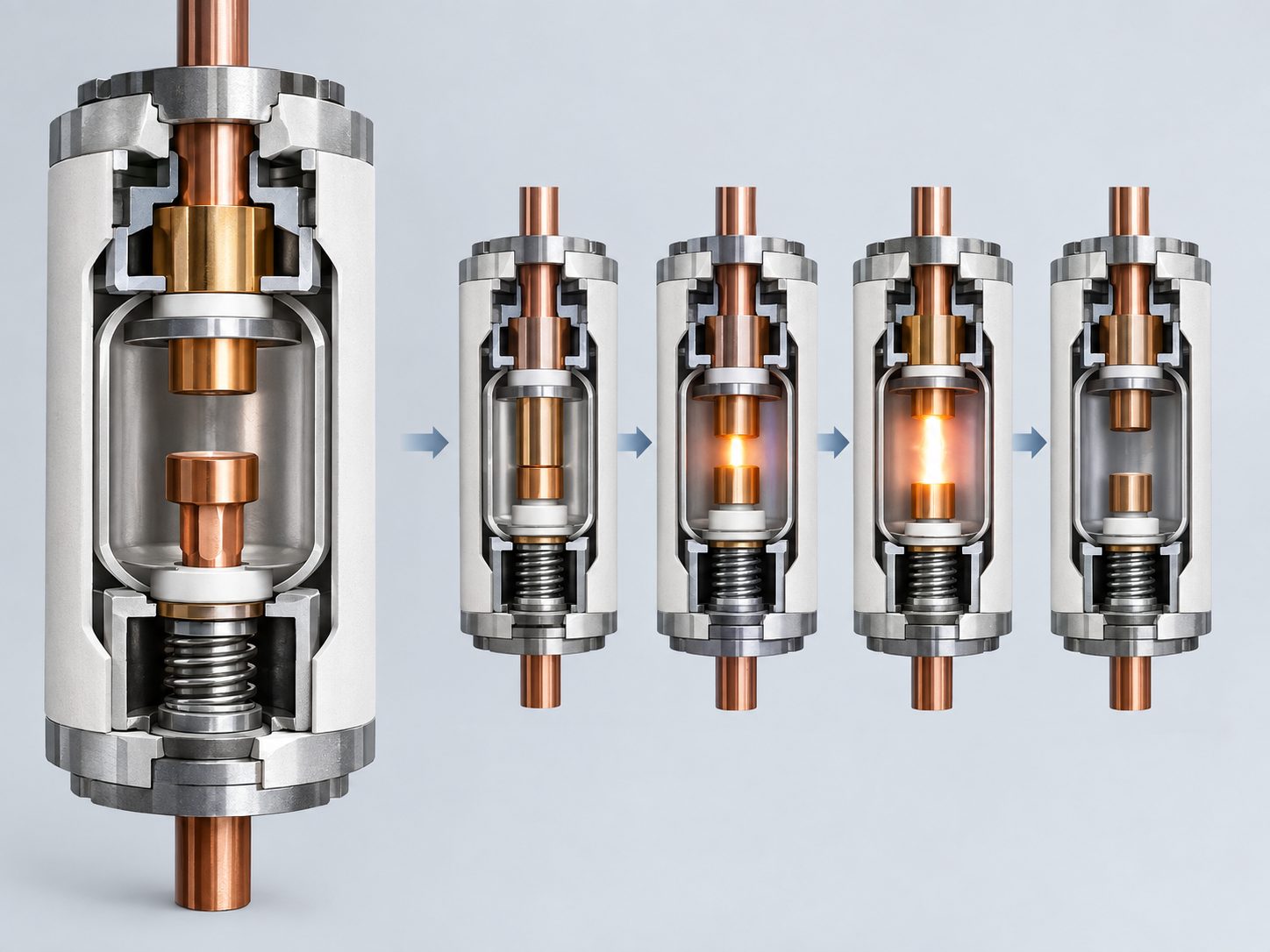
A VCB solves this problem with a sealed vacuum interrupter.
What Is a Vacuum Interrupter?
You can think of a vacuum interrupter as a small, sealed chamber designed specifically to interrupt electrical current and extinguish the arc.
It contains fixed and moving contacts.
During normal operation, the contacts remain closed and current flows through the circuit.
When the system needs to interrupt the circuit, the operating mechanism moves the moving contact away from the fixed contact.
The arc that forms during contact separation quickly extinguishes in the vacuum environment.
For this reason, the vacuum interrupter is one of the most critical components of a vacuum circuit breaker.
How Does a Vacuum Circuit Breaker Interrupt Fault Current?
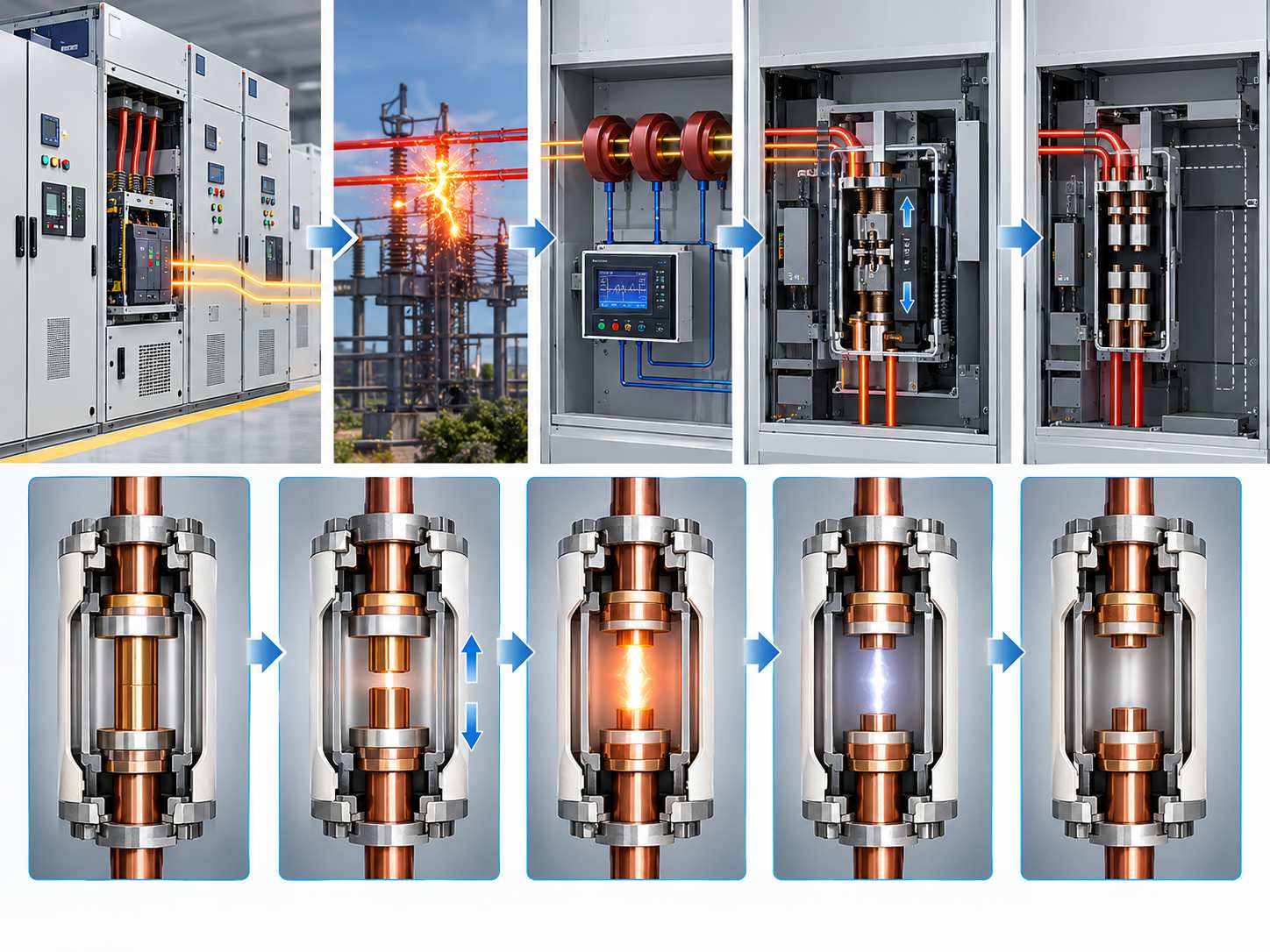
The basic operating sequence looks like this:
Normal power supply → Fault detected → Protection relay sends trip command → VCB contacts open → Arc forms → Current reaches zero → Arc extinguishes → Fault circuit is isolated
There is one important point to understand here.
A VCB does not normally detect a short circuit by itself.
Current transformers (CTs) and protection relays monitor the electrical system and identify abnormal conditions.
Once the protection system detects a fault, it sends a trip signal to the VCB.
So, reliable medium voltage protection depends on the coordinated operation of several devices rather than the circuit breaker alone.
Why Use Vacuum Circuit Breakers in Medium Voltage Switchgear?
The main reason to use a vacuum circuit breaker in medium voltage switchgear is its combination of fast arc extinction, long electrical and mechanical endurance, relatively low maintenance requirements, no SF6 arc-quenching gas, compact construction, and reliable fault interruption for many MV applications.
But what do these advantages actually mean for your project?
Let’s break them down one by one.
1. Fast Arc Extinction Helps Interrupt Fault Current Reliably
A short circuit can cause the current in a medium voltage system to rise rapidly.
If the protection system does not clear the fault in time, the high fault current can create significant thermal and mechanical stress on cables, transformers, busbars, and other electrical equipment.
This makes the circuit breaker’s interruption performance critical.
A VCB uses its vacuum interrupter to extinguish the arc quickly after the contacts separate, allowing the breaker to interrupt fault current within its rated breaking capability.
In simple terms:
The faster the protection system detects and clears a fault, the shorter the time the equipment normally remains exposed to the fault.
However, the total fault-clearing time does not depend on the VCB alone.
Protection relay operating time, CT performance, control circuit response, and the mechanical operating time of the breaker all affect the overall protection sequence.
So, when you purchase medium voltage switchgear, do not ask only, “How fast is the VCB?”
Instead, look at how the CT, protection relay, control system, and circuit breaker work together.
2. VCBs Offer Long Electrical and Mechanical Life
When a supplier tells you that a circuit breaker has a long service life, you may immediately ask:
How many operations can it perform?
That is a good question, but it is only part of the picture.
A circuit breaker has two different endurance concepts: mechanical life and electrical life.
What Is VCB Mechanical Life?
VCB mechanical life refers mainly to how many mechanical opening and closing operations the operating mechanism can perform under specified test conditions.
Every close-open cycle puts some mechanical wear on components such as the operating mechanism, springs, linkages, and related parts.
What Is VCB Electrical Life?
VCB electrical life refers to the breaker’s ability to perform electrical switching operations under specified load and fault conditions.
Interrupting a short-circuit current places much greater electrical stress on the contacts and interrupter than normal load switching.
Therefore, when you compare two VCB products, do not look only at a figure such as:
Mechanical Life: 20,000 operations
Also ask the supplier about:
- Electrical endurance
- Short-circuit breaking current
- Number of short-circuit interruption operations
- Rated operating sequence
- Applicable standards
- Relevant test reports
The actual VCB electrical life and VCB mechanical life depend on product design, rated current, interruption duty, operating conditions, and the applicable standard.
So, a higher operation count does not automatically make one VCB the better choice.
3. VCBs Usually Require Less Routine Maintenance
The purchase price is only one part of the cost of electrical equipment.
If a circuit breaker requires frequent inspection, servicing, or component replacement, its total cost of ownership can increase significantly over the years.
One important advantage of a VCB comes from its sealed vacuum interrupter.
Because the breaker does not use SF6 gas as its arc-quenching medium, you can avoid maintenance tasks associated with SF6 gas management.
For example, a VCB does not require SF6 gas replenishment for its vacuum interrupter, nor does it require the gas pressure management associated with conventional SF6 equipment.
That can simplify long-term maintenance for many industrial power distribution projects.
However, a VCB does not mean completely maintenance-free equipment.
The vacuum interrupter is sealed, but the circuit breaker still contains an operating mechanism, control circuits, coils, auxiliary contacts, and interlocking components.
You still need to inspect and test these components according to the manufacturer’s maintenance instructions.
A more accurate way to describe this advantage is:
VCBs generally reduce routine maintenance requirements, but the complete circuit breaker and MV switchgear still require proper inspection and maintenance.
4. VCBs Do Not Use SF6 Gas as the Arc-Quenching Medium
One of the clearest differences between a VCB and an SF6 circuit breaker is the arc-quenching medium.
- A VCB uses a vacuum interrupter.
- An SF6 circuit breaker uses SF6 gas.
SF6 provides excellent insulation and arc-quenching performance, but it also has a very high global warming potential.
As environmental regulations and corporate sustainability requirements become more important, project owners increasingly pay attention to SF6 use, leakage control, recovery, and end-of-life management.
A VCB does not rely on SF6 gas for arc extinction.
This can reduce the amount of SF6-related lifecycle management required for the equipment.
Therefore, if your project places a strong emphasis on environmental requirements or wants to reduce dependence on SF6 gas management, a VCB is often worth evaluating.
5. VCBs Can Support More Compact MV Switchgear Designs
If your electrical room has limited space, equipment dimensions become an important engineering consideration.
Urban buildings, data centers, underground substations, and other space-constrained projects may have little room for large electrical equipment.
The vacuum interrupter allows manufacturers to develop relatively compact breaker arrangements.
As a result, manufacturers can integrate VCBs into compact metal-enclosed medium voltage switchgear designs.
This can help reduce the equipment footprint.
However, there is an important detail that buyers sometimes overlook:
A compact VCB does not automatically mean that the complete switchgear will have a small footprint.
The complete switchgear still needs enough space for busbars, cable connections, maintenance access, heat dissipation, insulation, and internal arc protection.
So, if you are planning an electrical room, compare the overall dimensions and required maintenance clearances of the complete MV switchgear, rather than looking only at the VCB dimensions.
6. VCBs Provide Reliable Protection for Critical Power Systems
For a typical commercial building, a short power interruption may cause inconvenience.
For a data center, manufacturing plant, mine, or large water treatment facility, however, a power failure can interrupt production or critical services.
Some continuous-process industries can face substantial financial losses when a medium voltage fault causes an unexpected shutdown.
That is why these projects place a strong emphasis on power system reliability.
A VCB normally works together with CTs, protection relays, and control systems.
You can think of the protection sequence like this:
CT senses the current → Protection relay identifies the fault → VCB interrupts the fault circuit
When the protection system detects an overcurrent or earth fault, it sends a trip command to the circuit breaker.
The VCB then isolates the faulty circuit so that the fault does not continue to affect healthy circuits.
For critical-load applications, therefore, a VCB is more than just a switch. It acts as an important execution device within the overall MV protection system.
7. VCBs Can Suit Applications That Require Frequent Switching
Some medium voltage systems operate the circuit breaker more frequently than others.
Certain industrial motors, production lines, and power switching systems may require repeated opening and closing operations.
Depending on the product’s mechanical and electrical endurance ratings, a VCB can support these operating requirements.
However, you should not assume that every VCB suits every frequent-switching application.
Different loads have different switching characteristics.
Motors, transformers, capacitor banks, and other loads can produce different transient conditions during switching.
If your project requires frequent operation, tell the supplier about:
- Load type
- Rated current
- Starting current
- Switching frequency
- Operating sequence
- Required electrical endurance
This information helps the supplier select a suitable VCB for the actual application.
VCB vs SF6 Circuit Breaker: Which One Should You Choose?
When you start purchasing MV switchgear, you will probably encounter another common question:
VCB or SF6 circuit breaker — which one should I choose?
There is no universal answer because both technologies have their own application areas.
Let’s start with the basic differences.
| Comparison | VCB / Vacuum Circuit Breaker | SF6 Circuit Breaker |
|---|---|---|
| Arc-quenching medium | Vacuum | SF6 gas |
| Requires SF6 gas | No | Yes |
| SF6 gas management | Not required for arc quenching | Required according to equipment design and applicable requirements |
| Routine maintenance | Generally low | Depends on product design |
| Environmental management | Does not rely on SF6 for arc quenching | Requires consideration of SF6 management |
| MV applications | Widely used | Also used in selected applications |
| Compactness | Generally compact | Generally compact |
| Final selection | Depends on project requirements | Depends on project requirements |
If your project prioritizes:
- Low routine maintenance
- Reduced SF6 gas management
- Indoor MV power distribution
- Compact switchgear design
- Long-term operation
- Lifecycle cost considerations
then a VCB is often a strong option to evaluate.
However, if your project has specific voltage levels, interruption duties, environmental conditions, or owner specifications, you should make the final decision based on those requirements.
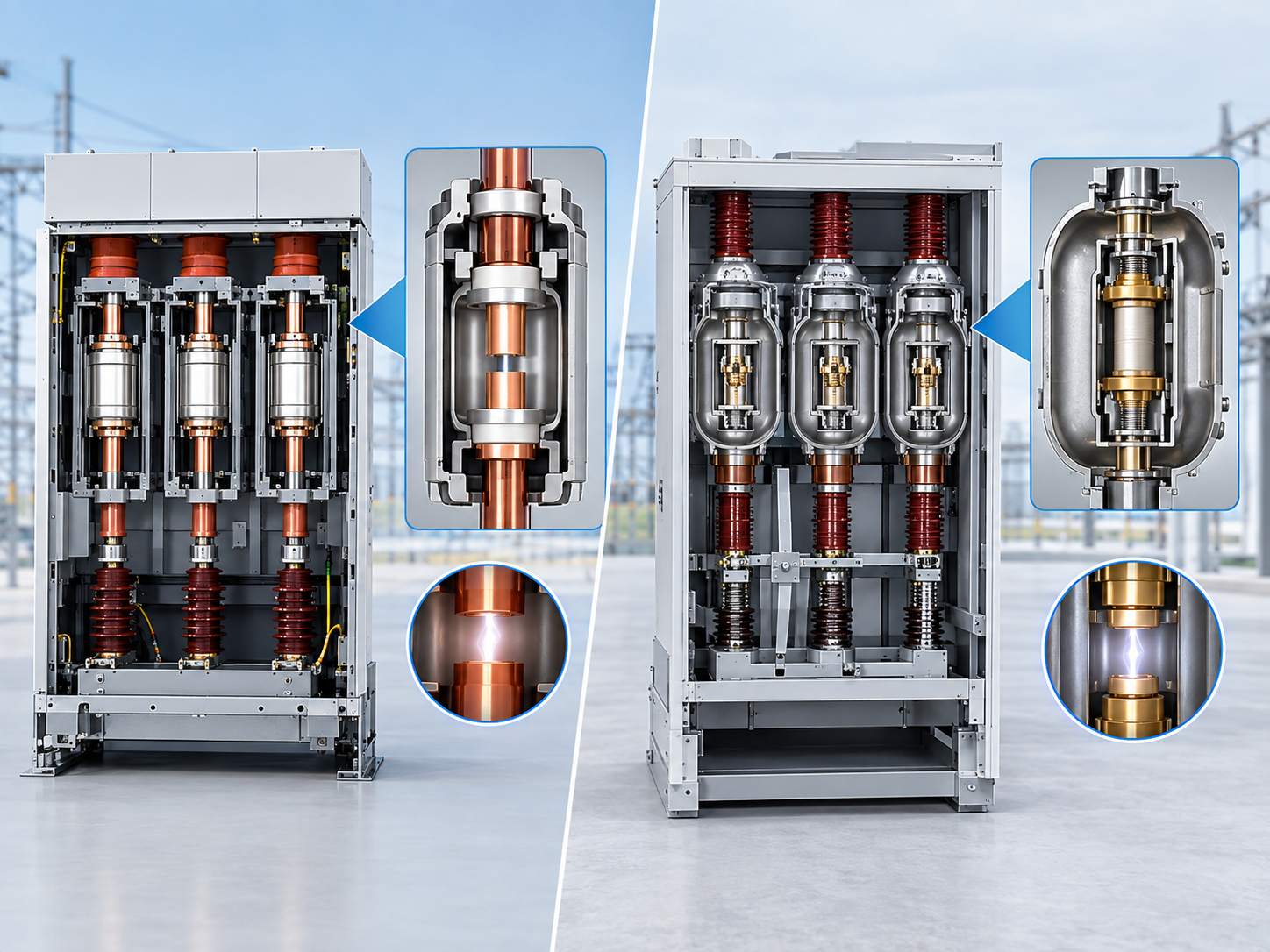
How to Select a Vacuum Circuit Breaker for Medium Voltage Switchgear
Suppose you need to purchase an 11kV medium voltage switchgear system.
If you simply tell a supplier, “I need an 11kV VCB,” that information is not enough.
The supplier needs additional electrical and project data to select the right medium voltage VCB for your switchgear.
Here are the key parameters you should provide.
1. Confirm the Rated Voltage
Rated voltage is one of the most basic selection parameters.
Different countries, utilities, and industrial systems use different medium voltage levels.
For projects in Australia and Southeast Asia, you may encounter 11kV, 22kV, and 33kV systems in different distribution and industrial applications.
However, do not select the voltage based only on the project location.
Always refer to the single-line diagram, utility requirements, and project specifications.
2. Confirm the Rated Current
Rated current defines how much continuous current the VCB can carry under specified operating conditions.
For example, if a transformer supplies downstream equipment through an MV switchgear lineup, you need to determine the expected operating current based on the transformer rating and actual load.
You should also consider future load growth.
If the project plans an expansion, account for the expected future capacity during the initial design stage.
There is another important point:
Do not evaluate the VCB rated current in isolation.
The busbar, CTs, cable compartment, connections, and other current-carrying components within the switchgear must also meet the required ratings.
3. Confirm the System Short-Circuit Current
Short-circuit current is one of the most important parameters when selecting a VCB.
During a fault, the current can become much higher than the normal operating current.
The VCB must therefore have sufficient short-circuit breaking capability for the system.
Common MV VCB breaking current ratings may include 16 kA,20 kA,25 kA,31.5 kA and 40 kA.
The appropriate rating depends on the product design and project requirements.
One important procurement principle is this:
A higher short-circuit breaking rating is not automatically better. The VCB should match the actual fault level of the system.
You should first perform a system short-circuit study and then select the appropriate circuit breaker rating.
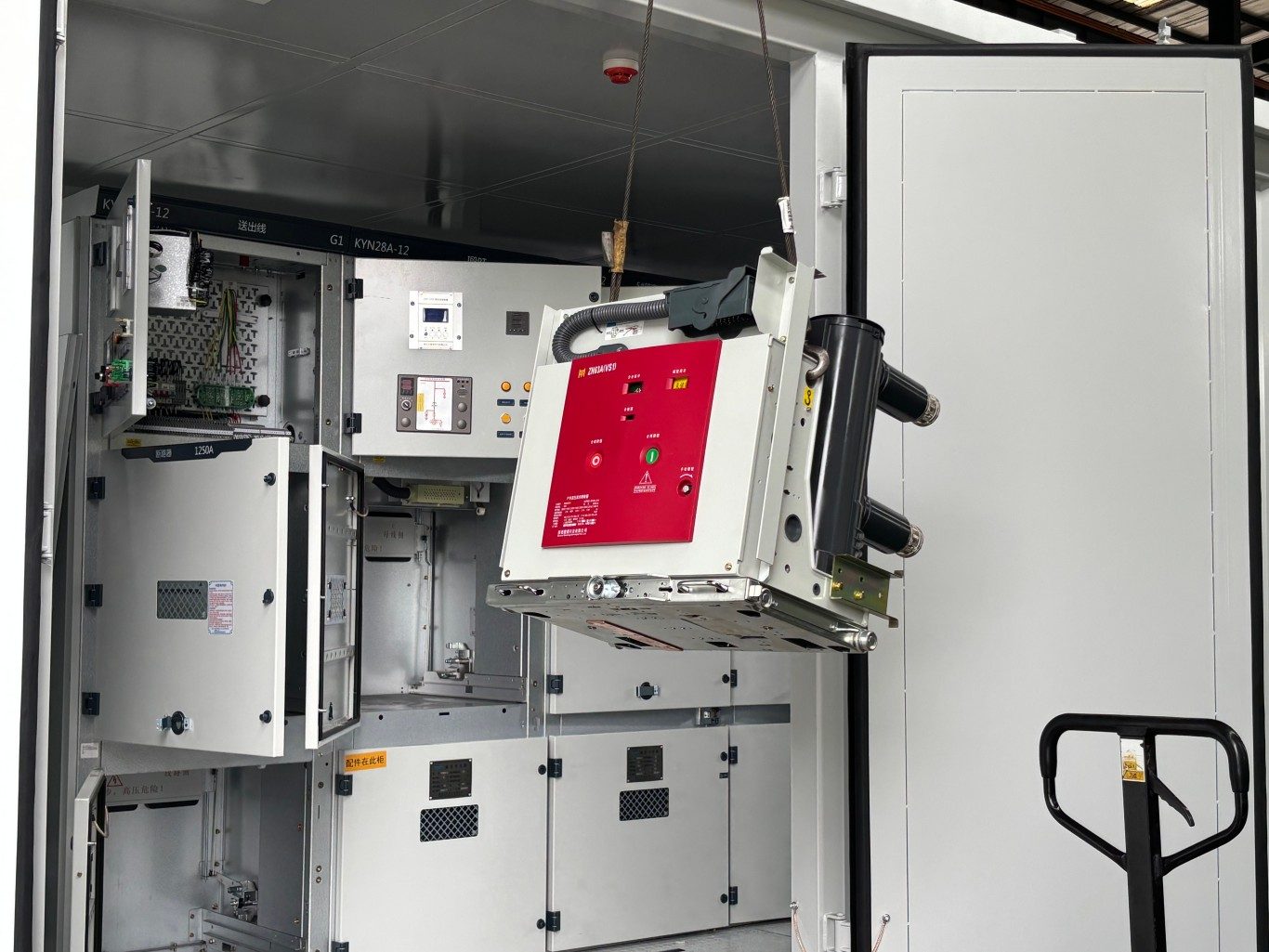
4. Do Not Overlook Short-Time Withstand and Making Capacity
Many first-time buyers ask only:
“How many kA can the breaker interrupt?”
That question matters, but it does not cover all the important short-circuit parameters.
For example:
Breaking capacity
Defines the fault current the circuit breaker can interrupt under specified conditions.
Short-time withstand current
Defines the current the equipment can withstand for a specified duration without unacceptable thermal or mechanical effects.
Making capacity
Defines the circuit breaker’s ability to close onto a fault under specified conditions.
You should review these parameters together when evaluating an MV vacuum circuit breaker.
5. Check Both Mechanical and Electrical Endurance
If you are comparing several VCB suppliers, include both mechanical and electrical endurance in your technical comparison sheet.
Ask suppliers to provide at least:
- Mechanical endurance
- Electrical endurance
- Rated operating sequence
- Short-circuit interruption capability
- Relevant test reports
This allows you to compare more than just the purchase price.
You can evaluate the actual technical performance and expected lifecycle value of each product.
6. Confirm the Protection Relay
Do not evaluate the VCB and protection relay as completely separate components.
The VCB executes the trip command, while the protection relay determines when the system should trip.
Depending on the project, the protection system may include:
- Overcurrent Protection
- Earth Fault Protection
- Undervoltage Protection
- Overvoltage Protection
- Motor Protection
- Transformer Protection
The required functions depend on the load and overall system design.
If you are purchasing a complete medium voltage switchgear with a vacuum circuit breaker, it is a good idea to confirm the compatibility between:
VCB + CT/PT + Protection Relay + Control System
This helps prevent interface problems during commissioning and operation.
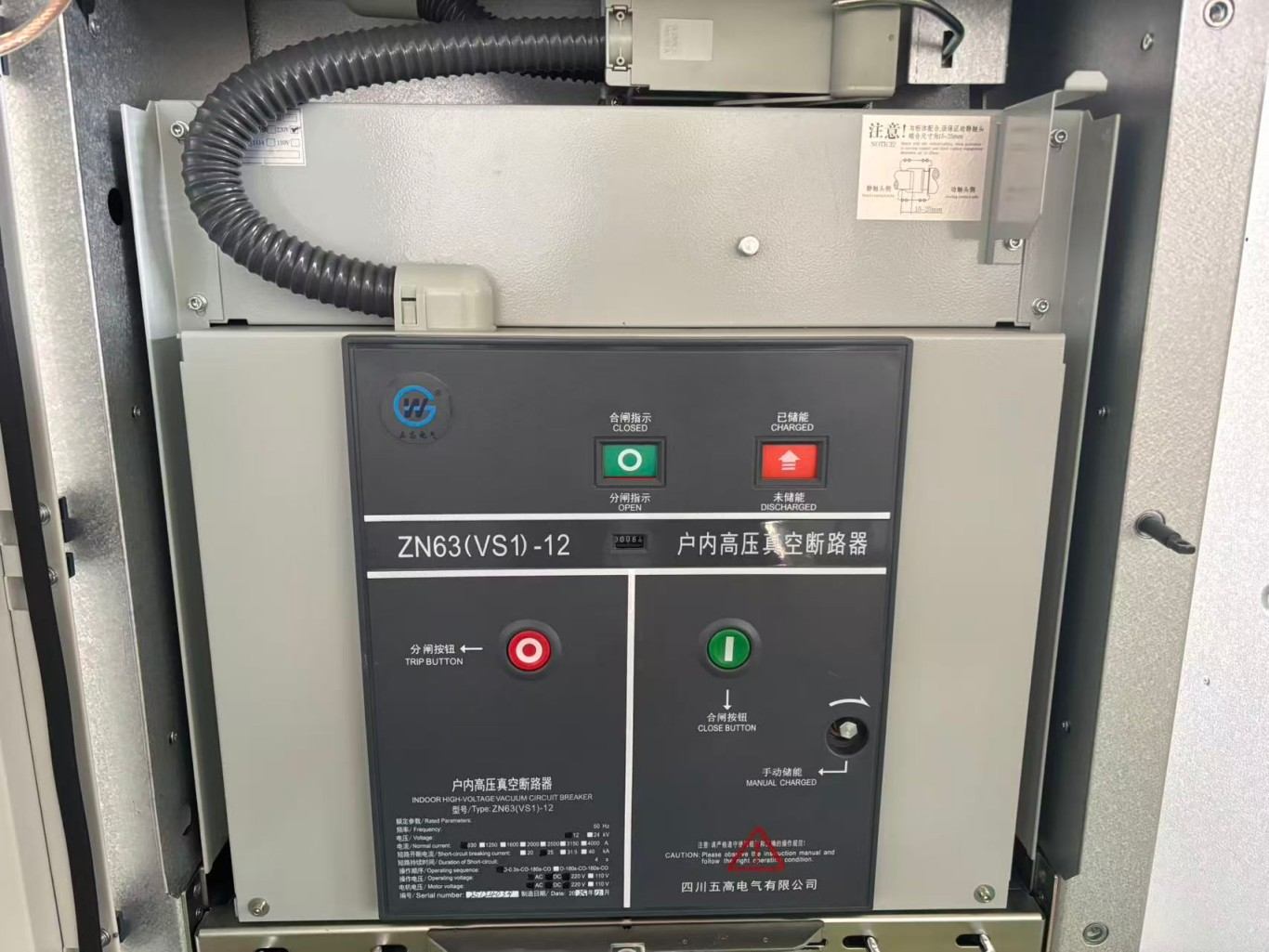
What Should You Consider When Using VCBs in Australia and Southeast Asia?
If your project is located in Australia or Southeast Asia, understanding the VCB technology alone is not enough.
You also need to consider local standards, utility requirements, and environmental conditions.
What Should Australian MV Projects Consider?
Australian medium voltage projects need to comply with the applicable Australian/New Zealand standards, utility requirements, and project-specific specifications.
Depending on the project, requirements may include:
- IEC standards
- AS/NZS standards
- Utility specifications
- Project-specific technical specifications
So, when an Australian customer sends you an RFQ, a more practical approach is to ask:
Which standard does the project require? Does the utility have a specific specification? Does the project require internal arc classification, type testing, or other certification?
The IEC 62271 series provides an important international framework for medium voltage switchgear and circuit breakers. For Australian projects, however, you should also confirm the applicable AS/NZS requirements and local utility specifications.
What Environmental Factors Matter in Southeast Asia?
Many Southeast Asian regions experience high temperatures, high humidity, and heavy rainfall.
Projects near coastal areas may also face salt spray and increased corrosion risk.
These environmental conditions can affect the long-term performance of MV switchgear.
For example, high humidity can cause condensation inside the enclosure, which may reduce insulation performance.
Therefore, for projects in tropical or coastal environments, you should evaluate the complete switchgear system rather than looking at the VCB alone.
Pay particular attention to:
- IP rating
- Anti-condensation heaters
- Temperature and humidity control
- Cable entry sealing
- Anti-corrosion coating
- Insulation level
- Creepage distance
If the project is near the coast, in a mining area, or in a heavily polluted industrial environment, confirm the applicable pollution and corrosion conditions.
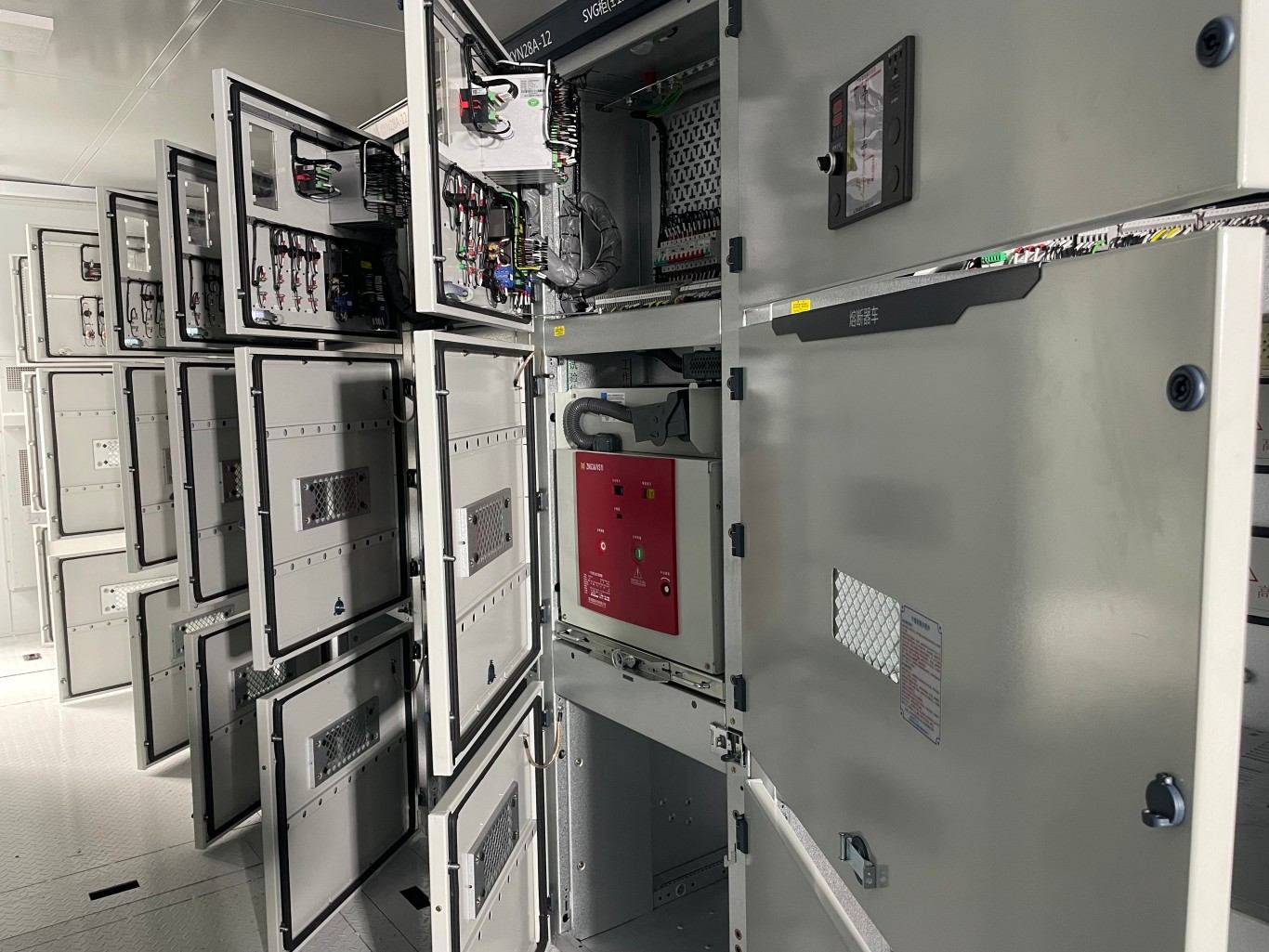
Where Are Vacuum Circuit Breakers Commonly Used?
VCBs have a wide range of applications.
You may find them in the following types of projects.
Industrial Plants
Industrial facilities often use medium voltage power to supply transformers, motors, and production equipment.
A VCB can serve as an incoming breaker, feeder breaker, transformer feeder, or motor breaker depending on the system design.
For this reason, a vacuum circuit breaker for industrial power distribution is a common solution for many industrial MV systems.
Solar Power Plants
In large solar projects, electricity from the PV system passes through inverters and step-up transformers before entering the medium voltage collection system.
A typical power path looks like this:
Solar PV → Inverter → Transformer → MV Switchgear → Grid
A VCB can provide switching and protection on the medium voltage side.
Data Centers
Data centers place strong demands on power availability and fault isolation.
Their MV switchgear therefore needs reliable protection, control, and switching capabilities.
VCBs can work together with protection relays, backup power systems, and automatic transfer systems as part of the overall electrical distribution architecture.
Utility Distribution
In utility distribution networks, VCBs can serve different circuits, including:
- Incoming feeders
- Outgoing feeders
- Transformer feeders
- Bus couplers
The exact configuration depends on the network architecture and protection philosophy.
Mining, Oil & Gas, and Water Treatment
These facilities often require continuous operation and may operate in environments with dust, humidity, corrosion, or complex industrial loads.
When selecting a VCB for these applications, consider electrical ratings and environmental conditions together.
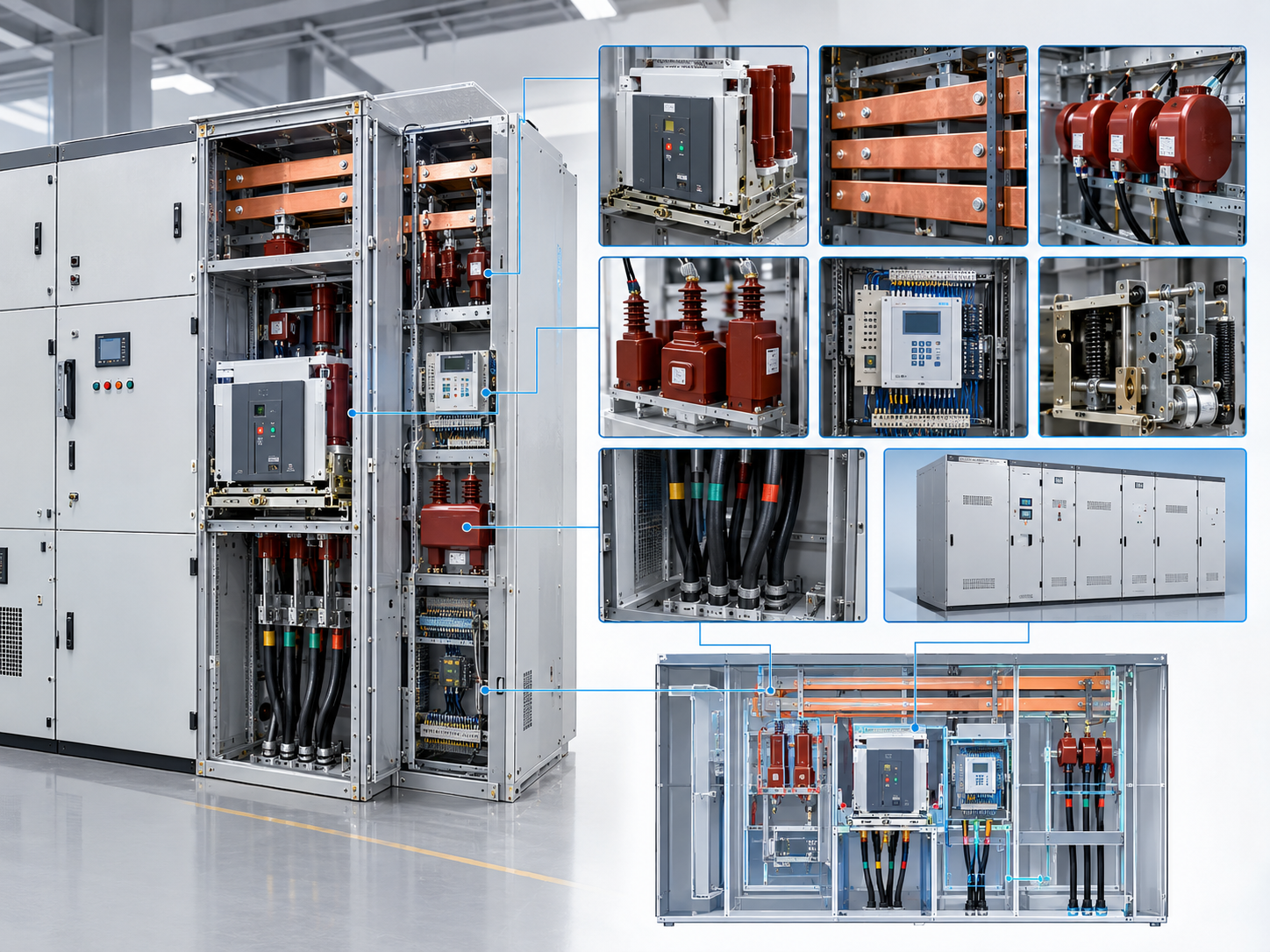
VCB Selection Checklist for EPC Contractors and Electrical Buyers
If you are preparing an RFQ for an MV project, collect the following information before contacting suppliers.
| Item | Information to Confirm |
|---|---|
| Rated Voltage | 11kV/22kV/33kV, etc. |
| Rated Current | A |
| Frequency | 50H /60Hz |
| Short-Circuit Breaking Current | kA |
| Short-Time Withstand Current | kA/s |
| Installation | Indoor / Outdoor |
| Load Type | Transformer / Motor / Feeder, etc |
| Protection | OC / EF / UV / OV, etc. |
| CT/PT | Ratio and Class |
| Circuit Breaker | VCB |
| Operating Mechanism | Manual / Motorized |
| Communication | Confirm according to project requirements |
| Internal Arc | Confirm according to project requirements |
| IP Rating | Confirm according to installation environment |
| Ambient Temperature | ℃ |
| Humidity | % |
| Altitude | m |
| Applicable Standards | IEC/AS/NZS/Utility Specification |
| Testing | FAT/Routine Test/Type Test, etc. |
Once you have this information ready, technical communication with suppliers becomes much easier.
It also gives you a more consistent basis for comparing different suppliers and their quotations.
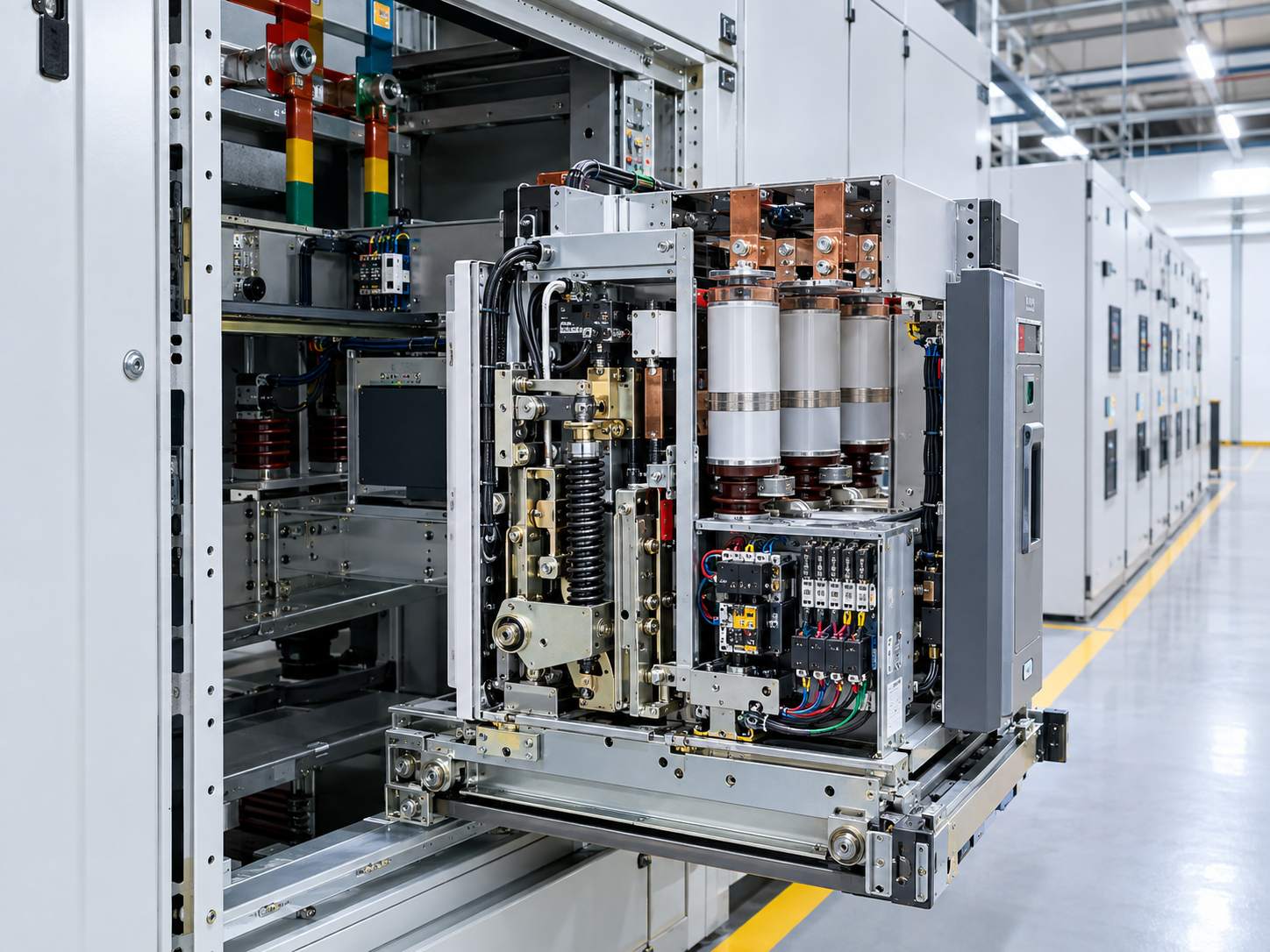
Frequently Asked Questions About Vacuum Circuit Breakers in Medium Voltage Switchgear
1. Why are vacuum circuit breakers widely used in medium voltage switchgear?
VCBs are widely used because they provide fast arc extinction, strong electrical and mechanical endurance, relatively low routine maintenance requirements, and do not use SF6 gas as the arc-quenching medium. These characteristics make them suitable for many medium voltage power distribution applications.
2. Is a VCB better than an SF6 circuit breaker?
Not necessarily. A VCB is not universally better than an SF6 circuit breaker; the right choice depends on the application.
You should consider system voltage, short-circuit level, load type, switching frequency, installation environment, applicable standards, and lifecycle cost before making the decision.
3. What voltage levels can vacuum circuit breakers handle?
Vacuum circuit breakers are widely used in medium voltage systems, including applications at 6.6kV, 11kV, 22kV, and 33kV.
The actual rated voltage depends on the specific VCB design, system requirements, and applicable standards.
For example, a vacuum circuit breaker for 11kV, vacuum circuit breaker for 22kV, or vacuum circuit breaker for 33kV should always match the project’s electrical specifications rather than rely on the voltage label alone.
4. How often does a VCB need maintenance?
A VCB generally requires less routine maintenance than many conventional gas-based circuit breaker arrangements, but it is not maintenance-free.
The sealed vacuum interrupter does not require SF6 gas replenishment, while the operating mechanism, control circuits, interlocks, and protection system still require periodic inspection and testing.
Always follow the manufacturer’s maintenance instructions and adjust the schedule according to operating conditions.
5. How do I choose a VCB for an 11kV or 22kV system?
Start with seven key parameters: rated voltage, rated current, short-circuit breaking current, short-time withstand capability, electrical and mechanical endurance, protection system, and installation environment.
For an 11kV or 22kV vacuum circuit breaker, you should also confirm local standards, utility requirements, load characteristics, and environmental conditions.
Conclusion: Does Your Medium Voltage Switchgear Need a VCB?
If your project needs reliable medium voltage fault interruption, relatively low routine maintenance, and an arc-quenching technology that does not rely on SF6 gas, a vacuum circuit breaker is worth serious consideration.
However, choosing a VCB is not simply about deciding whether vacuum technology is “good.”
The real question is whether the VCB matches your electrical system and project requirements.
Start by confirming the system voltage, rated current, and short-circuit level.
Then evaluate the load type, switching frequency, installation environment, protection system, applicable standards, and lifecycle requirements.
If you are purchasing medium voltage switchgear with vacuum circuit breaker, provide your supplier with the voltage level, rated current, short-circuit level, installation method, environmental conditions, and applicable standards.
With these basic details, the supplier can recommend a suitable VCB, switchgear configuration, and protection arrangement more accurately.
At Wondon, we provide medium voltage switchgear and electrical solutions for industrial, commercial, renewable energy, infrastructure, and other power distribution projects.
If you are looking for a medium voltage switchgear with a vacuum circuit breaker, send us your project requirements. Our technical team can help you evaluate the appropriate VCB ratings, switchgear configuration, protection system, and project-specific requirements.