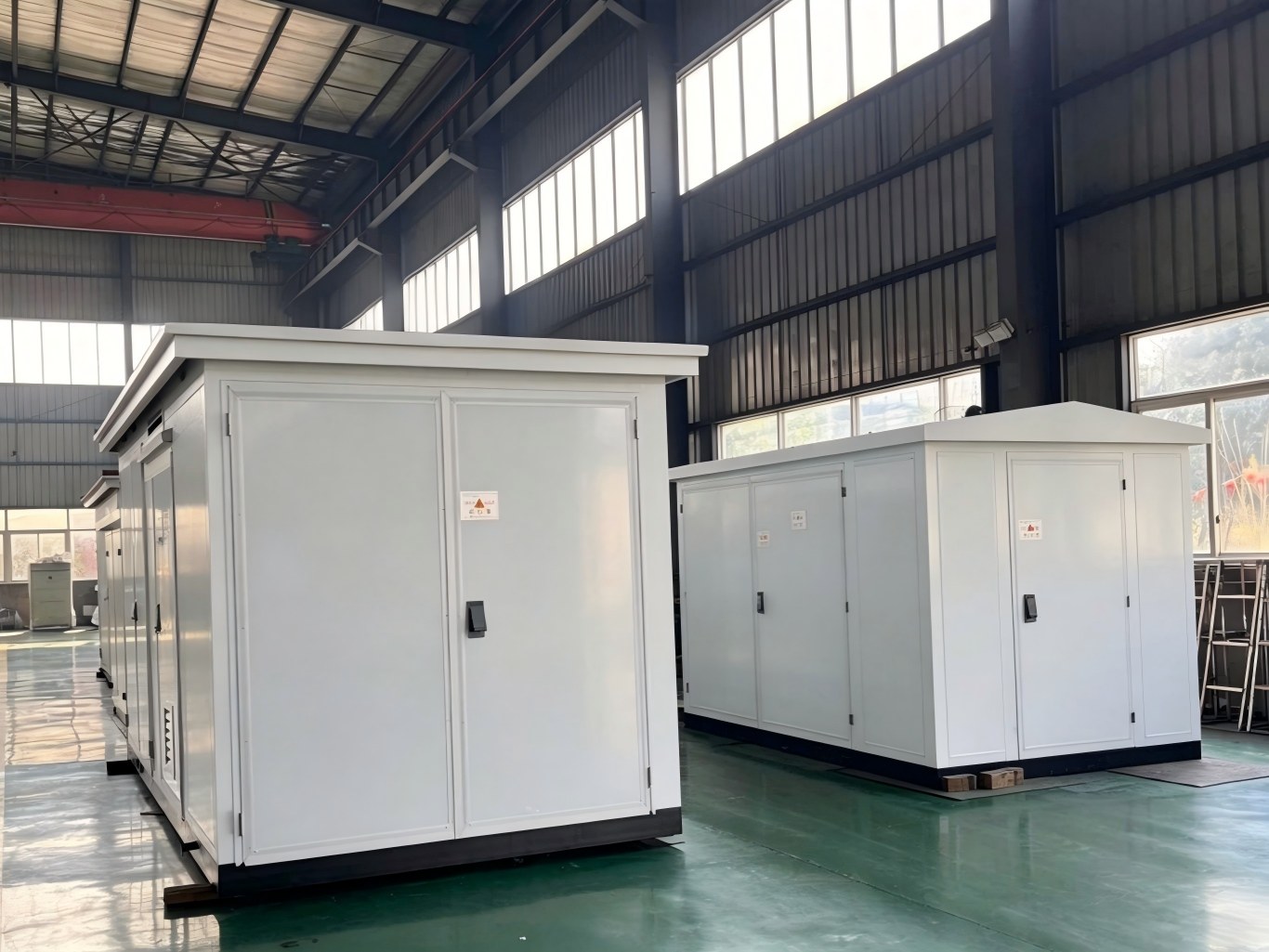

A substation can be thought of as a “transfer station” or “control point” in the power system. It is essentially a compact, integrated power distribution unit that combines the medium‑voltage switchgear room, transformer room, and low‑voltage switchgear room into one enclosed structure, receiving, controlling, and transmitting electricity to move power from one part of the grid to another.
In a typical power system, a power plant generates electricity, which is then transmitted over long distances through transmission lines. But before the electricity can be delivered to homes, buildings, or factories, it must first pass through a substation. Inside the substation, the power is directed to the appropriate circuits so that it can continue safely through the grid.
FAQs About a Substation
1. In a power system, where exactly does a substation sit in the electricity flow?
It sits between transmission lines and end users, acting as a transfer point. Wondon helps position substations correctly so power moves safely from the grid to the load.
2. Why can’t electricity go directly from power plants to factories or buildings?
Because voltage must be adjusted and controlled for safe end-use. Wondon designs substation solutions that ensure proper voltage transformation and distribution.
3. What makes a substation more than just a single piece of equipment?
It is an integrated system combining switchgear, transformers, and control rooms. Wondon delivers integrated substation systems tailored to your project structure.
4. How does a substation help improve power stability in real projects?
It controls, redirects, and distributes electricity to different circuits safely. Wondon ensures stable operation through well-coordinated system design and protection.
5. If I’m planning a project, when should I consider using a substation?
When your system needs medium-to-large-scale power distribution and control. Wondon evaluates your project requirements to recommend the right substation configuration.