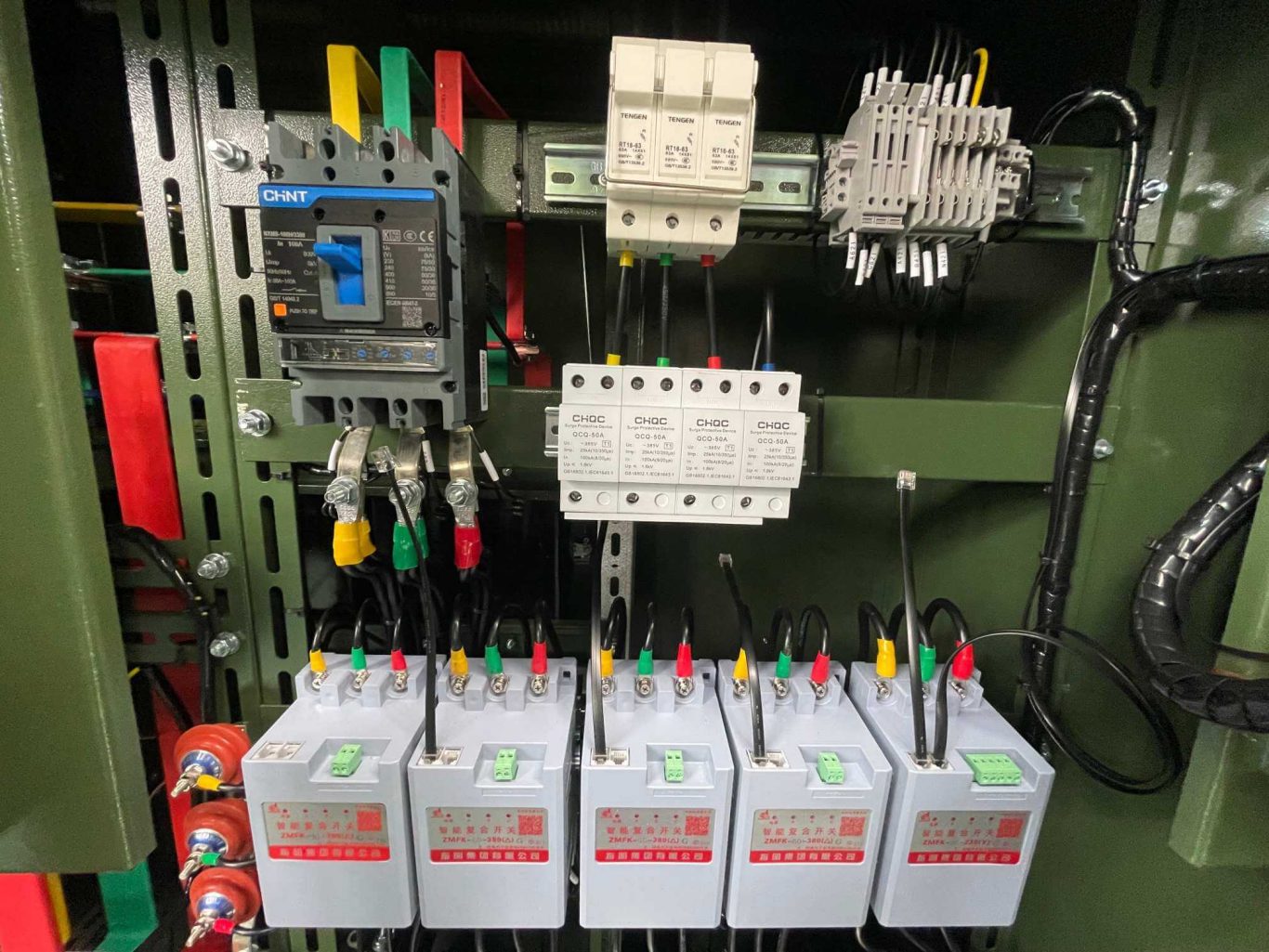

A power distribution panel is a type of electrical equipment used to receive, distribute, and control electrical energy, as well as to protect the safe operation of the electrical system. It is responsible for delivering electrical energy from the power source to various electrical devices, and is a key link in ensuring a safe and stable power supply.
After electrical energy is output from a generator or transformer, it needs to be reasonably distributed by a power distribution panel so that it can be sent to different power consumption areas or devices. Inside a power distribution panel, switches, protection devices, and connectors are installed to control the current, allowing electrical energy to flow to each load along the designated path.
Main functions:
1. Power distribution
Split one incoming electrical path into multiple paths, sending them to different electrical circuits to meet the power needs of various devices.
2. Circuit control
Turn the power on or off as needed, making system operation more flexible.
3. System protection
When an overload, short circuit, or other abnormality occurs in the circuit, the internal protection device will quickly cut off the power to prevent equipment damage or safety accidents.
4. Management and organization
Install various electrical components in a reasonably structured device, making the power distribution system clear and orderly, and convenient for daily inspection, maintenance, and fault handling.
FAQs
1. When power comes from a generator or transformer, what is the first thing the system actually does with it?
It first enters the power distribution panel, where it is received and organized before being sent out. Wondon designs this process to ensure incoming power is safely handled and properly directed to different circuits.
2. If I have multiple areas or machines running, how does one panel manage all of them at the same time?
It splits one incoming power path into multiple output circuits. Wondon structures each branch so that different devices or areas can receive power independently and in a controlled way.
3. In real operation, how do I actually control whether a device is powered on or off?
Through built-in switching devices inside the panel. Wondon integrates circuit control so you can start or stop specific loads without affecting the rest of the system.
4. If something abnormal happens, like an overload or short circuit, what should I expect the panel to do?
It will automatically disconnect the affected circuit. Wondon designs protection functions to quickly isolate faults and protect both equipment and system safety.
5. When I need to check or fix something later, what makes maintenance easier or harder?
The internal structure. Wondon arranges components in a clear and organized layout so you can quickly locate circuits, reducing downtime during inspection or repair.