

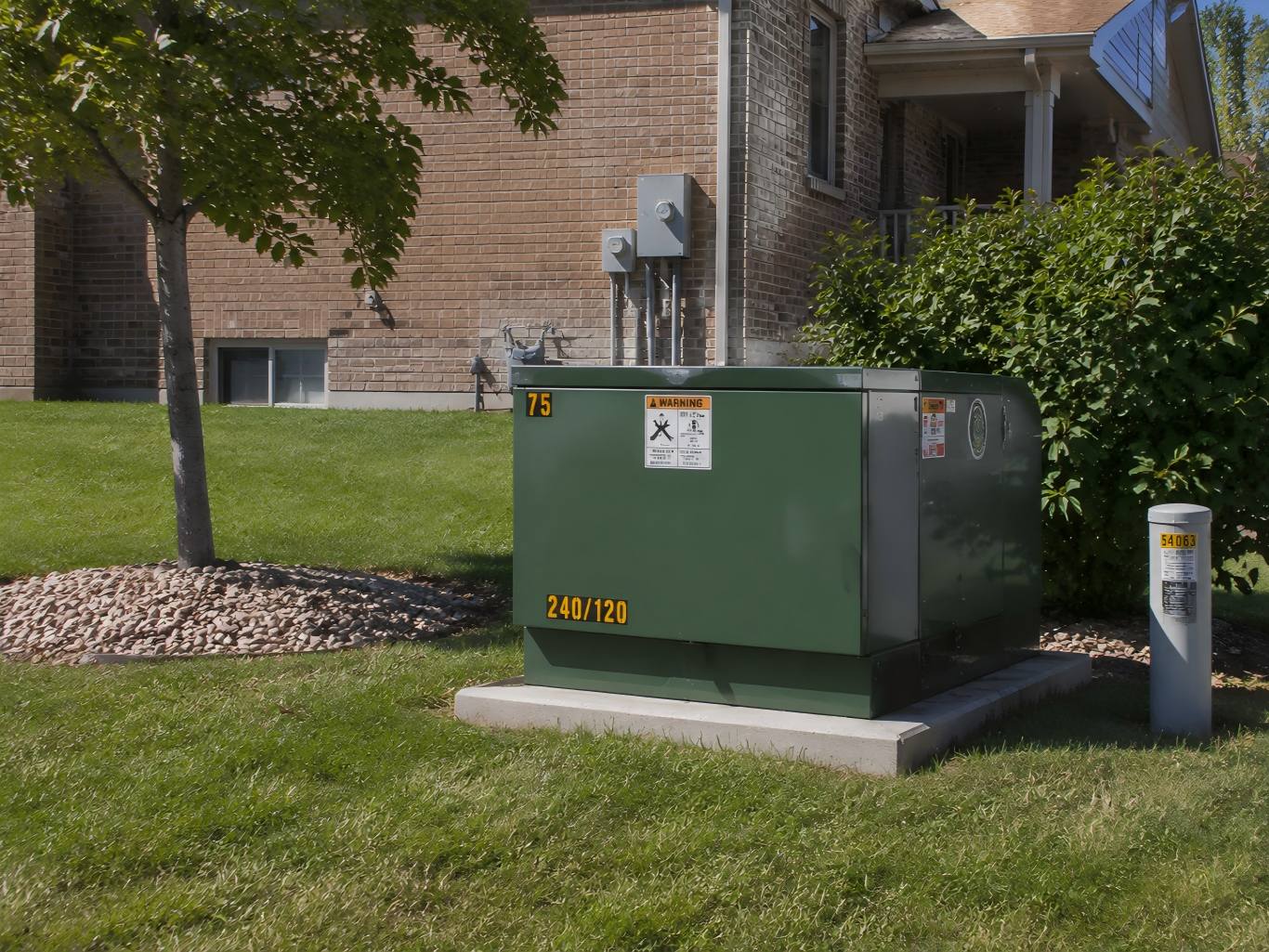
In North American residential areas, commercial zones, and suburban distribution networks—especially at the end of the power distribution system—you may often notice green, sealed electrical boxes with safety warning labels. These units are commonly single-phase pad-mounted transformers.
For power engineers and project procurement teams, this type of equipment is not particularly complex to understand. However, its selection logic, application boundaries, and system positioning can significantly impact the overall cost efficiency and stability of a distribution network. Therefore, a comprehensive understanding of single-phase pad-mounted transformers is essential for making informed project decisions.
Basic Definition of Single-Phase Pad-Mounted Transformers
A single-phase pad-mounted transformer is a ground-mounted distribution transformer widely used in North America, particularly in residential communities and light commercial areas.
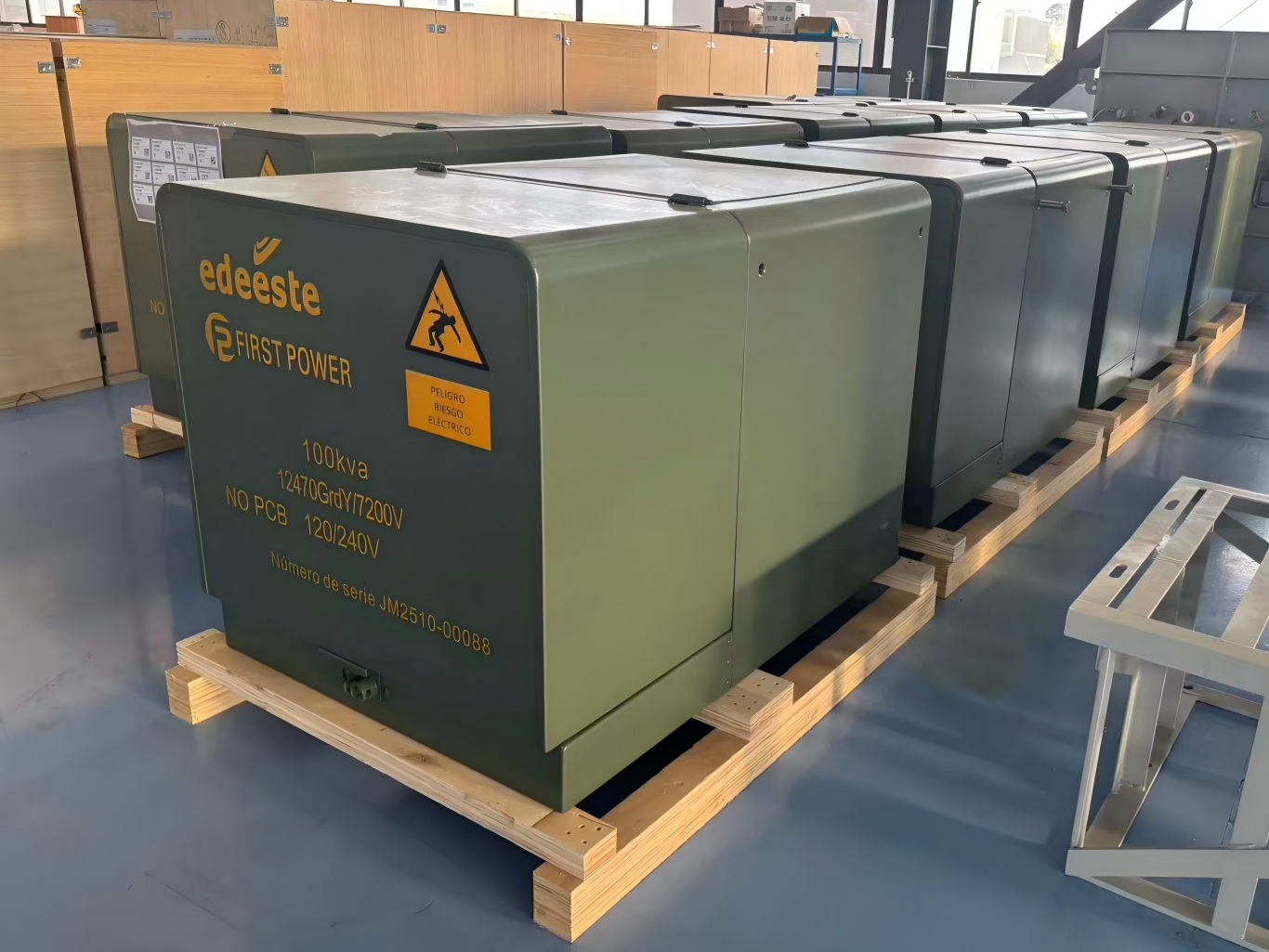
Visually, it appears as a green metal enclosure. Structurally, it typically features:
- Single-phase power configuration
- Fully sealed oil-immersed design
- Pad-mounted structure
- Outdoor protective enclosure
These equipment are most commonly deployed in urban distribution terminals and residential feeder systems, with a relatively standardized design across the industry.
Key Technical Features
In practical engineering applications, common standard configurations include:
- Primary voltage: 480V (with compatibility for higher medium-voltage inputs in some systems)
- Secondary voltage: 240/120V dual-winding (typical residential power supply configuration)
- Core material: Cold-rolled silicon steel laminations
- Insulation medium: Mineral oil
- Temperature rise: 65°C
- Enclosure: NEMA Type 3R (suitable for outdoor and certain indoor environments)
These parameters determine the adaptability of single-phase pad-mounted transformers within North American distribution networks, especially in residential power systems.
System Position of Single-Phase Pad-Mounted Transformers in Power Networks
Single-phase pad-mounted transformers are typically installed at the terminal end of North American distribution systems. They generally cover capacities from 15kVA to 167kVA, support primary voltages from 12kV to 34.5kV, and provide secondary outputs ranging from 120V to 600V.
The system role can be simplified as:
Medium-voltage distribution line → single-phase pad-mounted transformer → low-voltage end users
Working Principle of Single-Phase Pad-Mounted Transformers
Working Mechanism
The core function of a single-phase pad-mounted transformer is voltage conversion. Through electromagnetic induction, it steps down medium-voltage input (for example, 2400V or higher) into low-voltage output such as 240V/120V, which is then supplied to residential homes and commercial facilities.
Application Position in Power Systems
Single-phase pad-mounted transformers are mainly used at distribution network endpoints, with capacities ranging from 15kVA to 167kVA. They support primary voltage levels between 12kV and 34.5kV, while delivering low-voltage outputs from 120V to 600V.
Typical application scenarios include:
- Residential communities: stepping down grid voltage to supply household loads such as air conditioners, refrigerators, and lighting systems
- Small commercial buildings: powering lighting and equipment in convenience stores, cafés, and similar facilities
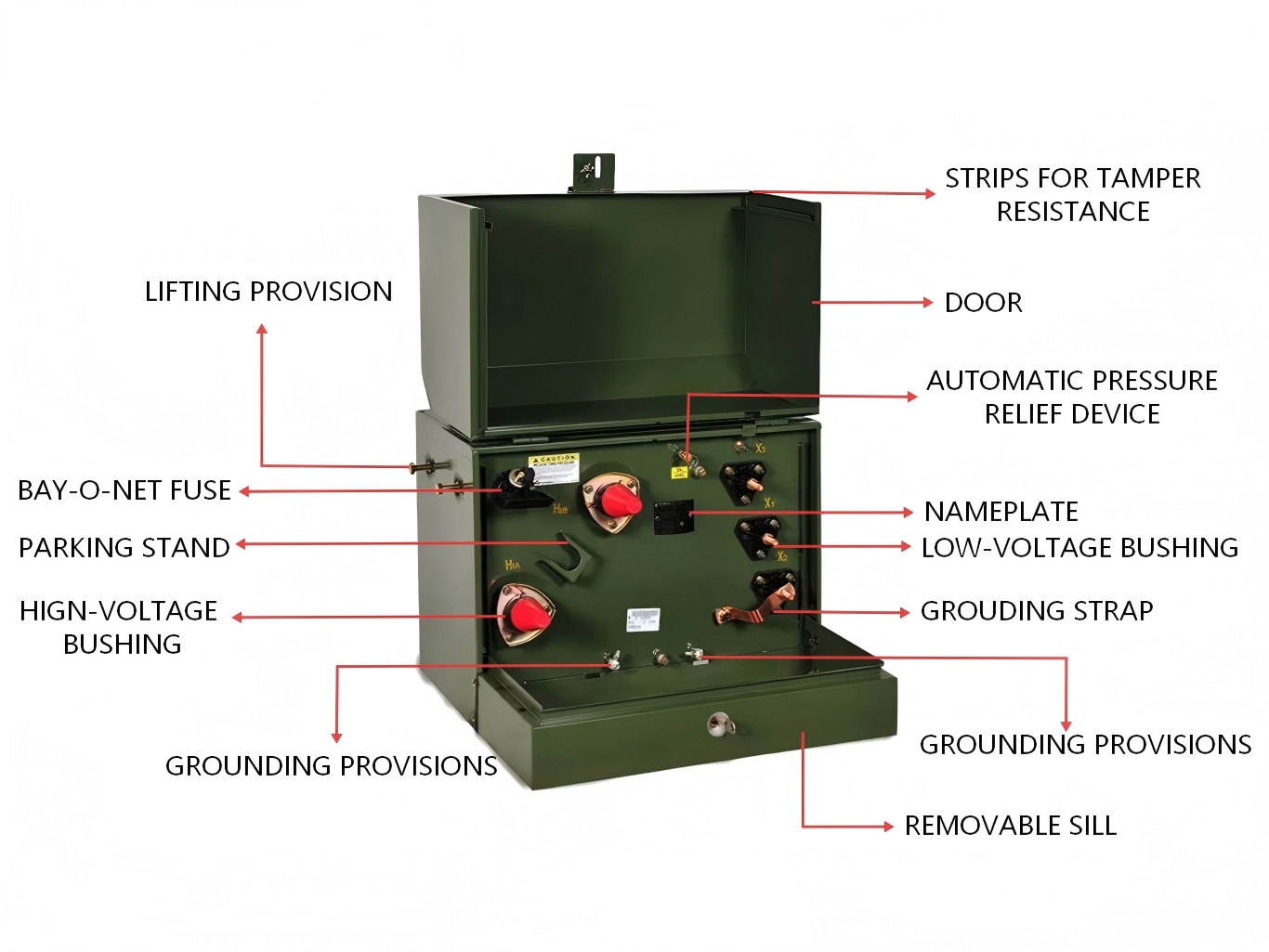
Internal Structure of Single-Phase Pad-Mounted Transformers
1. Core Electromagnetic System
- Core structure: Cold-rolled silicon steel laminations
- Winding system: Responsible for voltage transformation
2. High- and Low-Voltage Connection System
- High-voltage bushings
- Low-voltage output terminals
3. Insulation and Cooling System
- Insulation medium: Mineral oil
- Temperature control: Typical temperature rise around 65℃
- Cooling method: Natural oil circulation (ONAN mode commonly used)
4. Enclosure and Protection System
- NEMA Type 3R protection rating
- Rainproof, dustproof, and anti-contact design
- Ground-mounted sealed enclosure
Technical Parameters and Design Constraints
From an engineering selection perspective, key parameter ranges include:
Voltage Range
- Primary side: 2.4kV – 19.92kV
- Secondary side: 120V – 600V
Capacity Range
Typical range: 15kVA – 167kVA
System Limitations
- Single-phase configuration, not suitable for balanced three-phase loads
- More suitable for distributed low-load networks
- Not designed for a heavy industrial continuous-load system
Safety Standards and Compliance Requirements
Safety Standards
In North American and international distribution projects, single-phase pad-mounted transformers typically comply with:
- IEEE distribution transformer standards
- ANSI electrical equipment requirements
- NEMA enclosure protection standards
Key Safety Design Considerations
- Anti-contact structural design
- Physical separation of high- and low-voltage compartments
- Reliable grounding system integrity
- Strong adaptability to outdoor environments
Key Advantages
- Well-suited for residential distributed power systems
- Reduces the complexity of distribution networks
- Supports underground cable distribution systems
- Provides stable performance in low-load electrical applications
Single-Phase vs Three-Phase Pad-Mounted Transformers
The differences between single-phase and three-phase pad-mounted transformers can be better understood through the following comparison table.
| Comparison Item | Single-Phase Pad-Mounted Transformer | Three-Phase Pad-Mounted Transformer |
|---|---|---|
| System Structure | Single-phase power supply | Three-phase balanced power supply |
| Primary Voltage Range | 2.4 kV-19.92 kV | 2.4 kV-46 kV |
| Secondary Voltage Range | 120 V-600 V | 208Y/120 V-14.4 kV |
| Power Capacity Range | 15-167 kVA | 45-12,000 kVA |
| Cooling Method | ONAN | ONAN / KNAN |
| System Complexity | Low | High |
| Installation Cost | Low | Relatively high |
| Maintenance Difficulty | Simple | More complex |
| Operating Stability | High (small-scale systems) | High (large-scale systems) |
| Scalability | Limited | Strong |
| Key Advantages | Low cost, fast deployment | High capacity, industrial adaptability |
| Typical Applications | Residential, small commercial buildings, end-user distribution | Industrial plants, data centers, utility grid nodes, renewable energy projects |
Application Scenarios of Single-Phase Pad-Mounted Transformers
Residential Distribution Systems
In residential distribution systems, power networks typically feature distributed loads and long-distance end-user supply. In this context, single-phase pad-mounted transformers offer a flexible way to match household electricity demand while reducing the complexity of three-phase load balancing.
Rural and Suburban Power Grids
In rural and suburban networks, single-phase pad-mounted transformers mainly function as node-based step-down units. They reduce medium-voltage lines step by step to usable end-user voltage levels, supporting extended distribution coverage in low-density areas.
Light Commercial Load Areas
In light commercial applications, single-phase pad-mounted transformers often serve as regional distribution nodes. They connect multiple buildings or small-scale load units, such as:
- Small shopping centers
- Office support facilities
- Public service infrastructure
Distributed Energy Nodes
This is one of the fastest-growing application areas in recent years. In distributed generation systems such as small-scale photovoltaic or energy storage projects, single-phase pad-mounted transformers act as grid interface units, integrating low-voltage generation systems into the distribution network.
Installation and Maintenance
Installation Methods
Common installation approaches include:
- Pad-mounted installation on concrete foundations
- Direct underground cable connections
- Outdoor enclosed placement
These methods help ensure stable operation in outdoor distribution environments.
Maintenance Characteristics
Maintenance for single-phase pad-mounted transformers typically includes:
- Periodic inspection and routine checks
- Fault handling through unit replacement or modular servicing
- Low dependence on complex maintenance systems
How to Select Single-Phase Pad-Mounted Transformers
1. Load Structure Matching
Confirm whether the system is based on a single-phase distributed load configuration, as this directly determines suitability.
2. Installation Environment
Evaluate whether the transformer will be used in:
- Outdoor environments
- Underground cable distribution systems
3. Voltage Level Matching
Ensure that both primary and secondary voltage levels align with the overall system design requirements.
4. Capacity Requirements
Select transformer capacity based on total connected load demand, ensuring sufficient margin for stable operation.
5. Parameter Selection
Wondon single-phase pad-mounted transformer specification parameters
| Rated Capacity(kVA) | Rated Voltage and Tapping Range | Efficiency | ||
| HV | LV | DOE(2016) | CSA(2023) | |
| 15 | 34.5kV/19.92kV 13.8kV/7.9kV 13.2kV/7.6kV 12.47kV/7.2kV or others |
120-240V 240-480V 347V 600V or others |
98.82 | 99.73 |
| 25 | 98.95 | 98.87 | ||
| 37.5 | 99.05 | 98.97 | ||
| 50 | 99.11 | 99.04 | ||
| 75 | 99.19 | 99.13 | ||
| 100 | 99.25 | 99.19 | ||
| 167 | 99.33 | 99.28 | ||
6. Compliance and Standards
Complies with local utility requirements and relevant international standards.
FAQs
1. What is a single-phase pad-mounted transformer used for?
It is mainly used to step down medium voltage to low voltage for residential, rural, and light commercial distribution systems.
2. Where are single-phase pad-mounted transformers typically installed?
They are installed at the end of distribution networks in residential areas, suburban grids, and small commercial zones.
3. What is the voltage range of single-phase pad-mounted transformers?
Primary voltage ranges from 2.4kV to 19.92kV, and secondary output ranges from 120V to 600V.
4. Can single-phase pad-mounted transformers be used for industrial loads?
No. They are not suitable for heavy industrial or three-phase balanced load systems.
5. What standards do single-phase pad-mounted transformers follow?
They typically comply with IEEE, ANSI, and NEMA standards for safety and performance.
Conclusion
From an engineering perspective, the value of single-phase pad-mounted transformers is not defined by any single performance metric. Instead, it depends on how well the equipment aligns with the load structure of the distribution system, the installation environment, and the overall grid design logic.
In residential distribution networks, end-of-line grid extensions, and distributed energy integration scenarios, single-phase pad-mounted transformers often provide a more economical and structurally simplified solution. However, when the application involves three-phase industrial loads or high-capacity grid nodes, engineers must adopt a completely different system design approach.
If you are currently working on project selection or technical solution evaluation, you can contact us directly. With 15 years of experience in electrical engineering projects, Wondon provides reliable, one-stop solutions for pad-mounted transformer applications.