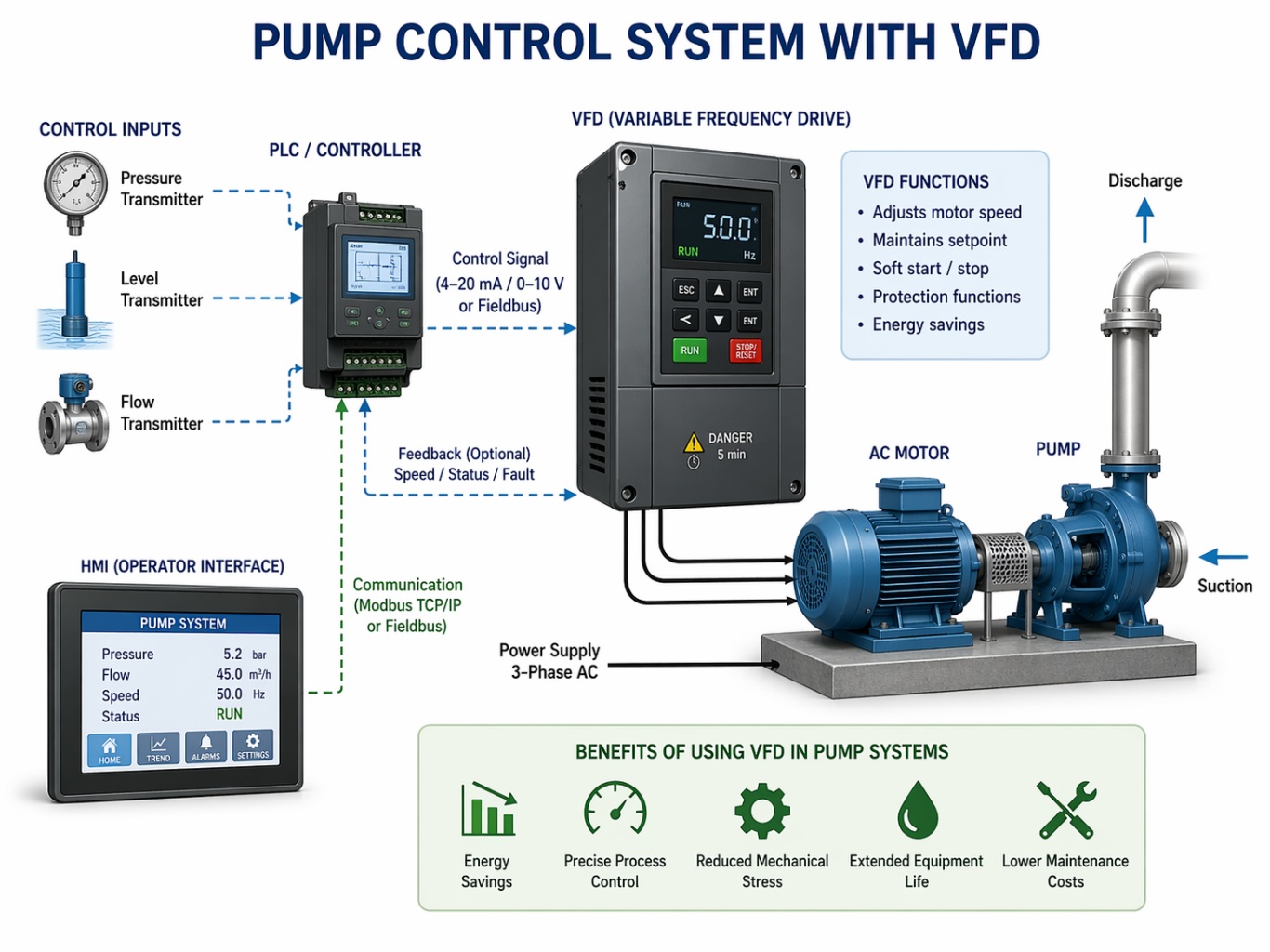

Nowadays, many modern water treatment plants have adopted variable frequency drives (VFDs), which change the way pumps operate, making daily operation more flexible and stable.
1. How Does VFD Improve Pump Operation?
The core function of a VFD is to control the rotational speed of the pump motor. The pump can adjust its speed according to actual needs – spinning faster when there is more water, and slower when there is less water.
The influent flow rate of a wastewater plant varies significantly throughout the day. The VFD allows the pump to continuously follow the demand, thereby maintaining stability at all times.
2. Common Applications of VFDs in Pump Systems
•Influent pump station
•Transfer pump system
•Aeration pump system
3. Operational Advantages
The pump operates more smoothly; the motor and pipelines are less likely to be damaged by sudden starts and stops or abrupt surges, making the equipment more durable. At the same time, the pump speed follows the actual water flow, so the treatment process is more stable, with less risk of flow interruption or disruption. Moreover, operators can flexibly adjust at any time based on seasonal changes or sudden increases in water volume – it is worry‑free and reliable.
VFDs have become an indispensable part of pump control in modern wastewater plants. They help the plant achieve stable flow, reliable equipment, and flexible operation. Drawing on extensive experience in manufacturing reliable electrical equipment, Wondon supports pump system performance with reliable products specifically designed for stable industrial operation.
FAQs
1. Why do wastewater plants use VFDs for pump control?
Wastewater flow changes throughout the day. VFDs allow pumps to automatically adjust motor speed based on actual demand, helping maintain stable system operation.
2. Can VFDs reduce damage to pumps and pipelines?
Yes. VFDs enable soft starting and smooth speed adjustment, reducing sudden pressure surges and mechanical stress on motors, pumps, and pipelines.
3. Are VFDs suitable for plants with fluctuating water volumes?
Yes. VFDs are especially useful in facilities where seasonal changes or peak-hour flow variations require flexible pump operation and continuous process stability.
4. What types of pump systems commonly use VFDs?
VFDs are commonly installed in influent pump stations, transfer pump systems, and aeration-related pumping applications within wastewater treatment plants.
5. How does Wondon support industrial pump control projects?
As an electrical equipment integration manufacturer, Wondon provides reliable VFD-related electrical solutions, control systems, and equipment integration support for stable long-term industrial operation.