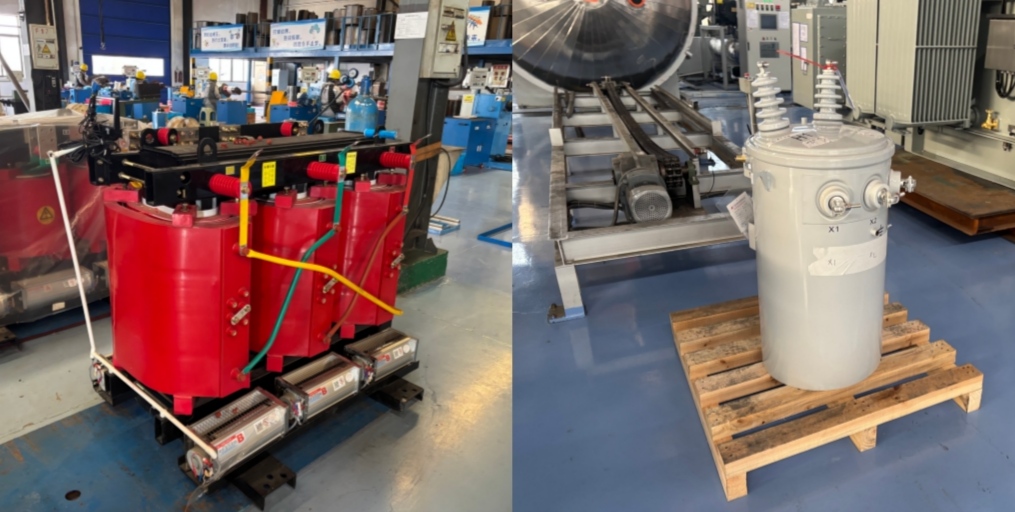

The main differences between three-phase transformers and single-phase transformers are in power capacity, applicable scenarios, efficiency, installation requirements, and power supply characteristics. Understanding these differences helps determine which type of transformer is more suitable for specific project needs.
1. Power capacity and applicable scenarios
Three-phase transformers can handle larger electrical loads, making them suitable for places that require large‑scale power distribution, such as industrial plants, manufacturing workshops, and large commercial buildings.
Single-phase transformers are suitable for situations with smaller power demands, such as residential homes, small shops, and light equipment.
2. Efficiency and operating performance
Three-phase transformers are more efficient when handling large loads and are more stable for long‑term continuous operation.
Single-phase transformers perform well under low to medium loads, making them suitable for small systems with low energy demands.
3. Installation and space requirements
Due to their larger capacity, three-phase transformers usually need to be installed in a dedicated electrical room or prefabricated substation. During the project planning stage, sufficient space should be reserved, and integration with the overall layout of the containerized substation should be considered.
Single-phase transformers are small in size and simple to install, making them more suitable for spaces with limited room.
4. Power supply characteristics
Three-phase transformers provide more stable and balanced power, making them suitable for running multiple heavy‑load devices at the same time.
Single-phase transformers are mostly used in lighting systems, small equipment, and other situations with relatively simple power requirements.
5. Cost
Three-phase transformers have a higher initial investment; after all, they have larger capacity and a wider application range.
Single-phase transformers have a lower initial cost, making them more cost‑effective for small‑scale installations.
FAQs
1. In a real project, what’s the difference between three-phase and single-phase transformers?
Single-phase is for smaller or simpler loads, while three-phase supports higher power demand. Wondon helps you match the right type based on your project design.
2. How do I know which one my project actually needs?
It depends on your load size, equipment type, and power distribution structure. Wondon analyzes your system and recommends the correct configuration.
3. Can I mix single-phase and three-phase in one project?
Yes, in many industrial systems. Wondon designs integrated solutions to ensure both work smoothly within the same power network.
4. What happens if I choose the wrong phase type?
It can lead to inefficiency, overload issues, or unstable operation. Wondon helps prevent this through proper system-level planning.
5. If I’m not sure yet, can Wondon help design the whole system?
Yes. Wondon supports you from project analysis to final configuration, making sure the transformer setup fits your actual power needs.