

Metal enclosed switchgear handles medium-voltage distribution. A grounded metal enclosure holds the switching, protection, control, and metering gear. You’ll see it in utilities, plants, commercial buildings, substations, and renewables.
But picking one isn’t just picking a metal box. Voltage, load current, fault level, protection scheme, the site itself, service continuity, and future expansion all shape the final design.
This guide covers the main types, where they actually fit, which ratings matter, and how to land on the right configuration for a project.
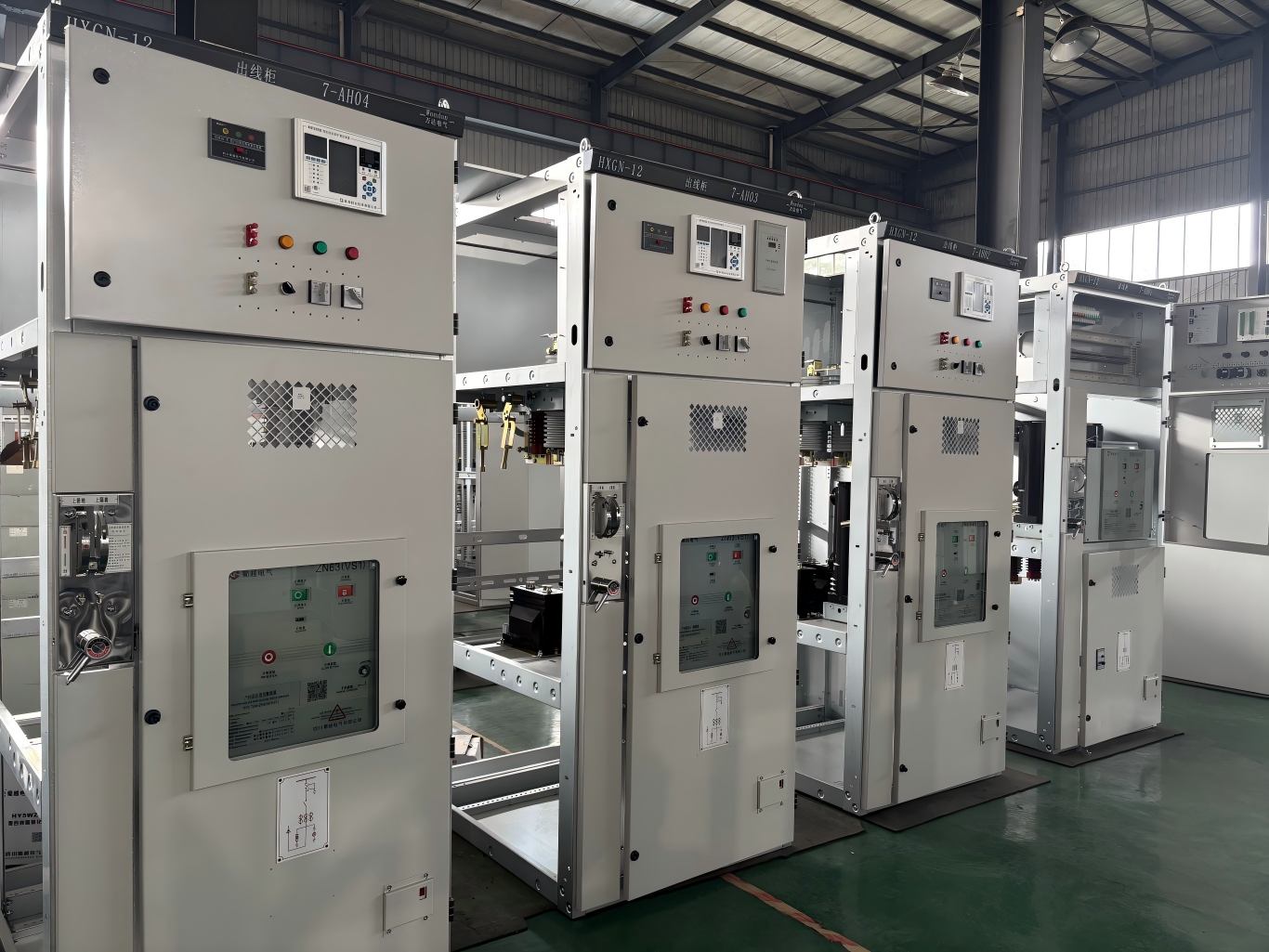
What Is Metal Enclosed Switchgear?
It’s an assembly where the switching and protection parts sit inside a grounded metal enclosure. Depending on the design, you might find circuit breakers, load switches, fuses, busbars, CTs, VTs, protection relays, meters, and control devices in there.
The job itself is simple: control the circuit, isolate equipment when you need to, and protect the system when a fault hits.
IEC 62271-200 covers AC metal-enclosed switchgear and controlgear from above 1 kV up to 52 kV, at frequencies up to 60 Hz, for indoor or outdoor use. The current edition is IEC 62271-200:2021+A1:2024.
The enclosure keeps people away from live parts. But a metal box alone doesn’t mean every assembly handles an internal arc the same way. You have to check the actual design and test requirements for your project.
How Is Metal Enclosed Switchgear Structured?
A typical lineup follows the power: incoming circuit, then busbar, then out to the feeders.
Designs differ, but most share a few functional areas.
Busbar Compartment
The busbar moves power between the incoming and outgoing sections. Its current rating has to match both the continuous load and the short-circuit withstand you need.
Switching Device Compartment
This is where the main switching device lives. Depending on the job, that could be a vacuum circuit breaker, a load interrupter switch, a fused switch, or something else.
Cable Compartment
The cable section gives you room for incoming or outgoing cables and their terminations. Get cable size, bending radius, grounding, and access sorted at the design stage, not after.
Protection and Control Compartment
Protection relays, meters, control switches, comms gear, and the secondary wiring normally sit here. This part matters a lot once the switchgear ties into a bigger automation or power management system.
Earthing and Interlocking
Earthing switches and mechanical or electrical interlocks stop unsafe operating sequences. A good design, for example, won’t let an operator open a compartment until the circuit has reached a safe state.
Types of Metal Enclosed Switchgear
No single configuration fits every project. Different insulation tech and switching arrangements suit different conditions.
Air-Insulated Metal Enclosed Switchgear
AIS uses air as the main insulation around the live parts. It’s a straightforward fit for plenty of MV distribution jobs. When you compare AIS designs, maintenance access and how the equipment is laid out matter as much as the spec sheet.
Gas-Insulated Switchgear
GIS seals an insulating gas inside the compartments to shrink the footprint. The big win is space. That matters when the install area is tight.
But before you go GIS, weigh the gas tech, the environmental rules, the maintenance procedure, and what the project standard actually calls for.
Solid-Insulated Switchgear
Solid-insulated designs wrap the live parts in solid dielectric. That supports compact builds and works where the project needs specific insulation or environmental behavior.
Fixed vs. Withdrawable Switchgear
Another split: does the main device stay put, or can it be withdrawn?
Fixed is simpler and often cheaper. Withdrawable makes isolation, maintenance, and swap-out easier, but it needs more room and a more involved mechanism.
Which is better? Depends on how much maintenance flexibility and service continuity your project can’t live without.
Metal Enclosed vs Metal Clad Switchgear
The two terms get mixed up all the time, especially when a project runs both IEC and North American standards. They’re related. They are not the same thing, though.
Under IEEE, C37.20.3 covers metal-enclosed interrupter switchgear, and C37.20.2 covers metal-clad. The current IEEE C37.20.2-2025 describes metal-clad MV switchgear with drawout, electrically operated breakers and grounded metal barriers between the key sections.
Metal-clad generally compartments things more. The main bus, incoming and outgoing connections, instrumentation, and breaker sections each get defined separation.
So when you compare the two, look past the name. Consider compartmentalization, breaker arrangement, accessibility, maintenance needs, service continuity, the applicable standard, and the project spec.
If your spec uses North American terminology, confirm exactly which IEEE standard the customer expects before you quote.
Where Is Metal Enclosed Switchgear Used?
The same metal enclosure can hold very different electrical setups. The application decides what goes inside.
Utility and Grid Connections
Utilities use switchgear to control incoming power, protect feeders, and isolate network sections.
Transformer Primary Protection
A transformer primary can run on a load switch and fuse, or a breaker with a protection relay. Which one depends on transformer size, fault level, coordination needs, and the design.
Industrial Power Distribution
Factories, mines, processing plants, and similar sites use MV switchgear to feed transformers, motors, and major loads.
Motor Loads
Big motors pull high starting current and need specific protection settings. The switchgear has to account for starting behavior, not just running current.
Generator Systems
Generators need more than overcurrent protection. The scheme may also have to handle synchronization, reverse power, voltage, frequency, and other generator-specific functions.
Renewable Energy and Energy Storage
Solar PV and BESS need MV switchgear at the point where they tie into the distribution network.
Match the Switchgear Configuration to the Electrical Duty
A better way to pick switchgear: start with the electrical job, not the cabinet.
| Application | Typical Configuration | Main Consideration |
|---|---|---|
| Small transformer | Load switch + fuse | Transformer protection |
| Larger transformer | Vacuum circuit breaker + relay | Fault protection and coordination |
| Main incomer | Circuit breaker + protection relay | Selectivity and system protection |
| Bus coupler | Circuit breaker + interlocking | Service continuity |
| Generator | Circuit breaker + generator protection | Generator operating conditions |
| Motor feeder | Circuit breaker/switch + motor protection | Starting and overload |
| PV/BESS connection | Switchgear + protection and control | Grid connection requirements |
These are typical, not universal. The real config should follow the project’s protection study and the applicable standards.
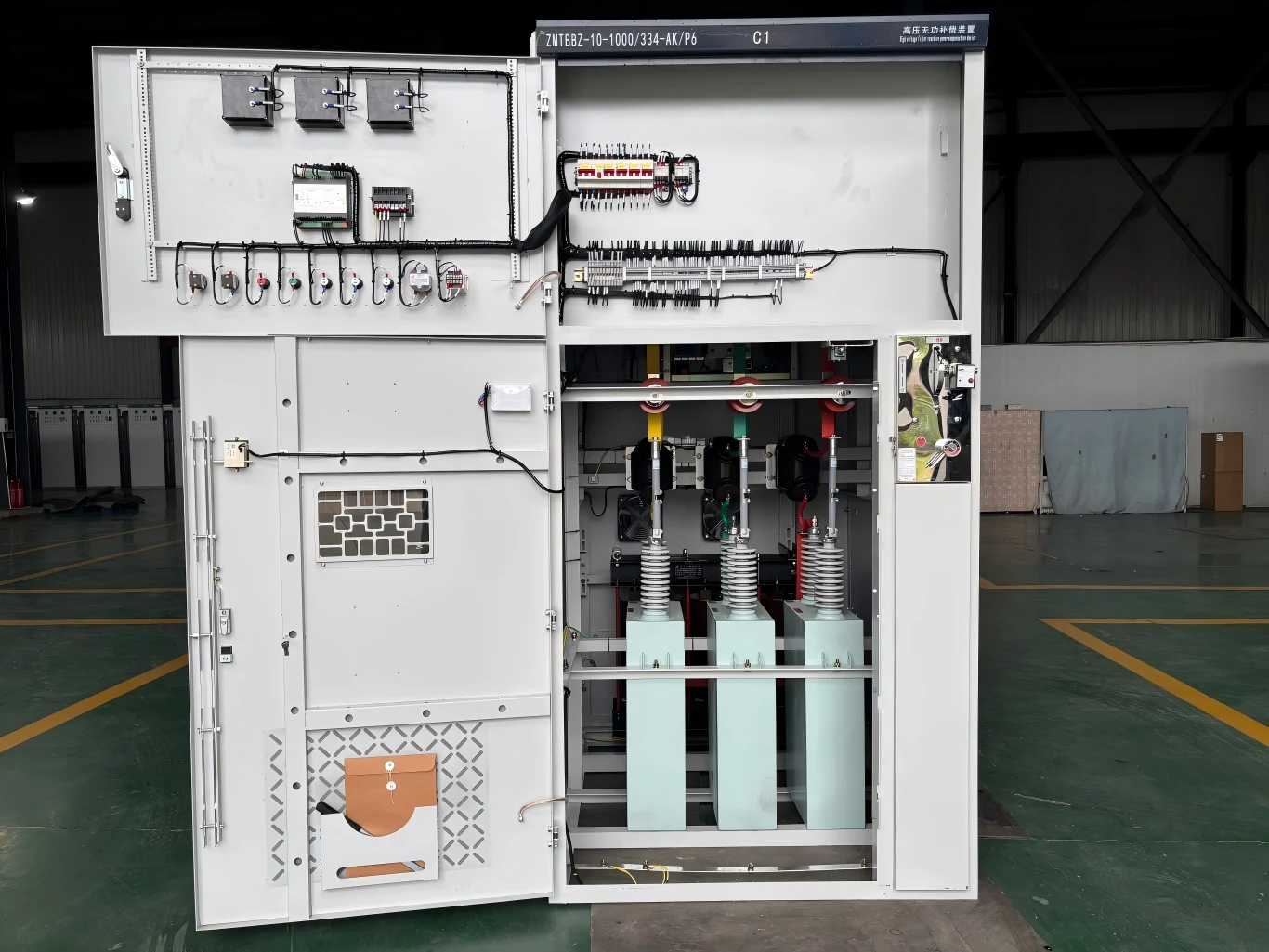
Key Ratings to Check Before Selecting Metal Enclosed Switchgear
Sizing switchgear on normal load current alone will bite you. Check the electrical and site parameters together.
Rated Voltage
Start with system voltage and the highest voltage the spec expects. The insulation level has to match the system.
Rated Continuous Current
The continuous rating should cover the operating load. And don’t size for today only. If more transformers, motors, or production lines are coming, build that growth in now.
Short-Circuit Breaking Current
A fault can push current far above normal. The switching device needs enough interrupting capacity for the fault level at its install point. That’s why the short-circuit study comes before you lock the rating.
Short-Time Withstand Current
The assembly and busbar also have to survive the thermal and mechanical hit of a short circuit for the set duration. This is different from the breaker’s interrupting rating. Check both.
Peak Withstand Current
A short circuit spikes hard on the first peak. The equipment must take those mechanical forces without damage.
Insulation Level
Power-frequency withstand and lightning impulse level tell you whether the insulation can take the expected electrical stress.
Installation Conditions
Don’t forget the site. Ambient temperature, altitude, humidity, condensation, dust, salt pollution, indoor or outdoor, cable entry, and available space all count. Switchgear that’s fine in a clean indoor room may need a different build in a hot, dusty, humid, or coastal site.
Safety and Service Continuity
Safety is more than bolting equipment inside a metal box.
Internal Arc Classification
An internal arc dumps extreme heat, pressure, and hot gas. IEC 62271-200 includes internal arc classification (IAC) as part of the assessment.
When you see an IAC marking, check which access directions the tested arrangement covers. The install also needs the switchgear room, the pressure-relief path, ceiling height, adjacent equipment, and operator access worked out.
In other words, an IAC rating is not a checkbox you tick and forget.
Loss of Service Continuity
LSC describes what happens to the rest of the install when one section needs maintenance.
Ask the practical question: if one section goes down for maintenance, how much of the system stays live?
For a small site, a simpler build may be fine. For a data center, plant, utility, or critical infrastructure, service continuity can dominate the design.
Partitioning and Interlocking
Physical separation between functional areas limits the fallout from certain faults and supports maintenance. Interlocking matters too. The operator shouldn’t be able to run an unsafe sequence just because the handle or door is there.
IEC 62271-200 and ANSI/IEEE Standards
For IEC projects, IEC 62271-200 is the key standard for AC metal-enclosed switchgear and controlgear above 1 kV up to 52 kV.
For North American projects, the terms and standards shift. IEEE C37.20.3-2023 covers metal-enclosed interrupter switchgear above 1 kV up to 48.3 kV. IEEE C37.20.2-2025 covers metal-clad.
The definitions and construction rules differ. Confirm the customer’s spec, the utility’s requirements, and local regulations before you pick a standard. Don’t assume an IEC spec can drop straight into an ANSI/IEEE slot.
How to Select Metal Enclosed Switchgear for a Project
Walk through these and the selection gets a lot easier.
- What’s the system voltage? Confirm nominal voltage and the required equipment voltage class.
- What’s the maximum load current? Work out the continuous current and leave room for future growth.
- What short-circuit current is available? Get the fault level at the install point. It drives the interrupting and withstand ratings.
- What protection does the system need? Fuses, vacuum breakers, overcurrent, transformer, motor, generator, or other functions.
- Fixed or withdrawable? Based on maintenance strategy, space, outage tolerance, and budget.
- Which insulation tech fits the site? Compare air, gas, or solid on space, environment, maintenance, and project need.
- What are the site conditions? Temperature, altitude, humidity, pollution, enclosure, cable access, room space.
- How much service continuity do you need? A critical install may justify more compartmentalization or added redundancy.
- Will the system expand? If more feeders or higher loads are coming, design for them now.
- Which standards apply? Confirm IEC, ANSI/IEEE, utility spec, and local rules before you finalize.
Metal Enclosed Switchgear RFQ Checklist
A good RFQ up front cuts the back-and-forth with suppliers.
At minimum, prepare:
System information
- Rated voltage
- Frequency
- Earthing system
- Available short-circuit current
Load information
- Transformer capacity
- Maximum load
- Motor loads
- Future expansion
Switchgear information
- Rated current
- Short-circuit rating
- Number of incoming and outgoing feeders
- Busbar arrangement
- Fixed or withdrawable
- Indoor or outdoor
Protection and control
- Protection relay requirements
- CT/VT requirements
- Metering
- Communication protocol
- Interlocking requirements
Site information
- Ambient temperature
- Altitude
- Humidity
- Pollution level
- Cable entry direction
- Available installation space
You don’t need a finished drawing to start the conversation. The more accurate these inputs are, the faster a workable config comes together.
Metal Enclosed Switchgear vs Other MV Switchgear Options
Metal Enclosed vs RMU
Don’t treat RMU and metal enclosed as opposites. An RMU is usually compact MV distribution for ring networks. Metal enclosed is a broader construction idea. An RMU can sit in a metal enclosure while serving a specific network role.
So the better question: what network role, switching function, protection level, and maintenance strategy does the project need?
AIS vs GIS
AIS and GIS describe insulation approach, not just the enclosure. AIS needs more room around live parts; GIS packs tighter. The call depends on site, ratings, maintenance strategy, environment, and budget.
Look Beyond the Initial Purchase Price
Lowest equipment price rarely means lowest project cost. When you compare two solutions, look at the whole operating life.
Installation, commissioning, maintenance, spares, operator access, outage time, future expansion, replacement, and local support all count. A higher upfront cost can pay off if it cuts maintenance downtime or makes expansion easier.
Compare on total cost of ownership, not just the first quote.
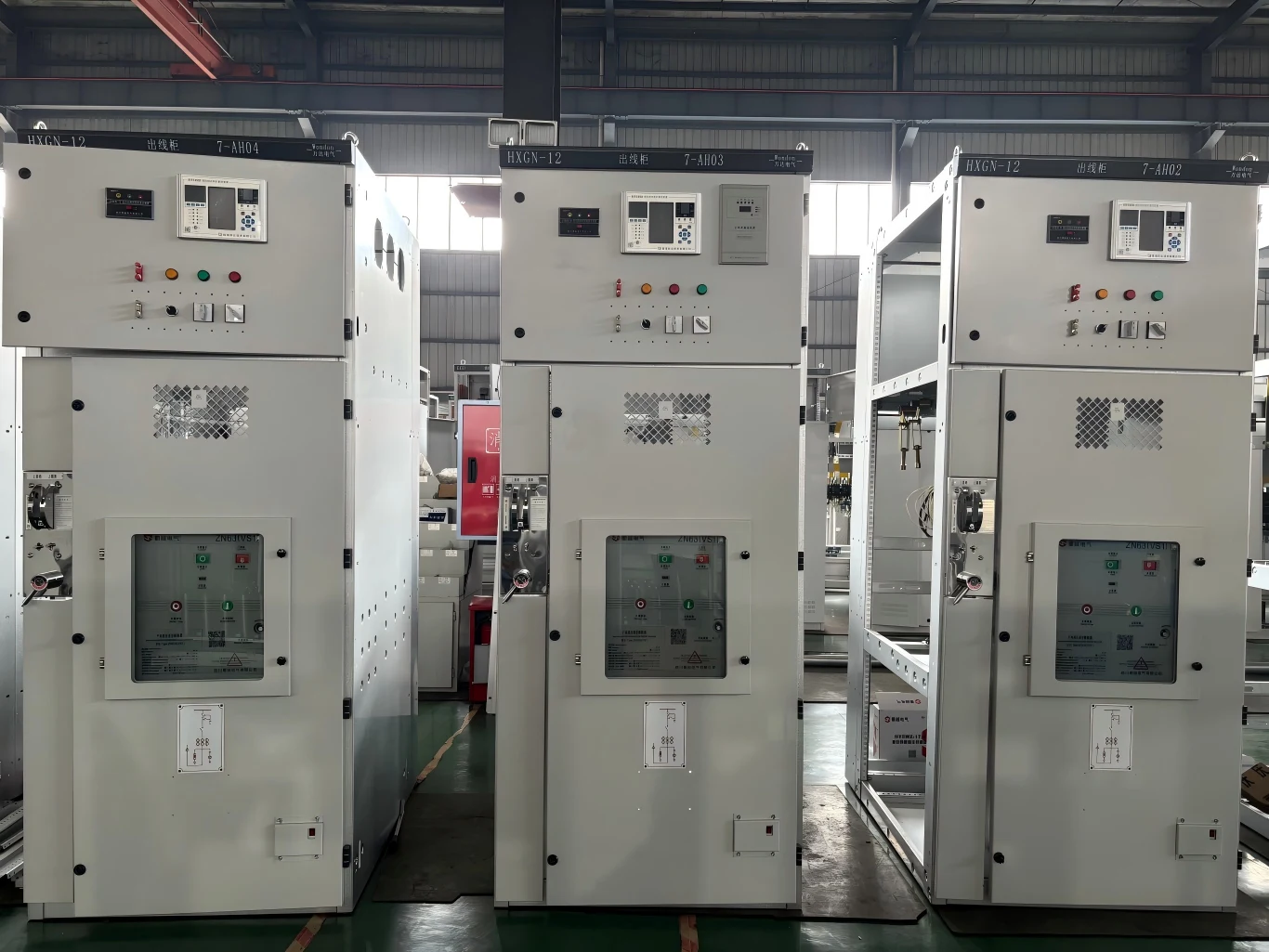
FAQs About Metal Enclosed Switchgear
1. What is metal enclosed switchgear?
An assembly that puts switching, protection, control, and metering inside a grounded metal enclosure. Widely used in MV distribution.
2. What voltage range does it cover?
Under IEC 62271-200, above 1 kV up to and including 52 kV.
3. What’s the difference between metal enclosed and metal clad?
Metal-clad generally compartments more, and under IEEE C37.20.2 it covers MV switchgear with drawout, electrically operated breakers. Metal enclosed is the broader construction category with several configurations.
4. Is RMU a type of metal enclosed switchgear?
An RMU can use a metal enclosure, but the two describe different things. RMU points at a compact distribution arrangement and network function; metal enclosed points at how the equipment is built.
5. What should I provide when requesting a quotation?
Start with system voltage, frequency, load current, short-circuit level, transformer capacity, number of feeders, protection requirements, install environment, applicable standards, and any future expansion.
6. How do I choose the right one?
Start with the electrical duty, not the cabinet type. Check voltage, current, fault level, protection needs, insulation tech, service continuity, site conditions, applicable standards, and future expansion.
Need Help Selecting Metal Enclosed Switchgear?
Every project runs different electrical conditions. The right config should match the actual network, load, protection strategy, site, and standards.
If you’re still pinning down the spec, send Wondon your system voltage, transformer or load capacity, short-circuit level, feeder count, and project application. Even without a finished drawing, those basics are enough to start a technical review.