

When planning a large electrical project, you may need to choose between low voltage switchgear and a distribution board. At first glance, both seem to perform a similar job: they receive electrical power and distribute it to downstream loads.
However, their design purposes are not exactly the same.
Low voltage switchgear is commonly used for main power distribution, high short-circuit current levels, critical loads, and applications that require more advanced protection, isolation, or maintenance functions. A distribution board is more commonly used for downstream or local circuit distribution.
For large projects, you do not necessarily have to choose only one of them. A typical power distribution system can use both at different distribution levels.
The final choice depends on several factors, including voltage, rated current, prospective short-circuit current, load importance, protection requirements, maintenance methods, applicable standards, and project budget.
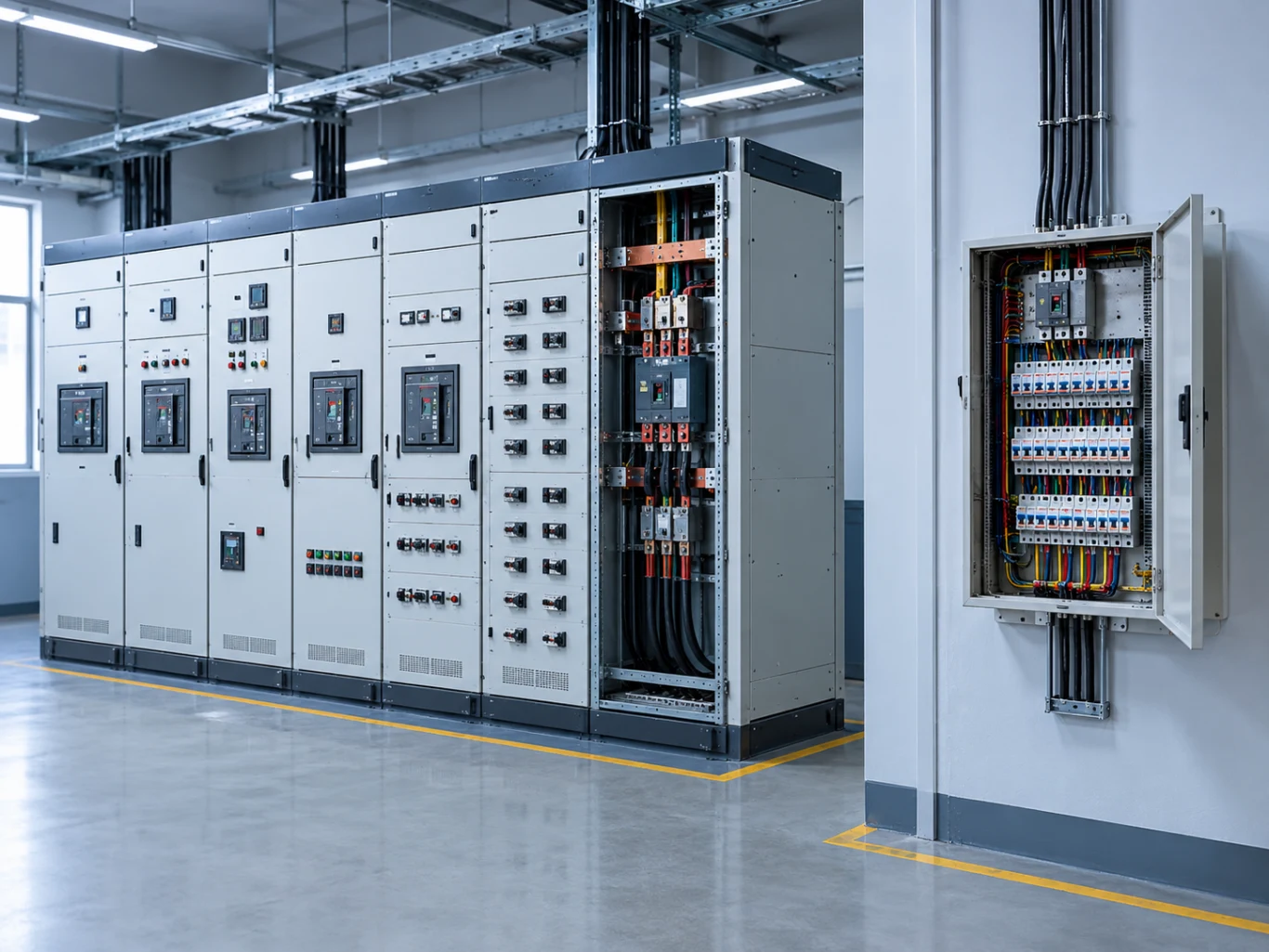
What Is the Difference Between Low Voltage Switchgear and a Distribution Board?
Before comparing them, it is important to understand what each type of equipment does.
What Is Low Voltage Switchgear?
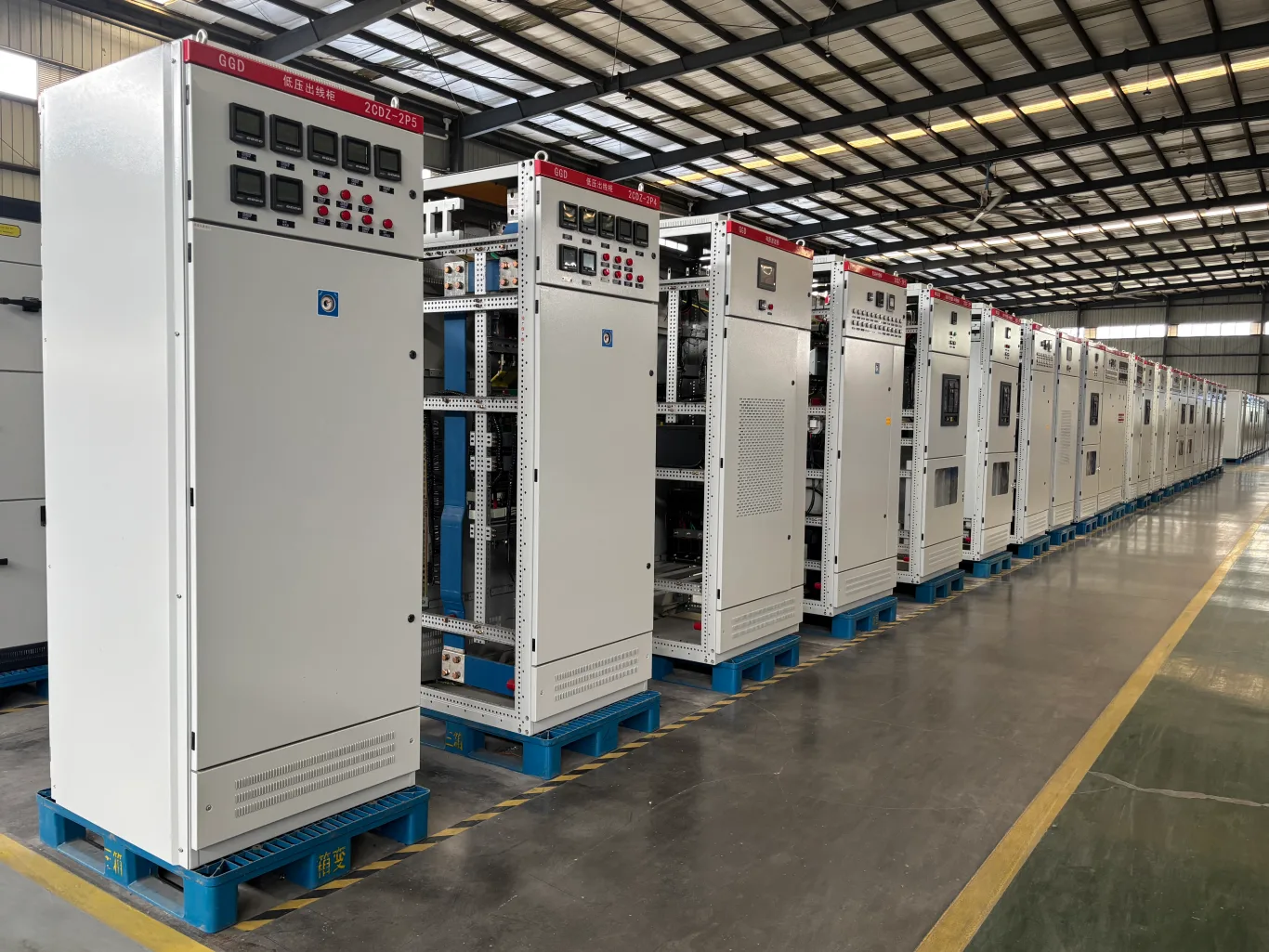
Low voltage switchgear is an electrical assembly used for switching, protection, isolation, control, and distribution of electrical power.
It is commonly installed at important points in a low voltage distribution system, such as the main incoming supply or large feeder sections. For example, a factory may receive power from a transformer and send it first to the main low voltage switchgear. The switchgear then distributes power to production equipment, motor control equipment, or downstream distribution cabinets.
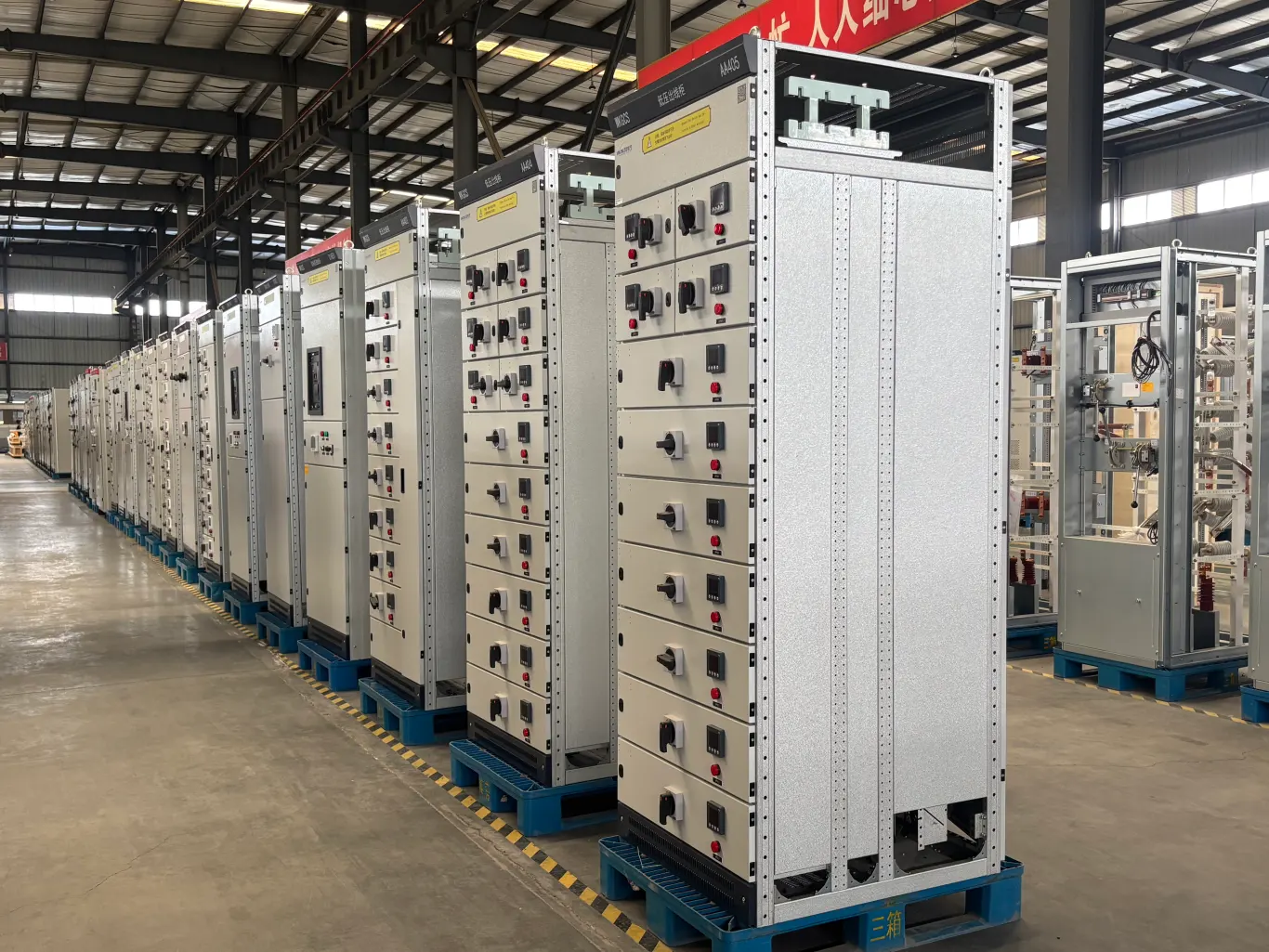
A typical low voltage switchgear assembly may include circuit breakers, busbars, protection devices, meters, control components, and cable connection sections.
What Is a Distribution Board?
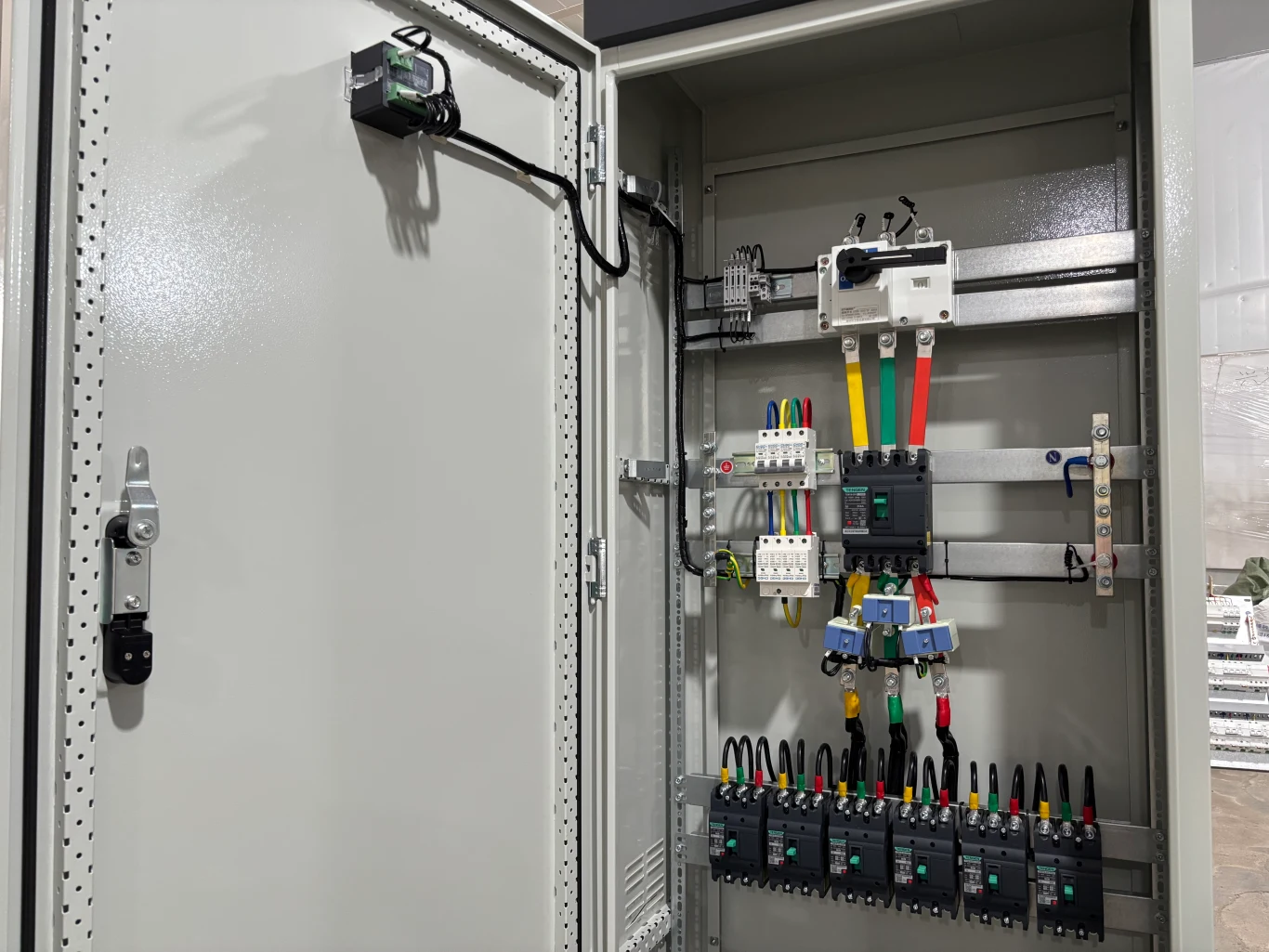
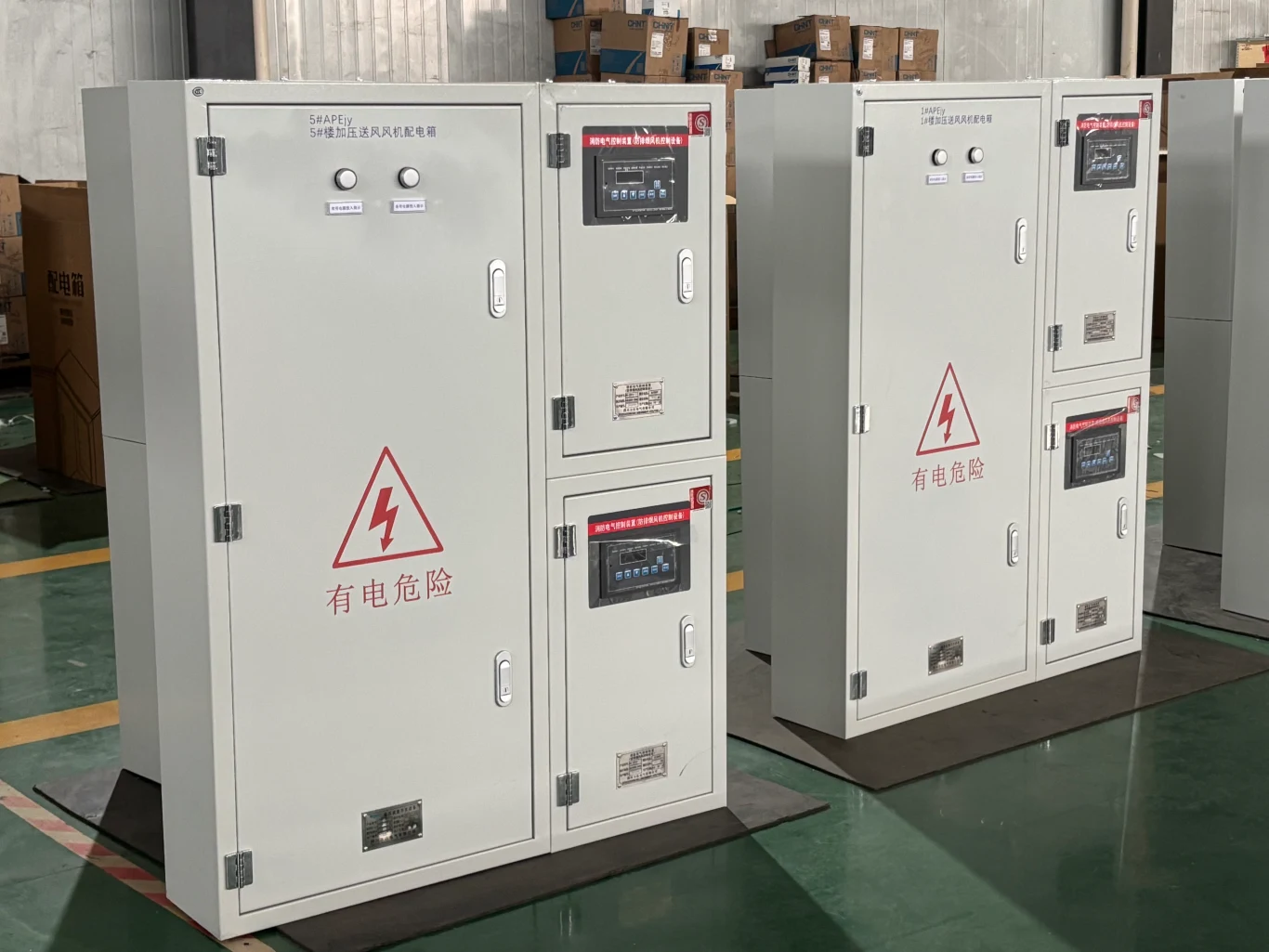
A distribution board mainly distributes incoming power to multiple outgoing circuits.
You can think of it as a local power distribution point.
For example, a distribution board in a commercial building may supply lighting, sockets, air-conditioning equipment, and other local loads on a floor.
Compared with large main switchgear, a distribution board usually has a simpler and more compact design. However, its actual current and fault-current capability still depends on the specific product design, ratings, protection devices, and applicable standards.
It is also important to note that the term “Distribution Board” can have different meanings in different markets.
Are Distribution Board, Switchboard, and Panelboard the Same Type of Equipment?
Not necessarily.
In everyday communication, these terms are sometimes used interchangeably. However, they may refer to different equipment categories depending on the country or region.
The exact distinction can depend on local standards, electrical codes, equipment construction, ratings, and application.
For example, in North American projects, UL 67 primarily covers panelboards, UL 891 covers switchboards, while UL 1558 covers metal-enclosed low-voltage power circuit breaker switchgear.
Therefore, when communicating with an overseas electrical equipment supplier, you should not determine equipment compliance based only on the product name.
It is better to confirm the rated voltage, rated current, short-circuit rating, equipment construction, applicable standards, and project technical specifications.
Low Voltage Switchgear vs Distribution Board: Key Differences
The following table provides a quick comparison of the main differences between low voltage switchgear and distribution boards.
| Comparison | Low Voltage Switchgear | Distribution Board |
|---|---|---|
| Main function | Switching, protection, isolation, control, and power distribution | Local and downstream power distribution |
| Typical location | Main distribution or important distribution points | Downstream or branch distribution |
| Typical applications | Industrial plants, data centers, hospitals, infrastructure, and large buildings | Commercial buildings, floors, local areas, and branch circuits |
| Fault current level | Commonly used where higher fault withstand capability may be required | Selected according to the actual fault current at the installation point |
| Circuit breakers | Fixed or withdrawable designs may be available | Usually fixed or plug-in designs, depending on the product |
| Maintenance | Can provide more advanced maintenance and isolation functions | Usually simpler and more direct to maintain |
| Protection coordination | Can support more complex protection schemes | Usually used for relatively simple downstream distribution |
| Construction | May include multiple separate compartments and functional separation | Usually simpler and more compact |
| Size | Usually larger | Usually more compact |
| Initial equipment cost | Usually higher | Usually lower for similar downstream applications |
| Typical role | Main distribution and important feeders | Local and final distribution |
This table provides a general comparison and does not apply to every product.
For example, you should not assume that a product is unsuitable for a project simply because the supplier calls it a “distribution board.” The final decision should consider its actual short-circuit rating, construction, and other technical parameters.
Why Does This Difference Matter for Large Electrical Projects?
As a power distribution system becomes larger, the differences between equipment types become more important.
A small building may have only a few distribution points. A large factory, hospital, data center, or commercial complex may have several distribution levels.
Each distribution level may have different electrical requirements.
Main Distribution Points Often Have Higher Short-Circuit Current
Prospective short-circuit current is one of the key factors in electrical equipment selection.
If a fault occurs close to a transformer or another strong power source, the available fault current can be much higher than that in a downstream circuit farther from the source.
Therefore, equipment installed at these points must have short-circuit withstand and interrupting capabilities that match the actual fault level.
This means you cannot select equipment based only on its normal operating current.
During project evaluation, engineers may also need to consider grid short-circuit capacity, transformer capacity and impedance, cable impedance, system configuration, and other relevant parameters.
A simple rule is:
The verified short-circuit withstand capability of the equipment must meet the prospective fault level at its installation point.
Critical Loads Require More Attention to Protection and Maintenance
Not all loads have the same level of importance.
For example, a sudden power interruption in a data center may affect servers and critical IT systems.
Hospitals may have medical equipment and essential building services that require continuous power.
In a manufacturing plant, an unexpected shutdown of an important production line can also interrupt production.
For these applications, the electrical system usually needs greater attention to protection coordination, isolation, maintenance access, redundancy, and power continuity.
Therefore, engineers may consider more advanced switchgear at important distribution points.
Large Projects Usually Need Multiple Distribution Levels
Large projects normally do not use one electrical cabinet to supply every load.
Instead, electrical power passes through several levels before reaching the final loads.
A simplified system can be shown as:
Utility Grid / Transformer → Low Voltage Switchgear → Main Distribution → Distribution Board → Final Loads
Different equipment at each level performs a different function.
The main switchgear handles higher-level power distribution and protection.
Downstream distribution boards then distribute power closer to the final loads.
Therefore, treating the two products simply as “one replacing the other” does not always reflect how large electrical distribution systems are actually designed.
When Should You Use Low Voltage Switchgear?
No fixed project size can determine that you must use low voltage switchgear.
A better approach is to evaluate the electrical parameters and operating requirements of the system.
For Main Incoming Power
Low voltage switchgear is commonly considered for the main incoming section of a large low voltage system.
For example:
Transformer → Main Low Voltage Switchgear → Large Feeders
At this point, the equipment may need to handle a large incoming current and supply multiple downstream feeders.
It may also need to provide metering, protection, isolation, and control functions.
When the Short-Circuit Current Is High
Short-circuit current is a critical factor in equipment selection.
Suppose the main distribution point of a project has a high prospective short-circuit current.
In this situation, you cannot confirm that the equipment is suitable simply because its rated current meets the calculated load current.
You should also check:
- Short-circuit interrupting capacity
- Short-time withstand current
- Peak withstand current
- Protection device characteristics
- Busbar capability
- Protection coordination with upstream and downstream equipment
The exact parameters and verification methods should follow the standards applicable to the project.
For Critical Loads
You may consider low voltage switchgear at distribution points that supply critical loads.
Typical applications include:
- Data centers
- Hospitals
- Manufacturing plants
- Airports
- Infrastructure facilities
- Large commercial buildings
- Utility-related facilities
The key issue is not simply whether the project is “large.”
A more important question is:
What happens if the power supply is interrupted, and how does the system need to be maintained?
When Maintenance and Protection Selectivity Matter
Some low voltage switchgear can use withdrawable circuit breakers.
For projects that require regular maintenance and a higher level of isolation flexibility, this design can provide greater operational flexibility.
Protection selectivity is also important.
For example, when a downstream circuit develops a fault, the design objective may be to isolate only the faulty circuit while keeping the rest of the system energized.
The actual level of selectivity depends on the protection devices and their settings. Therefore, engineers need to verify it during system design rather than assuming it based only on the switchgear type.
When Is a Distribution Board More Suitable?
When the main purpose is to distribute electrical power to multiple downstream circuits, a distribution board can be a practical choice.
For Downstream Distribution
Consider a commercial building as an example.
Its distribution structure may look like this:
Main Low Voltage Switchgear → Floor Distribution Board → Lighting and Socket Circuits
The main switchgear handles higher-level distribution.
The floor distribution board supplies individual circuits within that local area.
This approach avoids installing large switchgear at every local distribution point.
For Lighting and Small Electrical Loads
Distribution boards are commonly used for local circuits such as:
- Lighting
- Socket outlets
- Small air-conditioning loads
- Office equipment
- Small motors
- Building service equipment
The actual application still needs to match the equipment ratings and local electrical requirements.
When Space and Cost Are Important
Compared with large main switchgear, downstream distribution boards are usually smaller and simpler.
This makes them easier to install in electrical rooms, corridors, equipment areas, or other locations where space is limited.
If the electrical system does not require complex protection or maintenance functions, simpler distribution equipment may also reduce the initial equipment cost.
However, cost should not be the only selection factor.
The equipment still needs to meet the requirements for rated current, short-circuit current, enclosure protection, environmental conditions, protection, and applicable standards.
How Should You Choose Between Low Voltage Switchgear and a Distribution Board for a Large Project?
If you are responsible for electrical equipment selection, you can follow these five steps.
Step 1: Confirm the Voltage Level
First, confirm the system voltage.
If the system voltage exceeds the low voltage range, you may need to consider medium voltage switchgear instead of the low voltage equipment discussed in this article.
However, voltage level alone cannot determine whether you need switchgear or a distribution board.
You also need to consider current, fault current level, load type, installation location, and project standards.
Step 2: Calculate the Prospective Short-Circuit Current
This is an important technical check.
Prospective short-circuit current may be affected by:
- Grid short-circuit capacity
- Transformer capacity
- Transformer impedance
- Cable length and impedance
- Generators or other power sources
- Parallel power sources
- System operating conditions
The selected equipment must have short-circuit capability that matches the actual installation point.
If you do not have the short-circuit calculation, ask the electrical designer or project engineer for the relevant results before selecting the equipment.
Step 3: Determine the Importance of the Load
Next, ask yourself a simple question:
How important is this load to the project?
A circuit supplying ordinary office lighting may have very different requirements from one supplying critical medical equipment or an important production line.
For critical loads, you may need to consider:
- Protection coordination
- Redundancy
- Isolation
- Maintenance access
- Emergency power
- Monitoring
- Power continuity
These factors can affect the selection of distribution equipment.
Step 4: Identify the Distribution Level
Check where the equipment will be installed in the power distribution system.
For example:
Main incoming supply → Low Voltage Switchgear
Large feeder → Switchgear or other suitable switching equipment
Floor / Area Distribution → Distribution Board
Final Branch Circuit → Panelboard or other suitable distribution equipment
This is only a general distribution structure.
The actual solution should follow the project’s electrical design and local requirements.
Step 5: Consider Lifecycle Cost
The equipment with the lowest purchase price may not have the lowest total cost throughout the project lifecycle.
You should also consider:
- Purchase cost
- Installation cost
- Maintenance cost
- Spare parts
- Downtime losses
- Future expansion
- Replacement cost
- Actual operating requirements
For ordinary downstream circuits, a simple distribution board may already meet the requirements.
For important main distribution points, more advanced protection and maintenance functions may provide greater operational value.
Can Large Projects Use Both Low Voltage Switchgear and Distribution Boards?
Yes.
In fact, large power distribution systems commonly use different types of equipment at different distribution levels.
The key is to assign each type of equipment to the function it is designed to perform.
Typical Power Distribution Architecture for Large Projects
A simplified large-project power distribution system can be represented as:
Utility Grid / Transformer→ Main Low Voltage Switchgear→ Main Distribution / Large Feeders→ Distribution Board→Final Loads
The main switchgear handles higher-level switching, protection, isolation, and power distribution.
The downstream distribution board then distributes power to smaller circuits.
This layered approach can help large projects organize and maintain the electrical system more clearly.
Commercial Building Example
A commercial building may use:
Transformer → Main Low Voltage Switchgear → Floor Distribution Board → Lighting / Air Conditioning / Socket Outlets
The main distribution equipment handles the building’s primary low voltage distribution.
Each floor or area can then use a more compact distribution board.
This avoids installing large switchgear at every local distribution point.
Manufacturing Plant Example
A factory may have a more complex distribution system:
Transformer → Main Low Voltage Switchgear → Production Feeders → MCC / Distribution Equipment → Production Loads
Large motors and production equipment may have different starting, control, and protection requirements.
Therefore, engineers may use different equipment for main distribution, motor control, and local circuits.
Data Center Example
A data center may require several distribution levels because power continuity is critical.
A simplified system may include:
Utility Grid / Generator → Main Low Voltage Switchgear → UPS → Critical Load Distribution → Rack or Equipment Loads
The actual architecture can be much more complex.
Redundant power sources, automatic transfer systems, UPS systems, protection coordination, monitoring systems, and maintenance strategies can all affect the final design.
The key point is:
A large project does not mean that every location needs the highest-specification equipment.
Each distribution level should match its actual electrical and operating requirements.
Low Voltage Switchgear vs Distribution Board: How Should I Choose?
The final choice depends on the installation location and the actual requirements of the power distribution system.
If the equipment serves the main incoming supply, high prospective short-circuit current, critical loads, or distribution points with higher protection, isolation, and maintenance requirements, you can give greater consideration to low voltage switchgear.
If the equipment mainly serves downstream local distribution, branch circuits, lighting, or ordinary building loads, a compliant distribution board may be sufficient.
For large projects, both types of equipment may be used.
You can use the following approach as a simple guide:
Main incoming supply or critical distribution point
→ Evaluate low voltage switchgear
High prospective short-circuit current
→ Verify short-circuit withstand and interrupting capabilities
Downstream local distribution
→ Evaluate a suitable distribution board
Future expansion or complex protection requirements
→ Consider equipment configuration and spare capacity
The final selection should consider voltage, current, prospective short-circuit current, load importance, protection coordination, maintenance requirements, applicable standards, installation environment, and lifecycle cost rather than project size alone.
What Are Common Mistakes When Choosing Low Voltage Switchgear or a Distribution Board?
Even experienced project teams can make equipment selection mistakes when project information is incomplete.
1. Looking Only at Rated Current
A common mistake is to look only at rated current.
For example, a project’s calculated operating current may be below 1600 A, so someone may assume that 1600 A equipment will automatically meet the requirements.
However, you also need to check the prospective short-circuit current at the installation point and other relevant parameters.
Rated current is only one factor in equipment selection.
2. Ignoring the Fault Current at the Installation Point
The same equipment may be suitable for one location but unsuitable for another location with a higher fault current level.
Therefore, you should check the short-circuit calculation or relevant fault-current data before finalizing the equipment.
This is particularly important for equipment installed close to transformers, generators, and other power sources.
3. Treating All Distribution Boards as the Same Product
In a technical inquiry, simply telling a supplier that you need a “Distribution Board” is usually not enough.
Two products may have the same general name but differ significantly in:
- Rated current
- Short-circuit rating
- Construction
- Protection devices
- IP rating
- Internal separation
- Applicable standards
- Installation method
Therefore, you should ask the supplier for complete technical specifications.
4. Choosing Only by Initial Price
A lower purchase price can be attractive, especially when the project has a limited budget.
However, difficult maintenance or limited future expansion can create additional costs later.
When comparing quotations, you should also consider the actual operating environment and maintenance strategy.
5. Ignoring Future Expansion
Large projects may continue to expand after the initial construction phase.
If the equipment has no spare space or capacity, adding new feeders later can become difficult.
During the design stage, you can consider whether the project may need:
- Spare feeder positions
- Additional circuit breakers
- Spare busbar capacity
- Additional sections or cabinets
- Future monitoring functions
- Additional loads
The required spare capacity should follow the actual project requirements. You should not simply apply a fixed percentage to every project.
FAQs
1. What Is the Main Difference Between Low Voltage Switchgear and a Distribution Board?
The main difference is their typical role within the power distribution system. Low voltage switchgear is commonly used for higher-level switching, protection, isolation, and power distribution, while distribution boards mainly distribute power to downstream circuits. The exact difference still depends on equipment construction and applicable standards.
2. Can Large Projects Use Distribution Boards?
Yes. Large projects can use distribution boards at floor, area, or branch distribution levels. A large project does not mean that every distribution point must use low voltage switchgear.
3. When Should I Use Low Voltage Switchgear Instead of a Distribution Board?
When the equipment is installed at a main incoming or critical distribution point, and the project has higher requirements for fault current, protection coordination, isolation, maintenance, or power continuity, you can consider low voltage switchgear.
4. How Do I Determine the Required Short-Circuit Rating?
First, determine the prospective short-circuit current at the equipment installation point. The calculation may consider the utility supply, transformer impedance, cable impedance, generators, parallel power sources, and system operating conditions. Then verify that the equipment’s tested short-circuit capability meets the calculated fault level.
5. Can Low Voltage Switchgear and Distribution Boards Be Used Together?
Yes. Both can perform different distribution functions within the same power distribution system. For example, you can use low voltage switchgear for main distribution and distribution boards for downstream branch circuits.
Conclusion
Low voltage switchgear and distribution boards should not simply be viewed as two competing products.
They normally perform different functions within a power distribution system.
Low voltage switchgear is commonly used for main incoming supplies, large feeders, high fault current levels, and critical distribution points that require greater protection, isolation, or maintenance capabilities.
Distribution boards are more commonly used for downstream local distribution and branch circuits.
For large projects, both types of equipment can be used together.
If you are planning a large electrical distribution project, start with the actual requirements of the electrical system before selecting the equipment. This approach makes it easier to determine which type of equipment should be used at each distribution level.
How Can Wondon Support Large Power Distribution Projects?
Choosing the right distribution equipment involves more than selecting a product from a catalog.
The equipment needs to match the project’s electrical parameters, distribution architecture, applicable standards, installation environment, and operating requirements.
Wondon provides low and medium voltage electrical equipment and integrated power distribution solutions for industrial, commercial, infrastructure, and renewable energy projects.
Our low voltage distribution solutions can be configured for different main distribution, control, and downstream power distribution requirements.
If you are not sure whether your project needs low voltage switchgear, a distribution board, or a combination of different equipment at different distribution levels, you can provide your basic project information to our technical team. We can help you evaluate the requirements and identify a suitable configuration.
Contact us today and share your project requirements. Our team will respond within 24 hours.