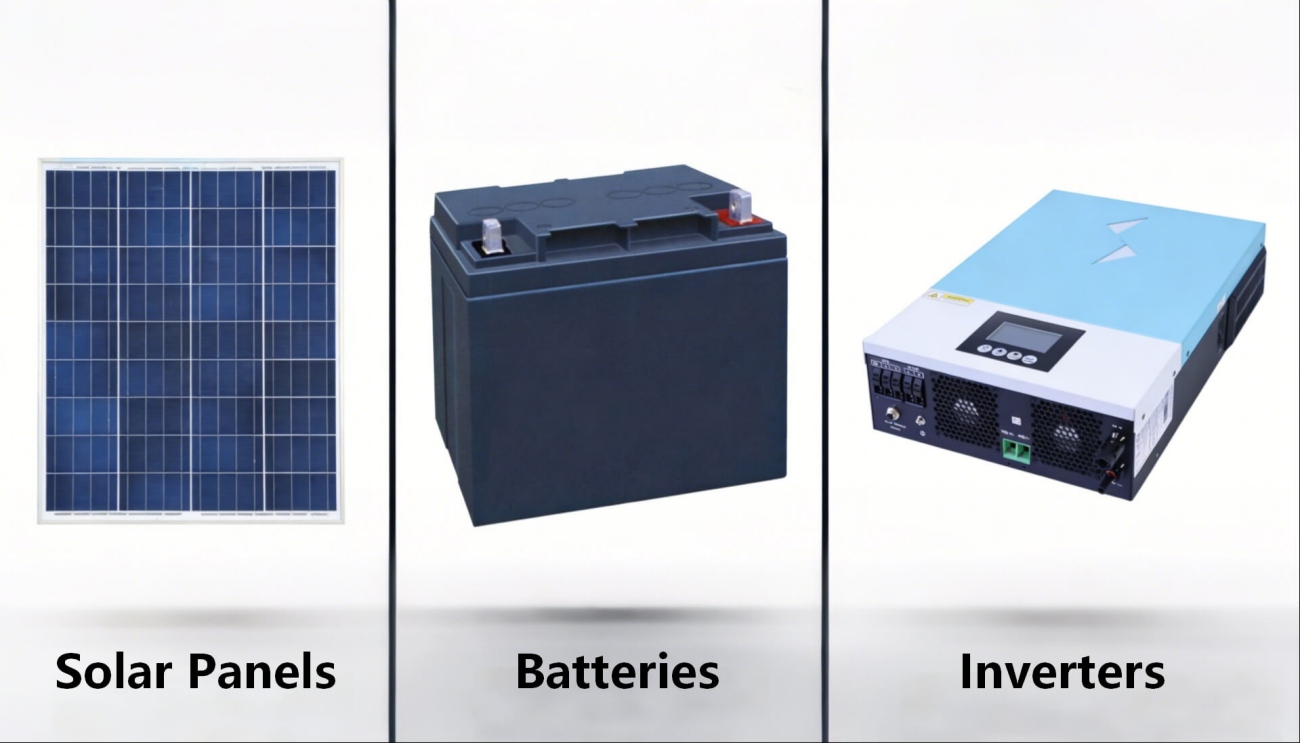

A renewable energy system refers to a setup used to convert, store, and distribute energy from sources such as wind and solar power. Most renewable energy systems are built around three basic components: solar panels, an inverter, and batteries.
1. Solar panels
When sunlight hits the surface of the panels, electricity is generated through a process, allowing the panels to produce power during the day. The amount of electricity generated depends on the intensity of the sunlight, the angle at which the panels are installed, and the total number of panels. Simply put, solar panels are the starting point of the entire system; without them, there would be no energy to distribute or store.
2. Inverter
The electricity produced by solar panels is not necessarily in a form that can be used directly by devices or appliances. The inverter takes the electricity generated by the solar panels and converts it into a form that machines, lighting systems, and other electrical equipment can use. Most buildings and equipment require a specific form of electricity, so the inverter acts as a converter, connecting the solar panels on one side and the electrical loads on the other.
3. Batteries
Batteries store energy for later use. Solar panels generate electricity mainly during the day, but electricity is also needed at night or on cloudy days. Batteries can store excess electricity generated on sunny days and release it when sunlight is not available. This helps maintain a stable power supply and reduces reliance on external power sources.
These three components do not work independently; instead, they operate together like a small team. Understanding the respective roles of solar panels, inverters, and batteries helps clarify how a renewable energy system provides stable and reliable electricity in practical applications.
FAQs
1. What are the basic components of a renewable energy system?
It usually includes solar panels, an inverter, and batteries working together as one system. In real projects, Wondon helps you combine these parts so the system runs smoothly from day one.
2. What role do solar panels actually play?
They convert sunlight into electricity and act as the starting point of the system. If your site has good sunlight conditions, Wondon can help you quickly estimate how much power you can realistically get.
3. Why do I really need an inverter in the system?
Because it turns unstable solar power into usable electricity for your equipment. Most customers are surprised here—Wondon often finds this is the key step that decides whether the system “works well or not”.
4. When do batteries become necessary?
When you need power at night or want backup during unstable sunlight conditions. If your project cannot afford downtime, Wondon usually recommends adding storage to avoid interruptions.
5. How do all these parts actually work together in practice?
They generate, convert, and store energy as a continuous workflow. When Wondon designs the system, we make sure you can think of it as one simple, stable “power cycle” instead of separate equipment.