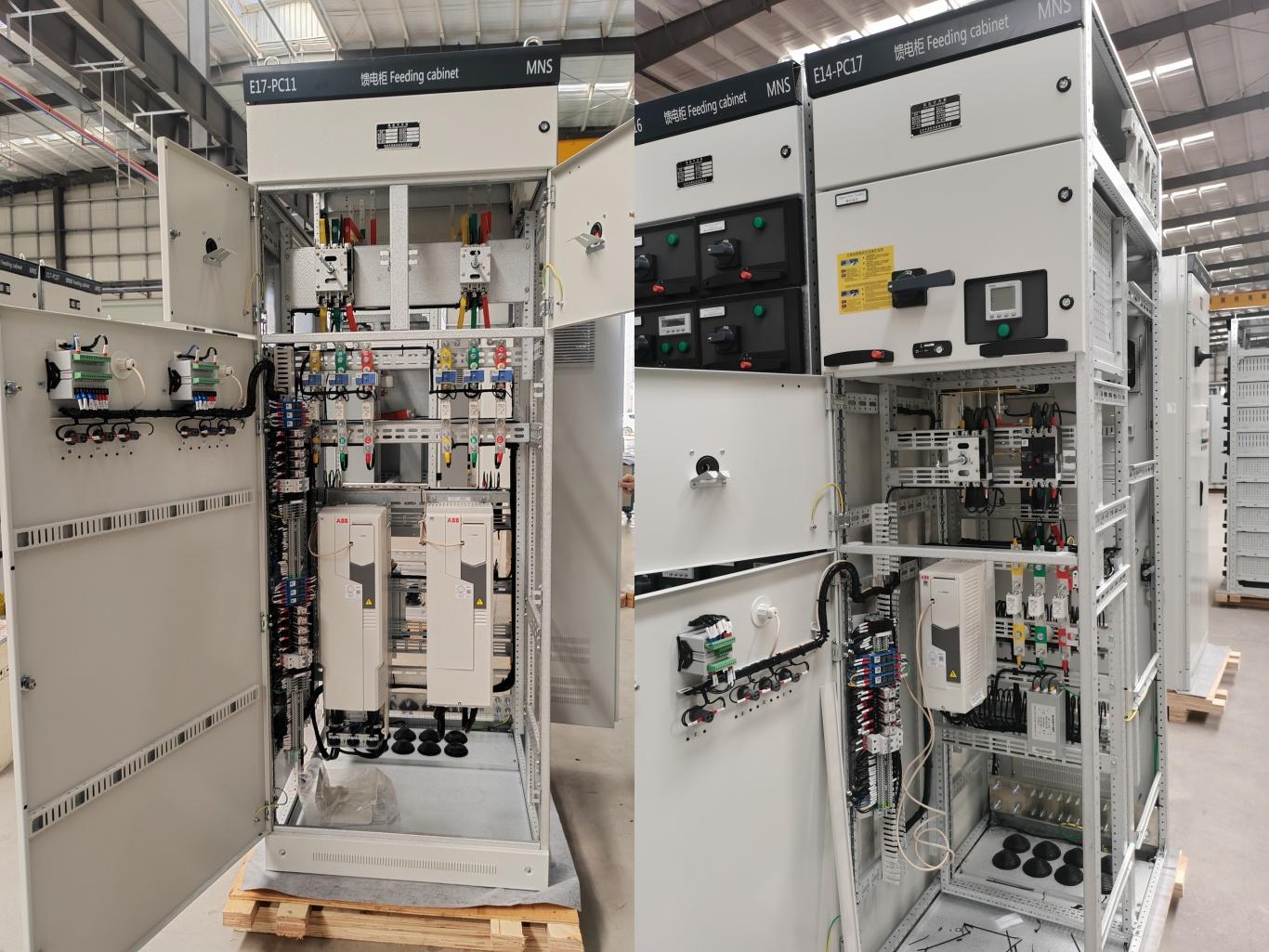

Choosing a suitable VFD control panel is not about getting tangled up in technical theories, but about matching the specifications with the actual application needs. The following factors deserve the most attention.
1. Motor power and load type
First, confirm the motor’s rated power, voltage, and current. At the same time, look at what load the motor is driving. It is recommended to choose a panel slightly larger than the motor’s rated capacity for more reliable operation.
2. Voltage and power supply compatibility
Confirm whether the VFD control panel is compatible with the site’s power supply, voltage level, short‑circuit capacity, etc.
3. Installation environment
Harsh environments require stronger protection and better cooling. Choosing a VFD control panel that suits the actual environment reduces failures and extends life. In some outdoor or temporary power supply projects, it may also be used in conjunction with a containerized substation to improve the overall system’s adaptability.
4. Safety protection functions
Overload, short circuit, overvoltage, undervoltage, overtemperature, phase loss protection, and emergency stop function are all basic configurations. The better the protection, the less downtime and the lower the maintenance cost.
5. Equipment maintenance and future expansion
A clear internal layout, space reserved for adding components, and the use of standardized parts all reduce long‑term operating costs.
FAQs
1. If you’re standing at the start of a project, what should you check first before choosing a VFD control panel?
Start with motor power, voltage, current, and what kind of load it drives. Wondon uses these basics to help you quickly match a VFD panel that actually fits your real operating conditions.
2. Have you ever had unstable performance due to power conditions? What should you check here?
You should confirm the voltage level, power stability, and short-circuit capacity on site. Wondon ensures the VFD control panel is selected to match your real power environment, not just catalog ratings.
3. Is your project running in a tough environment like heat, dust, or outdoor conditions? What changes in selection?
Yes, the environment changes everything. Cooling, enclosure protection, and sealing level become critical. Wondon helps you choose a configuration that can actually survive your site conditions long term.
4. If something goes wrong in operation, what kind of protection would you expect from a good VFD panel?
You should expect protection against overload, short circuit, over/under voltage, phase loss, and overheating. Wondon designs these protections to reduce downtime and keep your system stable in real operation—not just on paper.
5. Planning to expand later or add more equipment—have you considered that in your selection?
If not, it’s worth thinking now. Spare space, flexible layout, and standardized parts make future upgrades much easier. Wondon designs VFD control panels with this “future-proof” idea, so you don’t need a full redesign later.