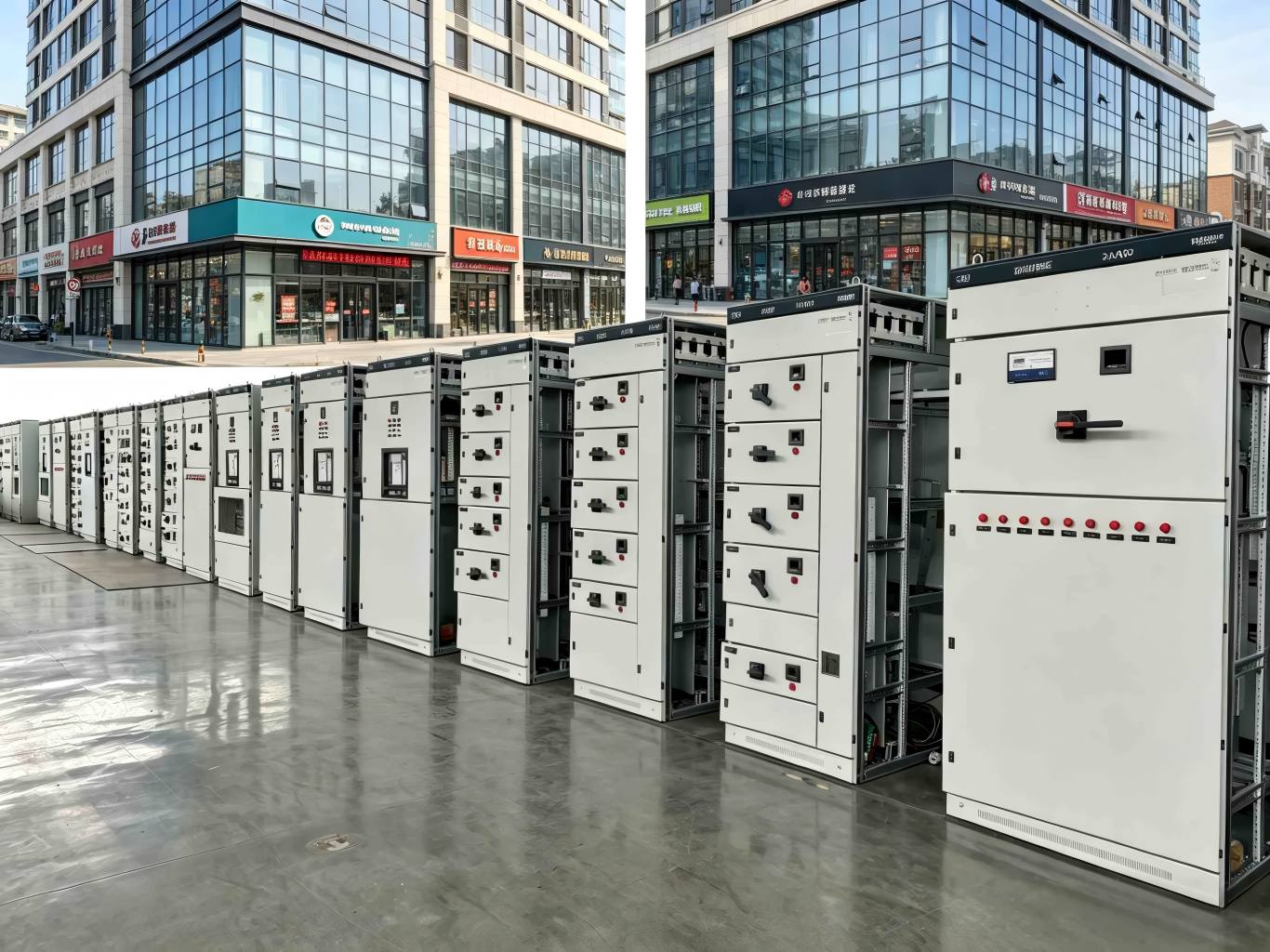

Choosing the right power distribution system is crucial for ensuring the safety, efficiency, and long-term stable operation of a project. Different application scenarios have significantly different requirements.
1. Differences in Load Requirements
Commercial projects have higher and more complex loads; residential projects are relatively simpler.
● Commercial: Air conditioning, elevators, equipment
● Residential: Lighting, appliances
We recommend that you design for future expansion capacity in advance to avoid later upgrade costs.
2. System Complexity
Commercial and residential buildings have different requirements. Commercial systems require higher automation and control capabilities, while residential systems prioritize cost and simplicity.
Our recommended equipment:
● Commercial: Switchgear, transformers, busbar systems
● Residential: Distribution boxes, circuit breakers
3. Safety and Protection Requirements
Commercial projects generally have higher requirements for power supply continuity.
Key equipment:
● Automatic Transfer Switch (ATS)
● Protective Relays
● Voltage and Current Protectors
4. Cost and Performance Balance
Residential projects are budget-sensitive, while commercial projects prioritize stability.
We recommend that you choose a modular solution to achieve a balance between cost and scalability.
Why choose Wondon?
With over 14 years of experience, Wondon provides expert selection advice and customized electrical solutions tailored to the specific project needs of diverse clients. If you are looking for the right solution for your project, feel free to contact us and let our professional electrical design and manufacturing team solve your problems.
FAQs
1. What factors should I consider before choosing a power distribution system?
Key factors include building function, load type, safety level, and whether the system can support future capacity expansion.
2. How do commercial and residential project requirements differ in system design?
Commercial buildings need stronger coordination and control for varied equipment, while residential systems focus more on simplicity and stable daily usage.
3. What equipment combinations are commonly used in different project types?
Commercial setups often integrate transformers, switchgear, and centralized distribution systems, while residential projects typically use compact protection and distribution units.
4. How can system reliability be improved in mixed-demand environments?
Using layered protection strategies and intelligent distribution planning helps reduce risk and maintain stable operation under changing loads.
5. How does Wondon support project-specific power distribution design?
Wondon, as an electrical manufacturing integrator, helps clients develop tailored system configurations based on real project conditions to improve efficiency and adaptability.