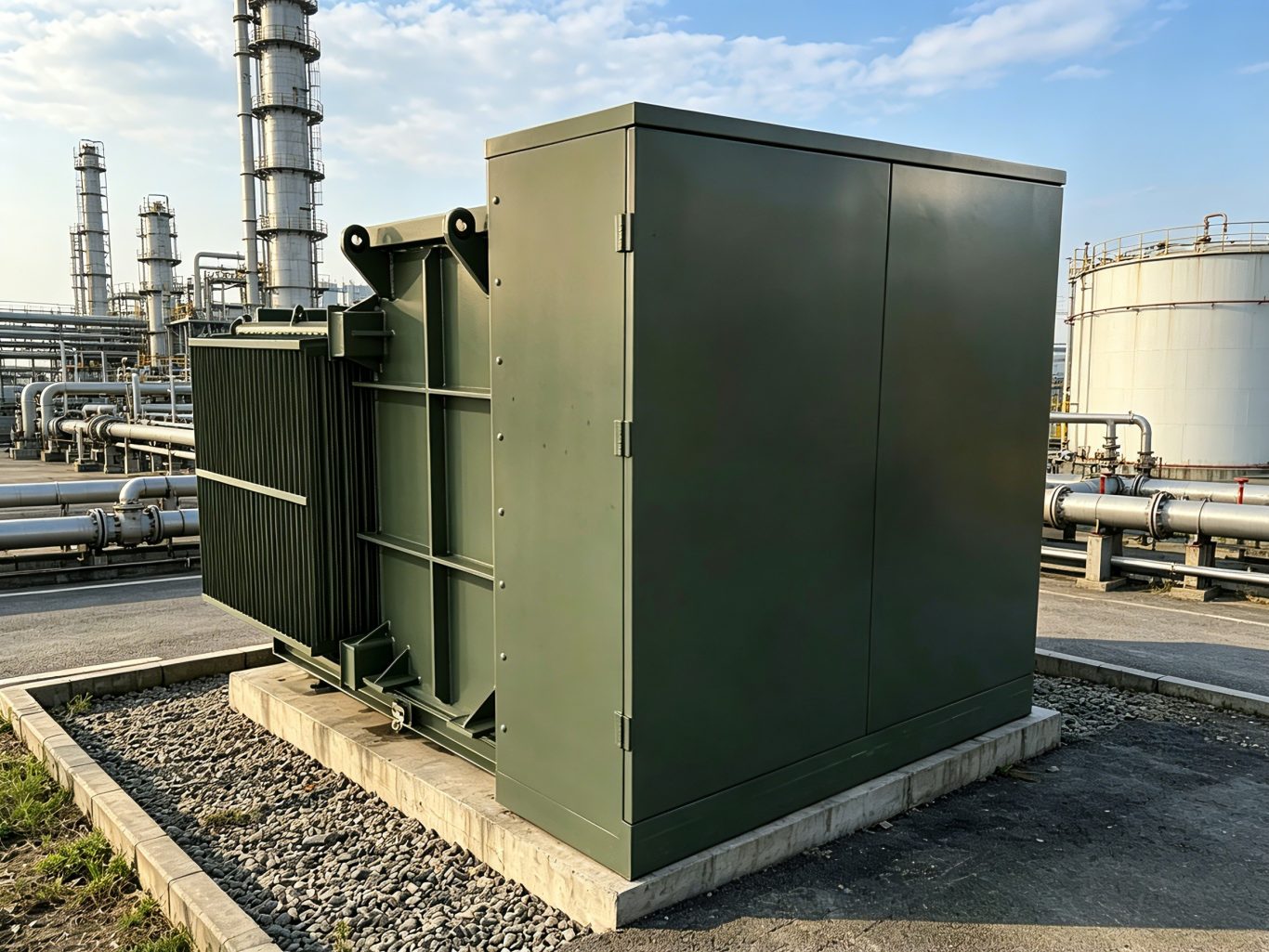

Choosing the right pad mounted transformer for a project is an important step to ensure stable power distribution, operational safety, and long-term project efficiency.
The following five core dimensions cover the key selection factors for choosing a Pad Mounted Transformer, helping you make a clear purchasing decision for your project.
1. Choose Based on Specific Application Scenarios
• Residential areas, commercial buildings
Prioritize public safety and low noise; use noise-reduced silicon steel sheet core design when necessary, and ensure the high-voltage side is fully enclosed and insulated.
• Solar, wind power, and energy storage projects
Photovoltaic power stations are typically exposed to strong ultraviolet light throughout the day, so they require excellent outdoor adaptability and must meet environmental compliance standards for clean energy projects.
• Heavy industry and utilities
Clearly define whether the high-voltage incoming line is loop type or terminal type; copper windings are preferred for the internal windings to ensure reliable and continuous operation.
2. Future Expansion and Full Lifecycle
When determining the power capacity of the transformer, focusing only on the current load often leads to high retrofitting costs later.
• Capacity expansion reserve
For industrial and commercial projects with potential for capacity expansion, reserve 15%–25% capacity above the current maximum calculated load.
• Temperature rise derating
Pad Mounted Transformers typically use a 65°C temperature rise design. If future loads will continuously stay at relatively high levels, specify a dual rating design of 55/65°C during selection, allowing the transformer to achieve a 12% safe overload capability without sacrificing insulation life.
• Energy efficiency cost-performance calculation
The total cost of ownership (TCO formula) for a transformer:
TCO = Transformer purchase price + (A × no‑load loss) + (B × load loss)
A: Capitalization factor for no‑load loss
B: Capitalization factor for load loss
Using high-quality grain-oriented silicon steel or amorphous alloy cores to reduce no‑load loss (core loss) can recover the premium cost of high‑efficiency models within 3–5 years.
3. Evaluate the Outdoor Installation Environment
Pad Mounted Transformers are installed directly in outdoor areas. The external environment directly determines the choice of enclosure material and anti‑corrosion treatment:
• General land
Select heavy‑duty carbon steel enclosure; the surface coating must pass the strict tests specified in IEEE Std C57.12.28 to ensure the equipment does not rust in dusty, high‑rainfall environments.
• Coastal areas and chemical plants
Salt spray and chemical gases are highly corrosive. Stainless steel enclosures and tanks must be specified to fundamentally eliminate the risk of oil leakage and tank corrosion.
• Flood‑prone and high‑seismic mining areas
For low‑lying areas with flood risk, specify raised base channels and fully sealed watertight cable compartments during selection. For high‑vibration scenarios such as mining areas, reinforce the internal active part with anti‑vibration clamping structures.
4. Safety and Maintenance
• Tamper‑resistant mechanical structure
The doors and cabinets of the Pad Mounted Transformer must comply with ANSI/IEEE safety standards. Check whether they are equipped with concealed hinges, three‑point interlocking door latches, and lockable anti‑theft covers to prevent unauthorized access.
• Comprehensive condition monitoring instruments
When purchasing, require the inclusion of oil level indicators, oil thermometers, pressure vacuum gauges, and automatic pressure relief valves as standard. This helps operation and maintenance personnel quickly check the health status of the equipment, reducing downtime and maintenance costs.
• Smart substation interface
Modern power systems can install intelligent monitoring sensors with remote transmission signals (4‑20 mA or Modbus RTU protocol) on the line side to achieve remote monitoring and automatic alarms when abnormalities occur.
FAQs
1. What is a pad mounted transformer and where is it used?
A pad mounted transformer is a ground-level electrical transformer enclosed in a secure, weatherproof cabinet. Wondon transformers are commonly used in residential, commercial, and industrial power distribution for safe, reliable electricity delivery.
2. How do I choose the right size of a pad mounted transformer?
Select based on your system voltage, load requirements, and future expansion. Wondon provides detailed specifications to help you match transformer capacity with your project needs.
3. What are the key safety features of a pad mounted transformer?
Look for features like secure enclosures, grounding, and protective relays. Wondon pad mounted transformers include robust protection to ensure safe operation in urban and industrial environments.
4. Can pad mounted transformers be customized for specific projects?
Yes. Wondon offers customization for voltage ratings, enclosure types, and monitoring options, ensuring the transformer fits your exact project requirements.
5. How do I maintain a pad mounted transformer?
Regular inspection for leaks, corrosion, and proper grounding is essential. Wondon transformers are designed for low maintenance, with accessible components for easy service and long-term reliability.
As a professional transformer integrator, Wondon is committed to providing high‑performance Pad Mounted Transformers for utility, commercial building, industrial manufacturing, and renewable energy projects. Please contact Wondon for professional selection support and customized electrical solutions.