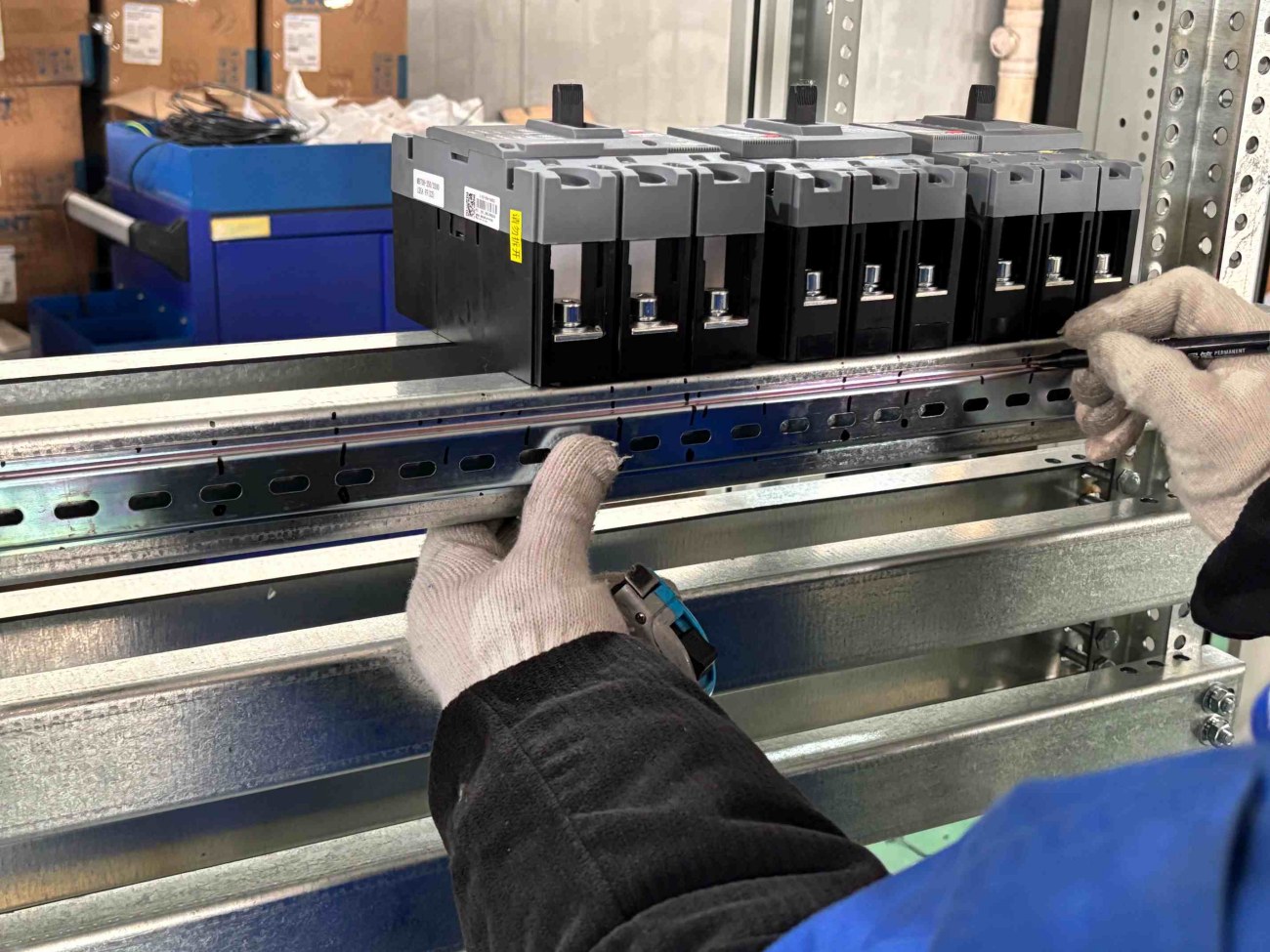

When selecting a molded case circuit breaker (MCCB), you also cannot just look at one parameter. You need to combine the load of the whole power distribution system and the use environment to make a comprehensive judgment, so that the main lines and high-power equipment can run more stably and truly provide safety protection.
1. Assess system load level
Molded case circuit breakers are mainly used on main lines and high-power equipment. First, make a reasonable assessment of the overall load level, then match the corresponding circuit breaker specification to ensure long-term reliable work.
2. Determine rated current capacity
The rated current should be selected based on the total system load and long-term running current. It must meet the normal working needs of the equipment, and also avoid protection failure or frequent tripping caused by unreasonable current selection.
3. Choose a high breaking capacity level
In industrial environments and main power distribution systems, the short-circuit current is usually higher. Therefore, you need to choose a molded case circuit breaker with a higher breaking capacity to ensure reliable interruption when a large fault current occurs, protecting the whole system’s safety.
4. Select trip unit type
Common types are thermal-magnetic and electronic. The thermal-magnetic type is simple and reliable, suitable for basic protection scenarios. The electronic type has higher protection accuracy and adjustable parameters, and can meet more complex control and protection needs.
5. Configure the protection function combination
Besides the standard overload and short-circuit protection, you can also optionally add functions like ground fault protection based on site needs, making protection more complete and able to handle different working conditions.
6. Consider system-level coordination
In a complete power distribution system, the molded case circuit breaker must coordinate with the upstream and downstream switches to achieve selective protection, ensuring that a fault only cuts off the faulty circuit and does not expand the power outage range.
FAQs
1. For my power distribution project, what should I evaluate first before selecting an MCCB?
Start with the overall system load and application scenario. Wondon helps assess your main line and equipment demand to ensure stable long-term operation.
2. How do I choose the right MCCB current rating without causing nuisance tripping?
The rated current should match both the operating load and future margin. Wondon helps balance protection, reliability, and operational continuity for your system.
3. If my project has a high fault current risk, what should I pay attention to?
Focus on breaking capacity. Wondon recommends MCCBs with suitable interrupting capability to ensure safe fault isolation in industrial environments.
4. Which trip unit is more suitable for my application: thermal-magnetic or electronic?
Thermal-magnetic is ideal for standard protection, while electronic trip units suit more complex systems. Wondon helps select the right protection method based on your project needs.
5. In a complete distribution system, how can I avoid one fault shutting down the whole site?
Proper selective coordination is critical. Wondon designs coordinated upstream and downstream protection to limit outages only to the faulty circuit.