

If you are scoping a substation, a plant upgrade, or a new connection, the single decision that shapes your whole power distribution is the medium voltage (MV) switchgear. Get it wrong and you live with higher fault risk, costly redesign, or a unit that simply will not fit the room. This guide walks through how to choose medium voltage switchgear the way our engineering team actually does it — step by step, with the real ratings that decide the shortlist.
Most buyers start by searching how to choose medium voltage switchgear because they already sense the stakes, but the results are often thin on the ratings that actually decide the shortlist. We build MV switchgear at Wondon’s 12,000 m² manufacturing facility in Zigong, China, and we walk clients through this exact checklist almost every week. The goal here is simple: give you a framework you can take to any supplier, including us, and get a defensible answer instead of a sales pitch. For the full range of builds we offer, see our medium voltage switchgear overview.
Start with Your System Voltage
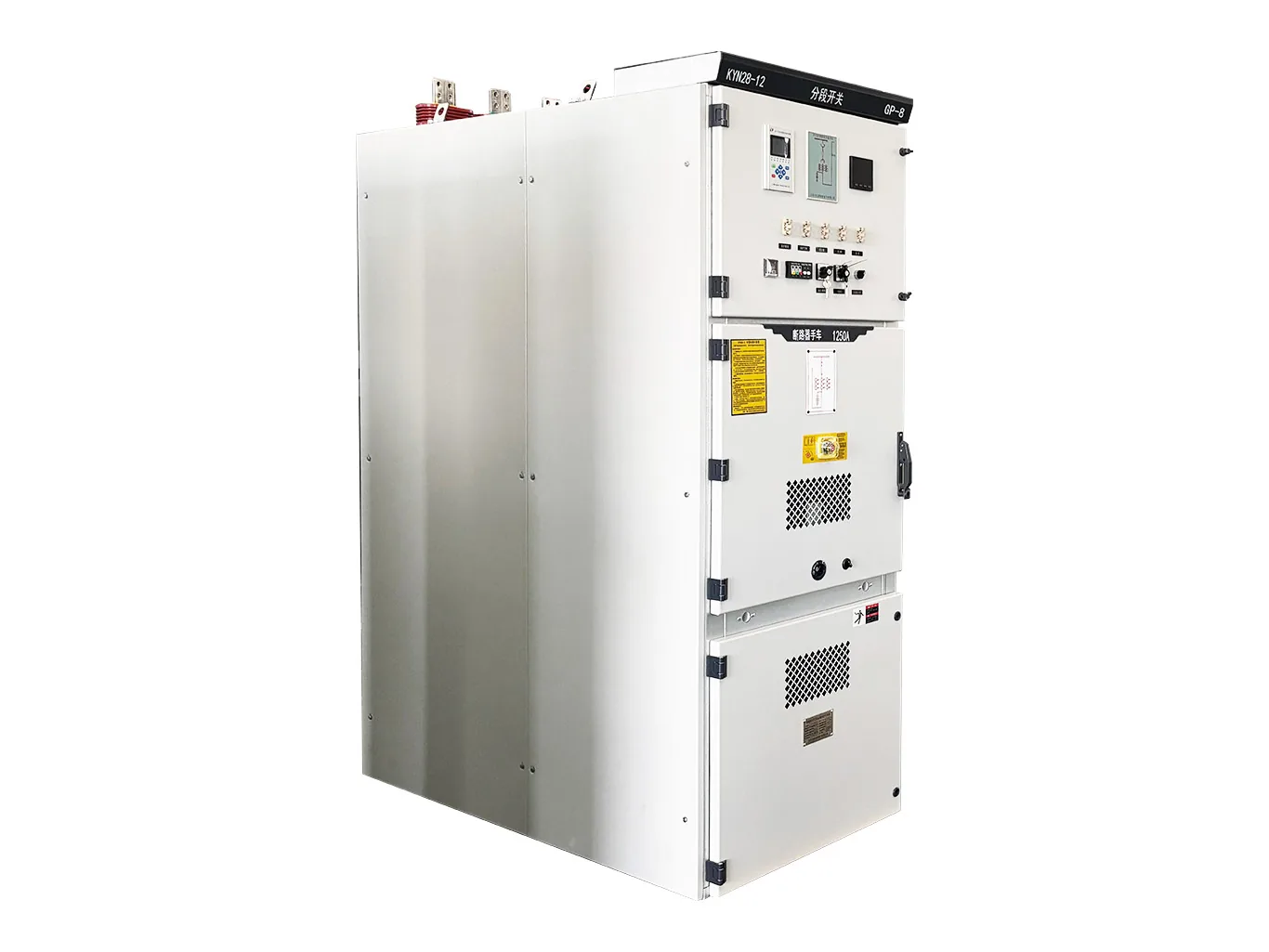
The first rule of how to choose medium voltage switchgear is to lock the system voltage before anything else. Medium voltage typically covers 1 kV up to 35 kV or 40.5 kV, and the switchgear rated voltage must be equal to or higher than your network’s nominal voltage. In practice, most industrial and utility projects land on 12 kV, 24 kV, or 35 kV / 40.5 kV.
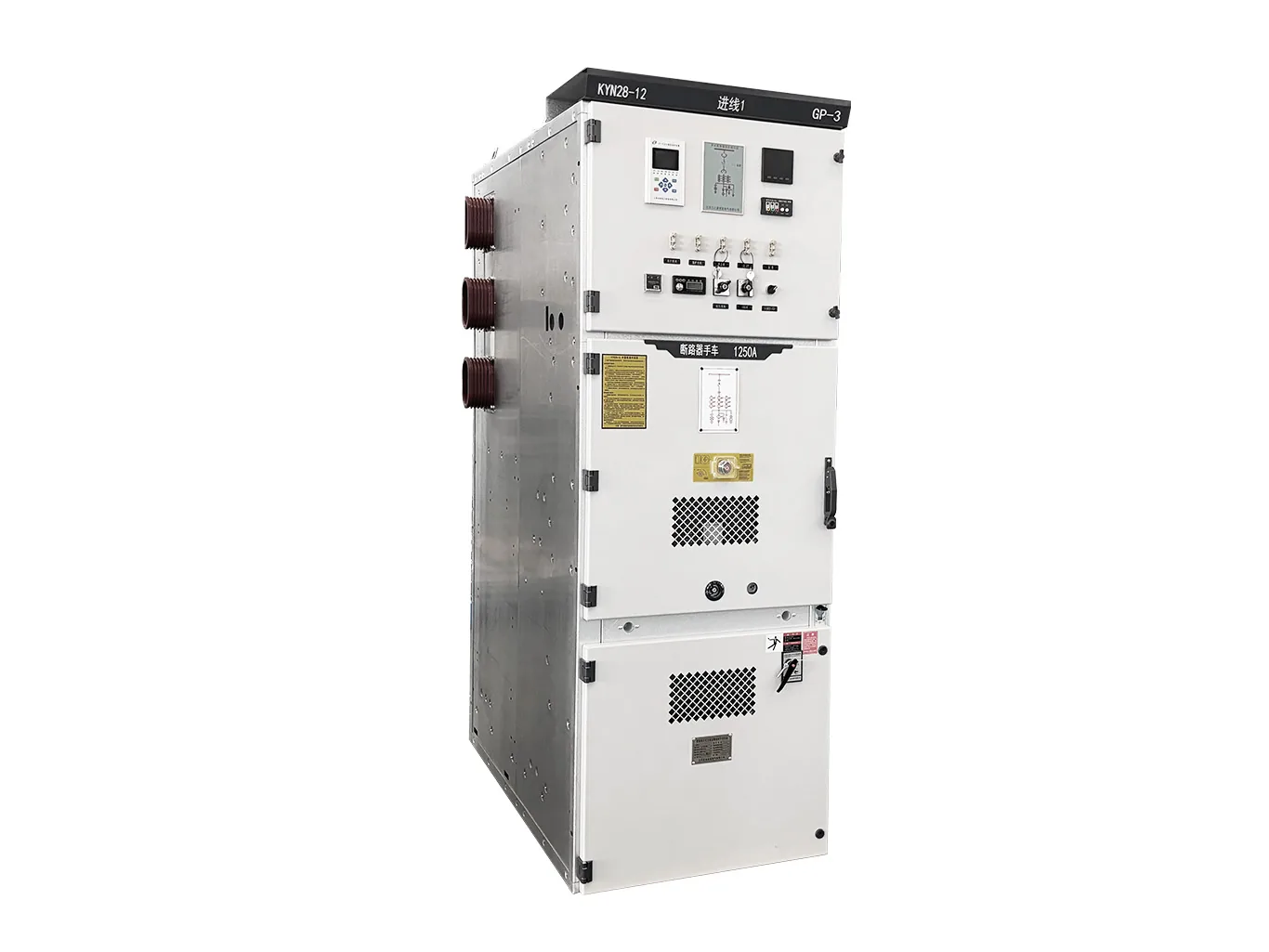
- A 12 kVsystem usually pairs with a metal-clad withdrawable line such as our KYN28-12 (rated 12 kV).
- A 35 kV / 40.5 kVsystem needs a higher-rated line such as our KYN61-40.5 (rated 40.5 kV).
Match the rated voltage first. If you skip this, every other parameter below is built on sand.
Size the Load Current and Plan for Expansion
Rated current is the continuous current the switchgear must carry. Look at your present maximum demand, then add a margin for expansion — most plants grow, and re-rating a cubicle later is expensive. A common rule we apply is 20% to 30% headroom above the calculated peak load.
Our lines cover the typical range: the KYN28-12 carries up to 1250 A, while the KYN61-40.5 goes up to 1600 A for heavier 35 kV feeds. If your load is modest — a building ring network, for example — a 630 A ring main unit such as the HXGN-12 or the gas-insulated WDSRM6-12 is usually enough. When you choose medium voltage switchgear for a growing plant, the expansion margin is the line item you will thank yourself for later.
Know Your Fault Level (Short-Circuit Breaking Capacity)
This is the rating people under-specify most often, and it is where how to choose medium voltage switchgear gets serious. The switchgear must be able to break the maximum short-circuit current your network can deliver, taken from a short-circuit study — not a guess.
Look at the breaking capacity:
- KYN28-12: 31.5 kA breaking capacity — suited to substations and industrial mains where fault levels are high.
- HXGN-12 / WDSRM6-12: 20 kA — right for radial networks and buildings with lower fault contribution.
- DFW-12(outdoor cable branch cabinet): 25 kA for 4 s, 63 kA peak — built for outdoor distribution nodes.
If you are unsure of the fault level, that is the first thing to ask your utility or protection engineer. Under-rating here is not a cost saving; it is a hazard.
Pick the Insulation Medium
MV switchgear is grouped by what insulates the live parts: air, gas (SF₆ or mixed), or solid (epoxy). Each has a clear trade-off.
- Air-insulated (AIS)is simple, easy to inspect, and lower cost, but it needs more floor space and is sensitive to dust, humidity, and salt.
- Gas-insulated (GIS / RMU)is compact and sealed against the environment. Our WDSRM6-12 is a fully insulated, sealed ring main unit rated IP67, which is why it works in damp, dusty, or semi-outdoor sites where air-insulated gear would age fast.
- Solid-insulatedsits between the two on size and cost.
For a space-tight urban room or a harsh site, gas insulation usually wins. For a clean indoor room with room to spare, air insulation is the economical default. If you want the full type breakdown with ratings, our MV switchgear complete guide covers each family in detail.
Choose the Construction Type
Two splits matter here: metal-clad vs metal-enclosed, and fixed vs withdrawable.
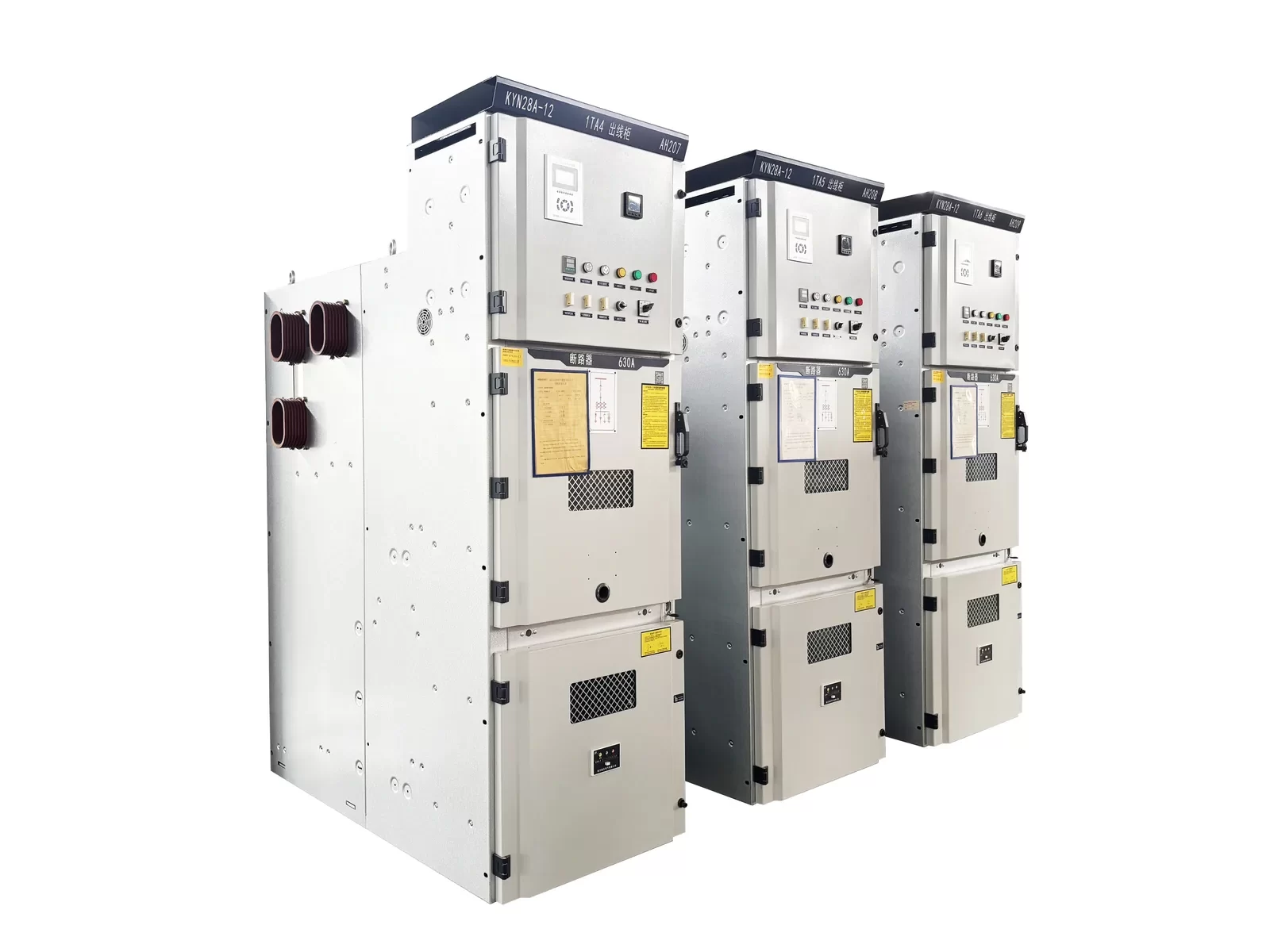
A metal-clad, withdrawable design — like the KYN28-12 — puts each function (breaker, busbar, cable) in its own grounded metal compartment. The breaker sits on a truck you can pull out for maintenance without a full shutdown. That is the format we recommend for mains and critical feeds because it trims downtime.
A fixed or simpler metal-enclosed unit costs less and suits smaller, lower-criticality branches. The trade-off is maintenance access: you generally de-energize more of the system to service it. A simple rule for how to choose medium voltage switchgear is to match construction to criticality — mains get withdrawable, branches can be fixed.
Match the Installation Environment
Where the gear lives decides the enclosure. Indoor rooms let you use standard enclosures. Outdoor sites need weatherproof, corrosion-resistant, temperature-rated units.
Our DFW-12 outdoor high-voltage cable branch cabinet is rated IP44, built for −40 °C to +45 °C, and handles sites up to 2000 m altitude — a real outdoor node for utilities and urban networks. If your plan is a full outdoor substation, a prefabricated unit packages the MV switchgear, transformer, and LV board into one weatherproof enclosure.
Also weigh temperature, humidity, altitude, and pollution level. Altitude in particular derates insulation and breaking capacity, so specify it up front rather than discovering it after commissioning. The indoor-versus-outdoor split is a topic on its own — our indoor and outdoor switchgear guide breaks it down. When you choose MV switchgear for a mixed site, get this split right first.
Don’t Skip Safety Ratings
Two ratings protect people, and they belong in every specification:
- IAC (Internal Arc Classification)per IEC 62271-200 — confirms the enclosure contains an internal arc and directs the pressure away from personnel. For any indoor or occupied installation, specify at least IAC A FLR (front, lateral, rear, tested at your fault level and time).
- LSC (Loss of Service Continuity)— tells you whether a fault or maintenance on one compartment drops the rest of the board.
These are not box-ticking. An internal arc can reach 20,000 °C in milliseconds; the classification is what keeps your team alive.
Plan for Automation and Monitoring
Not every project needs it, but if you run a remote site, a critical process, or a smart-grid interface, build in the option for protection relays, metering, and remote control. Withdrawable, compartmented boards integrate this cleanly. Decide this early — it is one of the points where how to choose medium voltage switchgear differs from simply buying the cheapest board, and retrofitting sensing later is painful and costly.
Confirm Standards Compliance
Before you commit, confirm the applicable standards — a step every guide on how to choose medium voltage switchgear must include but many buyers skip. For MV switchgear the key references are IEC 62271-200 (AC switchgear, including internal arc) and, for the Chinese market, GB/T 3906. Local utilities may add their own type-test or approval requirements. Ask the supplier for the type-test certificates against the exact standards you must meet — a credible supplier hands them over without hesitation.
Wondon Product Quick-Reference
A quick map of where our standard lines fit. (Ratings are the published type-test values; withstand voltages are confirmed per the relevant type-test report.)
| Product | Rated voltage | Rated current | Breaking capacity | Type | Best suited for |
|---|---|---|---|---|---|
| KYN28-12 | 12 kV | 1250 A | 31.5 kA | Metal-clad, withdrawable, indoor | Industrial plants, utility mains, main distribution |
| KYN61-40.5 | 40.5 kV | 1600 A | 31.5 kA | Metal-clad, withdrawable, indoor | 35 kV substations and feeders |
| HXGN-12 | 12 kV | 630 A | 20 kA | RMU, metal-enclosed, indoor | Compact ring networks, commercial buildings |
| WDSRM6-12 | 12 kV | 630 A | 20 kA | Gas-insulated RMU, IP67 | Harsh or semi-outdoor sites, space-tight rooms |
| DFW-12 | 12 kV | 630 A | 25 kA (4 s) / 63 kA peak | Outdoor cable branch cabinet, IP44 | Outdoor networks, urban and utility nodes |
The 10-Point Selection Checklist
Our ten-point list is the practical core of how to choose medium voltage switchgear without missing a rating. Print it and work top to bottom before you ask for a quote:
- System nominal and maximum voltage (e.g., 12 kV, 35 kV).
- Maximum load current, plus 20–30% expansion margin.
- Short-circuit fault current from a proper network study.
- Indoor or outdoor, and the IP rating that follows.
- Ambient temperature range, humidity, and altitude.
- Insulation medium — air, gas, or solid.
- Withdrawable vs fixed construction.
- Internal arc classification (IAC) and loss-of-service continuity (LSC).
- Protection, metering, and automation needs.
- Applicable standards (IEC 62271-200, GB/T 3906, local approvals).
If you can answer those ten, any competent supplier can return a defensible specification. If you cannot, that is the gap to close first.
Common Mistakes When Specifying MV Switchgear
These are the slips we see most when teams try to choose medium voltage switchgear on price and speed alone:
- Under-specifying fault capacityto save cost — the most dangerous cut.
- Ignoring altitude deratinguntil commissioning fails.
- Putting indoor-rated gear outsidebecause the room was “planned later.”
- Leaving no expansion margin, then overloading within two years.
- Skipping IACon an indoor board to save a few percent.
- Choosing on price alonewithout type-test certificates against the right standard.
None of these saves money in the long run. They move the cost to downtime, redesign, or risk.
Frequently Asked Questions
1. What is the first thing I should define when choosing MV switchgear?
When you choose medium voltage switchgear, start with system voltage and fault level from a network study. Those two numbers decide which product families are even eligible before you look at anything else.
2. How much current margin should I leave?
We typically recommend 20% to 30% above the calculated peak load. It covers normal growth and avoids an early, expensive re-rate.
3. Air-insulated or gas-insulated — which should I pick?
It depends on space and environment. Air-insulated is cheaper and easier to service but needs more room and clean conditions. Gas-insulated (like our WDSRM6-12, IP67) suits tight or harsh sites. Match the medium to the room, not the budget.
4. Do I really need an internal arc (IAC) rating?
For any indoor or occupied installation, yes. IAC per IEC 62271-200 confirms the enclosure contains an arc and protects personnel. It is a safety specification, not a nice-to-have.
5. Can Wondon help if my project details are incomplete?
Yes. Many clients come to us with only voltage, rough load, and a site photo. We turn that basic information into a shortlist and a specification, then refine it as details firm up.
6. How does altitude affect the selection?
Above roughly 1000 m, air density drops and insulation and breaking performance derate. Tell your supplier the site altitude up front so the unit is specified (or compensated) for it.
Talk to Our Engineering Team
That is how to choose medium voltage switchgear with confidence: a specification exercise, not a guess. Run the ten-point checklist, match the ratings to your site, and let the environment decide the enclosure and insulation. For a broader medium voltage switchgear selection guide, our MV switchgear complete guide walks through every family with its ratings and supports your mv switchgear selection.
If your details are still forming, that is normal — contact us with your voltage, load, and site conditions, and we will help you turn them into a clear, defensible MV switchgear specification.