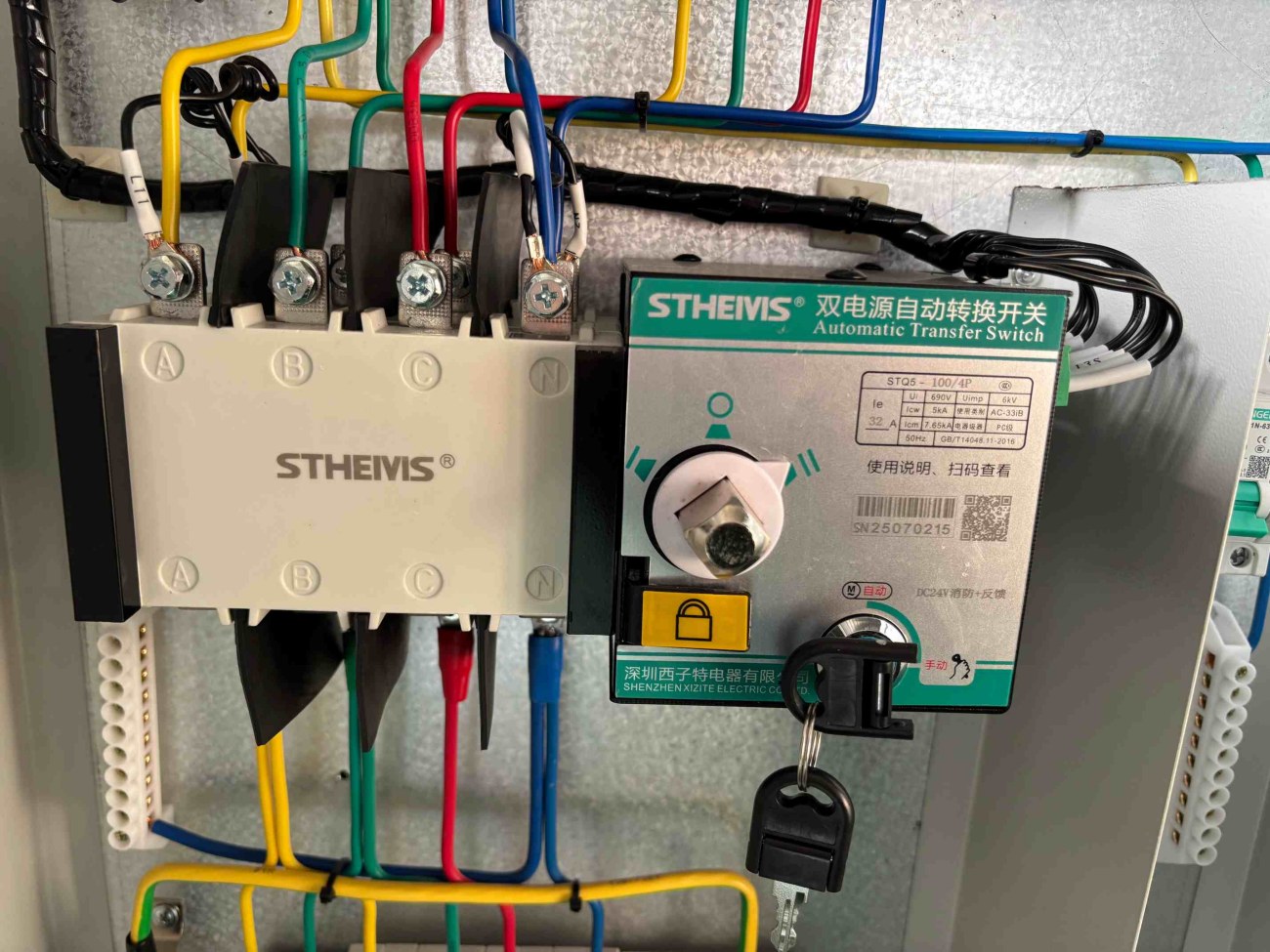

Choosing a suitable automatic transfer switch (ATS) control panel is an important step in planning a reliable backup power system. In many industrial, commercial, and infrastructure projects, choosing the right ATS control panel ensures smooth and reliable power transfer and avoids unnecessary later modifications and maintenance.
1. Power source type
In most systems, the ATS control panel connects the main power source (e.g., utility power) and the backup power source (e.g., diesel generator). The voltage levels and operating conditions of these two power sources must match the control panel to ensure smooth switching without conflicts.
2. Load capacity
The total electricity used by the connected equipment determines the rating of the ATS control panel. Large motors, production lines, or commercial complexes require much more current than small devices. In addition, consider future expansion and leave some margin, so that even if power consumption increases, the ATS control panel can still handle it.
3. Conversion requirements
Different projects have different requirements for the transfer speed and smoothness of the ATS control panel. Choose a panel that meets your expected transfer performance to reduce operational interruptions.
4. Installation conditions
Where the ATS control panel is installed directly affects its durability. If the environment has high humidity, high dust, or large temperature variations, the enclosure protection needs to be strengthened. If installed indoors in a clean environment, standard protection is sufficient. Matching the panel design to the actual installation location reduces maintenance frequency and ensures long‑term reliability.
5. System reliability
The ATS control panel is the critical connection point between the power sources and the critical loads. Paying attention to design quality, compatibility with existing equipment, and system integration can effectively reduce the risk of unexpected power outages.
FAQs
1. When selecting an ATS control panel, what should I look at first?
Start with your power sources—utility power and backup generator. Their voltage and operating conditions must match. Wondon designs ATS systems to ensure smooth coordination between both sources.
2. How do I know what ATS capacity I need?
It depends on your total load, especially motors, production lines, or building systems. Wondon helps size the ATS correctly and also considers future expansion needs.
3. Does transfer speed really matter for ATS performance?
Yes, it directly affects downtime during switching. Wondon recommends the right transfer speed based on how critical your operation is.
4. What kind of installation environment should I plan for?
Humidity, dust, and temperature all matter. Wondon adjusts enclosure protection levels to match your real installation conditions for long-term stability.
5. What makes a reliable ATS system in real operation?
Stable design, strong compatibility, and safe integration with existing systems. Wondon focuses on system-level reliability to reduce unexpected power interruptions.