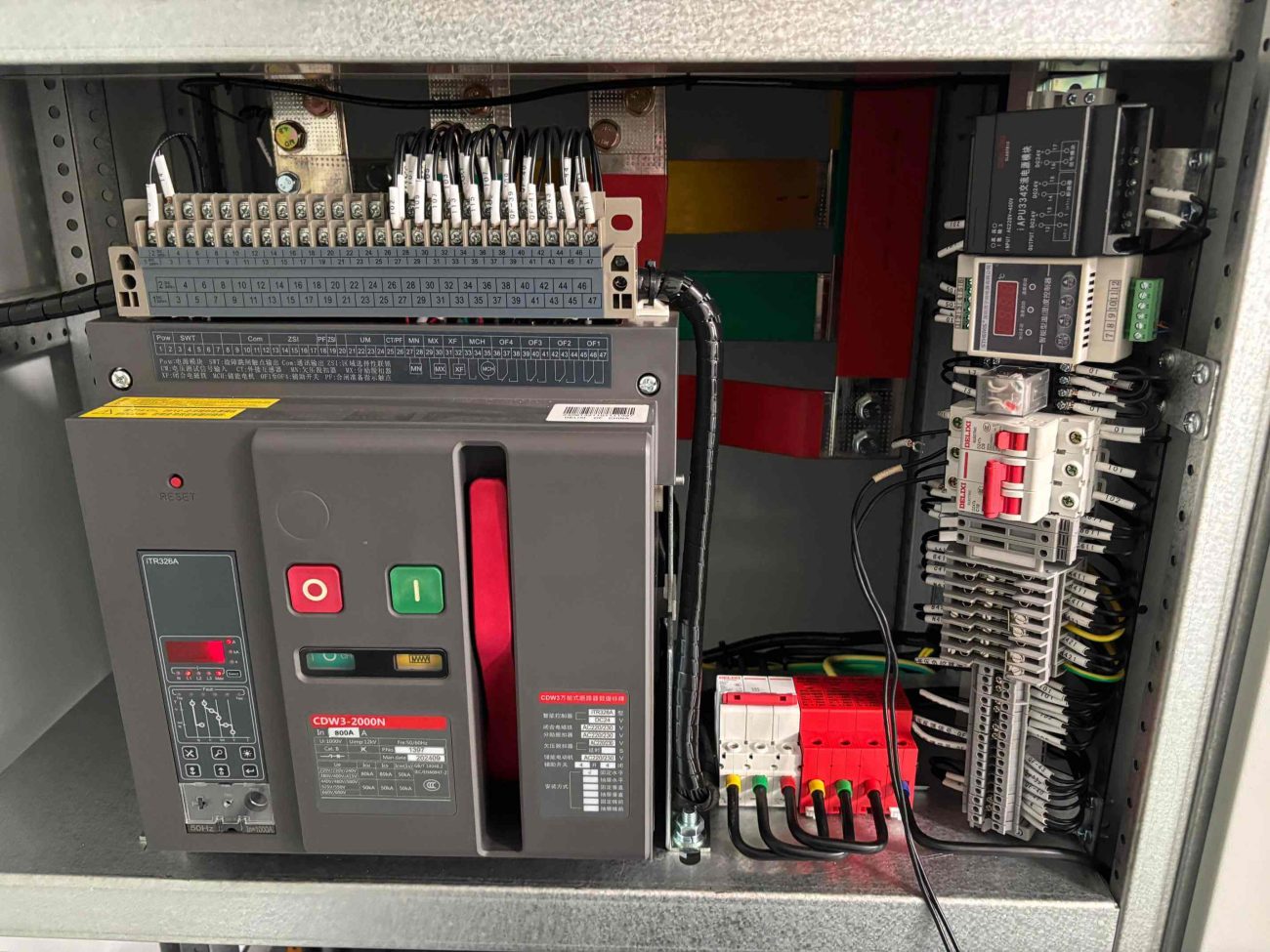

Selecting an air circuit breaker doesn’t require complex calculations; simply focus on the following nine points and align them with the specific requirements of your project to ensure you make the right choice.
Determine the Application
First, clearly identify where this circuit breaker will be installed: Will it serve as the main switch controlling the entire power distribution system? Clarifying its intended purpose from the outset ensures that your subsequent selection process stays on track.
Rated Current
This refers to the maximum current the circuit breaker can continuously and stably carry over time. It should be selected to be slightly higher than your actual load current. If you choose a rating that is too high, the breaker may fail to trip in response to minor circuit faults, thereby failing to provide adequate protection; conversely, if you choose a rating that is too low, it may trip frequently during normal operation, disrupting usage.
Rated Voltage
Simply put, this rating must correspond exactly to the voltage of your home or facility’s power supply. Pay close attention to this detail during selection; if the voltage ratings do not match, the air circuit breaker cannot be utilized and may even pose a safety hazard.
Breaking Capacity
A short circuit in a line generates an extremely high surge of current; the breaking capacity represents the circuit breaker’s ability to safely interrupt—or break- this massive current flow. This capacity must exceed the maximum potential short-circuit current that could occur in your specific circuit; otherwise, the breaker will fail to interrupt the fault during a short circuit, potentially leading to equipment damage or even fire.
Tripping Unit
Modern circuit breakers are equipped with built-in protection functions designed to handle circuit overloads and short circuits; some models even offer leakage protection. Opting for a model with an adjustable tripping unit is highly recommended, as it allows you to fine-tune the protection sensitivity to suit your specific load conditions, making it a more practical and versatile choice.
FAQs:
1. When I define the application, how does it affect my ACB selection?
It decides whether the ACB is used as a main switch or for specific protection. Wondon helps map your installation point so the ACB matches the real system role from the start.
2. How should I set the rated current without causing nuisance tripping or protection failure?
It should be slightly higher than the actual operating load. Wondon evaluates your load data to balance stable operation and reliable protection.
3. Why is matching rated voltage so critical in real projects?
Because a mismatch can cause failure or safety risks. Wondon ensures voltage compatibility between your site’s power system and the selected ACB.
4. How do I decide the right breaking capacity for my system?
It must exceed the maximum possible short-circuit current. Wondon calculates fault level conditions to recommend a safe and suitable breaking capacity.
5. Is an adjustable tripping unit really necessary for industrial use?
Yes, especially when load conditions vary. Wondon recommends adjustable protection settings to improve flexibility and long-term system stability.