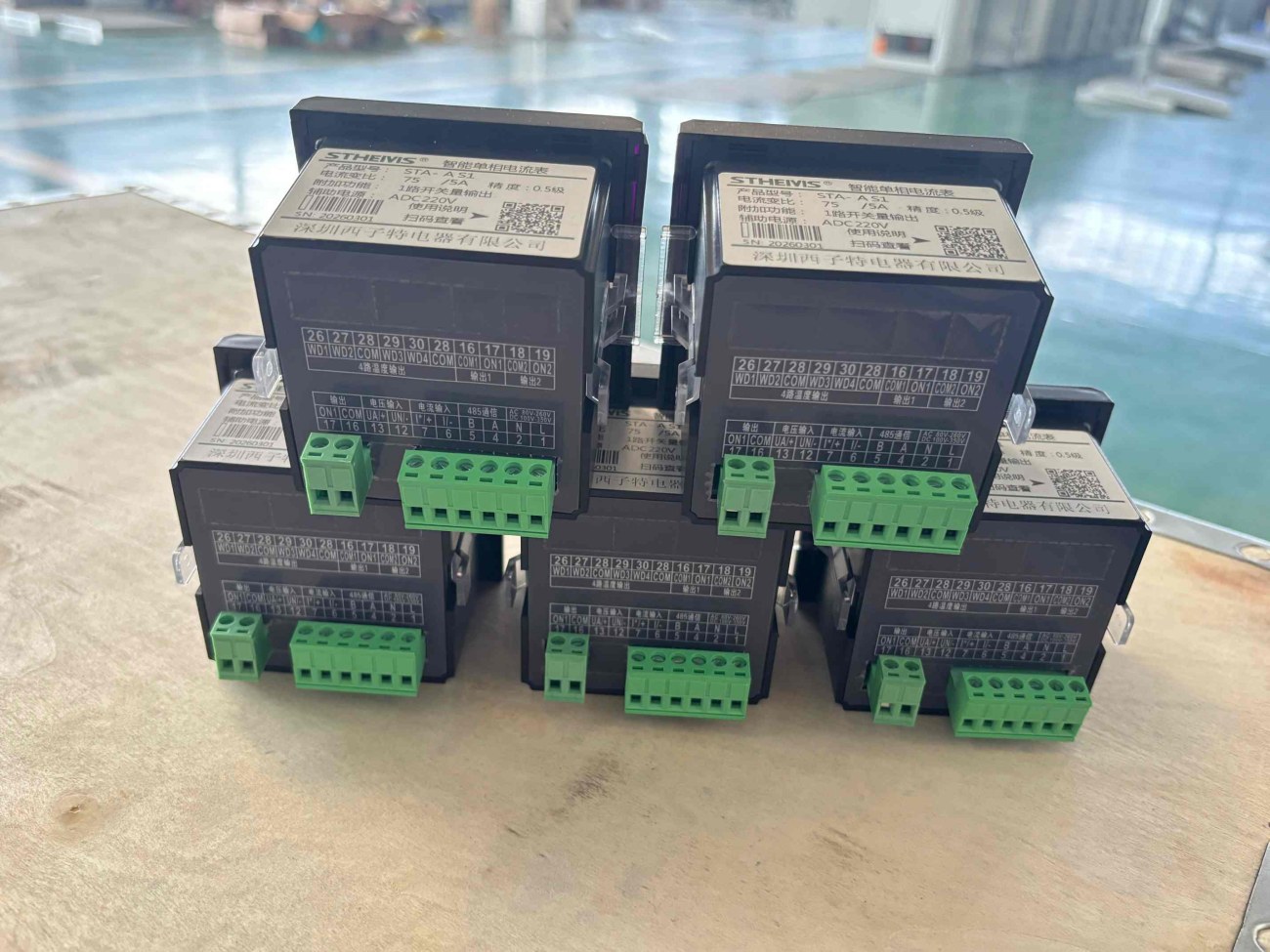

When selecting a multifunction meter, disregard the flashy marketing hype; instead, focus on the following seven key factors. By evaluating these points in the context of your specific site conditions, you can ensure you avoid pitfalls, prevent financial waste, and find a device that perfectly aligns with your operational needs.
1. System Type
Start by confirming the type of electrical system used on your site, as this directly determines the correct multifunction meter selection.
Single-phase systems are typically found in residential buildings and light commercial equipment, where a single-phase energy meter is sufficient for basic monitoring needs.
In contrast, industrial facilities such as factories, production lines, and workshops usually operate on three-phase power systems (including 3-phase 3-wire or 3-phase 4-wire configurations). In these high-load environments, a three-phase multifunction meter is essential.
Choosing the wrong meter type can lead to inaccurate readings or even make the device completely inoperable, so system identification is the first critical step in proper selection.
2. Voltage and Current Range
The meter’s voltage rating must match the actual voltage at your site—common examples include 220V and 380V—to ensure proper operation. Regarding current: for low-current applications (≤100A), the meter can be connected directly to the circuit. However, for the high-current loads typical of industrial facilities, a Current Transformer (CT) is essential for connection; failure to use a CT will result in the meter burning out.
3. Accuracy Class
For simple, routine monitoring tasks, an Accuracy Class 1 meter is sufficient and offers excellent value for money. However, if the meter is intended for billing purposes or for precise energy consumption analysis, you must select a Class 0.5 or Class 0.2 device. While higher accuracy generally comes with a higher price tag, there is no need to blindly pursue the highest possible precision; simply choose the class that best meets your specific requirements.
4. Measurement Functions
The four fundamental measurement parameters—voltage, current, power, and energy—are essential; a meter lacking even one of these functions is inadequate. If you require power quality analysis—such as monitoring power factor, frequency, or harmonics—then you should select a model equipped with these advanced features; for standard applications, however, there is no need to incur the additional cost for these extra capabilities.
5. Communication Capabilities
If you require remote data monitoring or centralized management, you must select a model equipped with communication capabilities. For industrial field applications, the RS485 + Modbus protocol offers the highest stability and is the standard choice for networking multiple devices; for smart buildings and IoT projects, Ethernet or Wi-Fi models are recommended for more convenient remote access.
6. Mounting Method
For standard electrical distribution cabinets, panel-mount models are typically used; these can be installed easily, provided the necessary cutout holes have been prepared in advance. For smaller systems, photovoltaic projects, or OEM integration, DIN-rail mount models are preferred due to their installation flexibility and space-saving design.
7. Functional Expansion
High-end power meters feature advanced capabilities such as alarm functions, data logging, remote control, and multi-circuit monitoring, making them suitable for complex operational environments. For general applications, a basic model is sufficient; since additional features come at an extra cost, selecting functions you do not actually need constitutes a waste of resources.
FAQs
1. What should I check first when selecting a multifunction meter?
Start with system type—single-phase or three-phase.In Wondon projects, correct system matching is the first step to avoid installation and reading errors.
2. How do I choose the right voltage and current range?
Match the meter to your actual system voltage (e.g., 220V/380V) and use CTs for high current. Wondon recommends CT-based solutions for industrial load stability and safety.
3. What accuracy class do I need?
Class 1.0 for general monitoring, Class 0.5 or 0.2 for billing or precise analysis. Wondon helps clients balance cost and accuracy based on project purpose.
4. Which communication protocol is commonly used?
RS485 with Modbus is standard for industrial systems; Ethernet is used for smart monitoring. Wondon often integrates meters into SCADA or energy management systems.
5. What is the most common selection mistake?
Choosing based on price instead of system requirements. Wondon always emphasizes that correct specification matching ensures long-term reliability.