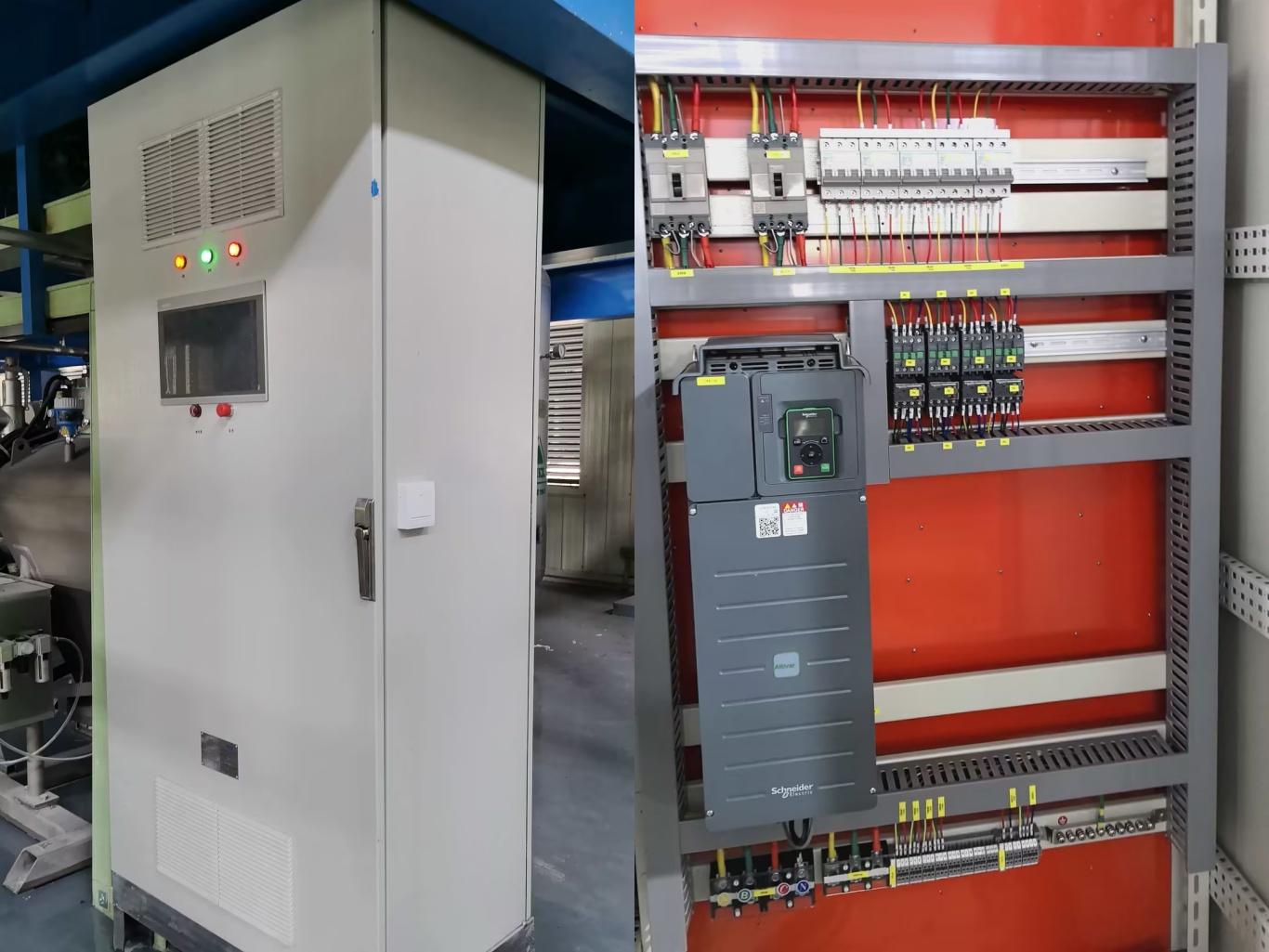

The Working principle of the VFD control panel explains how it adjusts motor speed and voltage for efficient and stable operation across industries. The working principle of the VFD control panel is to convert fixed‑frequency AC power into AC power with adjustable voltage and frequency, thereby controlling the motor’s speed and torque.
The whole process is divided into three steps:
1. Rectification
The standard AC power coming from the power source first passes through the rectifier module and is converted into DC power, turning the fluctuating AC into a stable unidirectional current.
2. Filtering and stabilization
The DC power enters the DC bus section, where components such as capacitors filter out the ripple in the voltage, resulting in a smooth DC voltage.
3. Inversion adjustment
The stable DC power then passes through the inverter and is converted back to AC power. But this time, the output AC power has adjustable voltage and frequency as needed. The most critical part here is frequency adjustment: when the frequency is low, the motor speed is slow; when the frequency is high, the motor rotates fast. At the same time, the voltage is adjusted accordingly to ensure the motor’s magnetic field remains stable.
FAQs
1. When you first bring power into a VFD control panel, have you ever wondered what actually happens inside?
The system first converts AC into DC through rectification. Wondon designs this stage to stabilize incoming power so the motor drive process starts clean and controlled.
2. After conversion to DC, why can’t the system use it directly—what’s missing here?
The DC still contains ripple and instability, so it must be smoothed through filtering. Wondon ensures this stage delivers a stable DC bus, which is essential for reliable motor control.
3. How does the panel actually turn stable DC into a controllable motor speed?
It uses an inverter to convert DC back into AC with adjustable frequency and voltage. Wondon VFD systems control this frequency precisely—this is what directly sets motor speed in real operation.
4. If you change the frequency in your system, what difference would you notice on site?
You would see the motor speed change instantly—slower at low frequency, faster at high frequency. Wondon keeps voltage and frequency coordinated, so performance stays smooth even during changes.
5. In your project, what problem are you actually solving by using this whole process?
You’re replacing fixed-speed operation with flexible control that matches real load demand. Wondon VFD control panels help you achieve smoother operation, better energy use, and more stable system behavior in daily work.