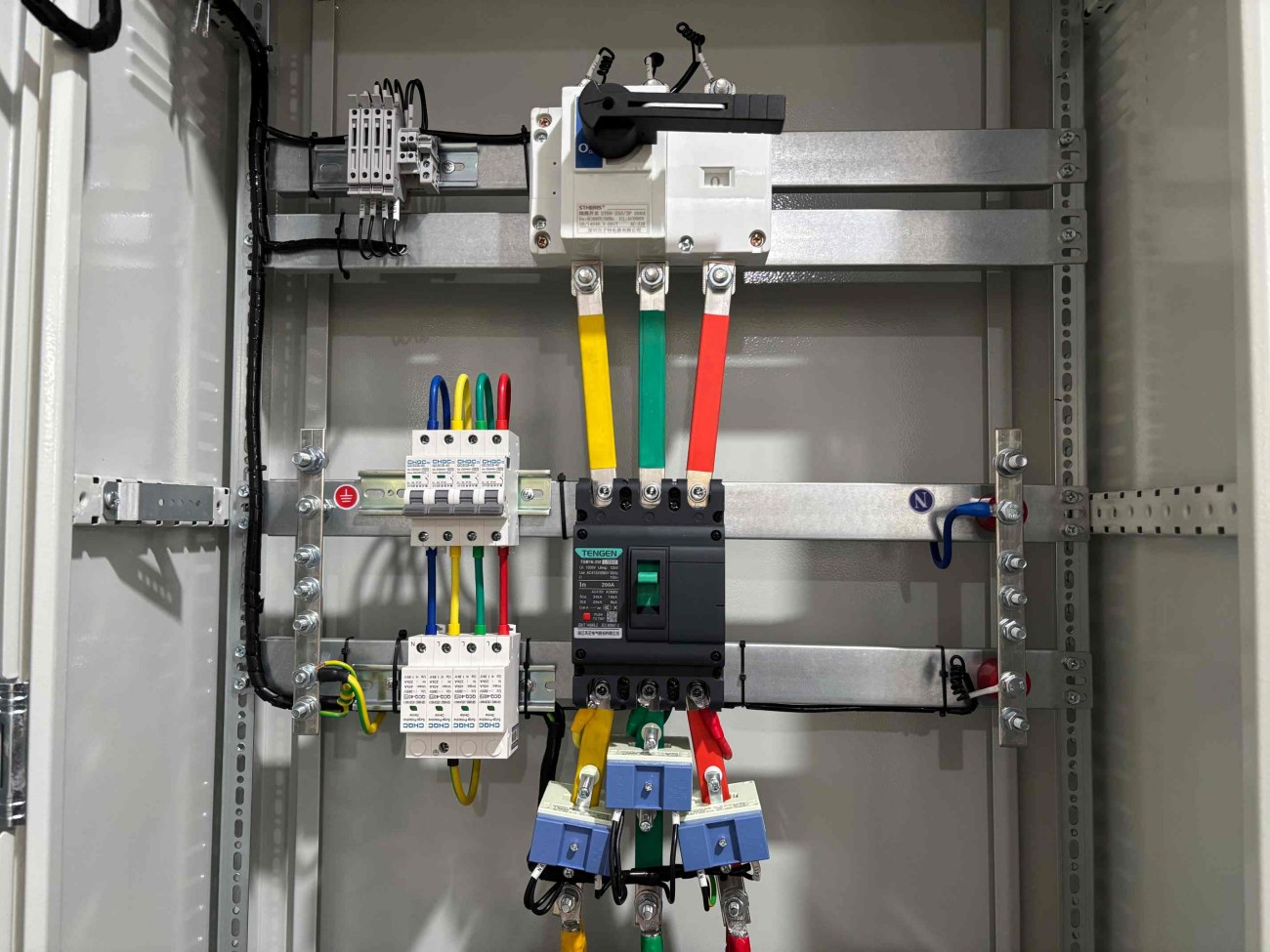

Understand the working principle of the power distribution cabinet, including how it distributes, controls, and protects electricity for safe and reliable system operation.
The core of the working principle of the power distribution cabinet is to distribute electricity to each circuit in an orderly manner, making power transmission both safe and efficient.
When electricity enters from the upstream power source, it typically first passes through a transformer or upstream distribution equipment, then flows through the incoming line into the distribution cabinet. The current travels along the internal conductors and busbar system, forming the main power transmission path. Next, according to the system design, the electrical energy is distributed to multiple outgoing circuits, each responsible for supplying power to specific equipment, machinery, or areas. Operators can independently manage each circuit via the control devices inside the cabinet, making maintenance or adjustments much more convenient.
During this process, the protection components continuously monitor the electrical conditions inside the cabinet. Once an abnormality such as overload or short circuit occurs, the system immediately isolates the problematic circuit, preventing equipment damage and ensuring the stable operation of the entire power distribution system.
FAQs
1. When power enters a distribution cabinet, what is the actual path it follows first?
It first comes through the incoming line after upstream equipment like transformers or switchgear. Wondon designs this entry stage to ensure power is properly stabilized before distribution begins.
2. How does one cabinet split power to different machines or areas in practice?
Inside the cabinet, busbars and internal conductors guide electricity into multiple outgoing circuits. Wondon structures this layout so each load gets a clear and stable power path.
3. If I need to operate or shut down one machine, can I control it separately?
Yes, each outgoing circuit can be controlled individually. Wondon integrates circuit control devices so operators can manage equipment safely without affecting the whole system.
4. What happens inside the cabinet when an overload or short circuit occurs?
Protection components detect the fault and immediately isolate the affected circuit. Wondon designs fast-response protection to minimize downtime and prevent wider system damage.
5. From an on-site operator’s point of view, why is a power distribution cabinet so important?
Because it centralizes distribution, control, and protection in one system. Wondon focuses on making operations more organized so users can manage complex loads with confidence and clarity.