

Choosing between dry-type vs oil-immersed transformers in prefabricated substations can affect much more than the transformer itself. Picking the wrong transformer for a prefabricated substation can cost you in ways you don’t expect. Fire code violations. Cooling problems. Maintenance headaches. Even project rejection by the local utility.
On paper, the choice looks simple. Dry-type = air and solid insulation. Oil-immersed = insulating oil does the work. But a real project has a way of complicating things.
This guide walks through the factors that actually matter when you’re choosing a transformer for a prefab substation, before you send out an RFQ.
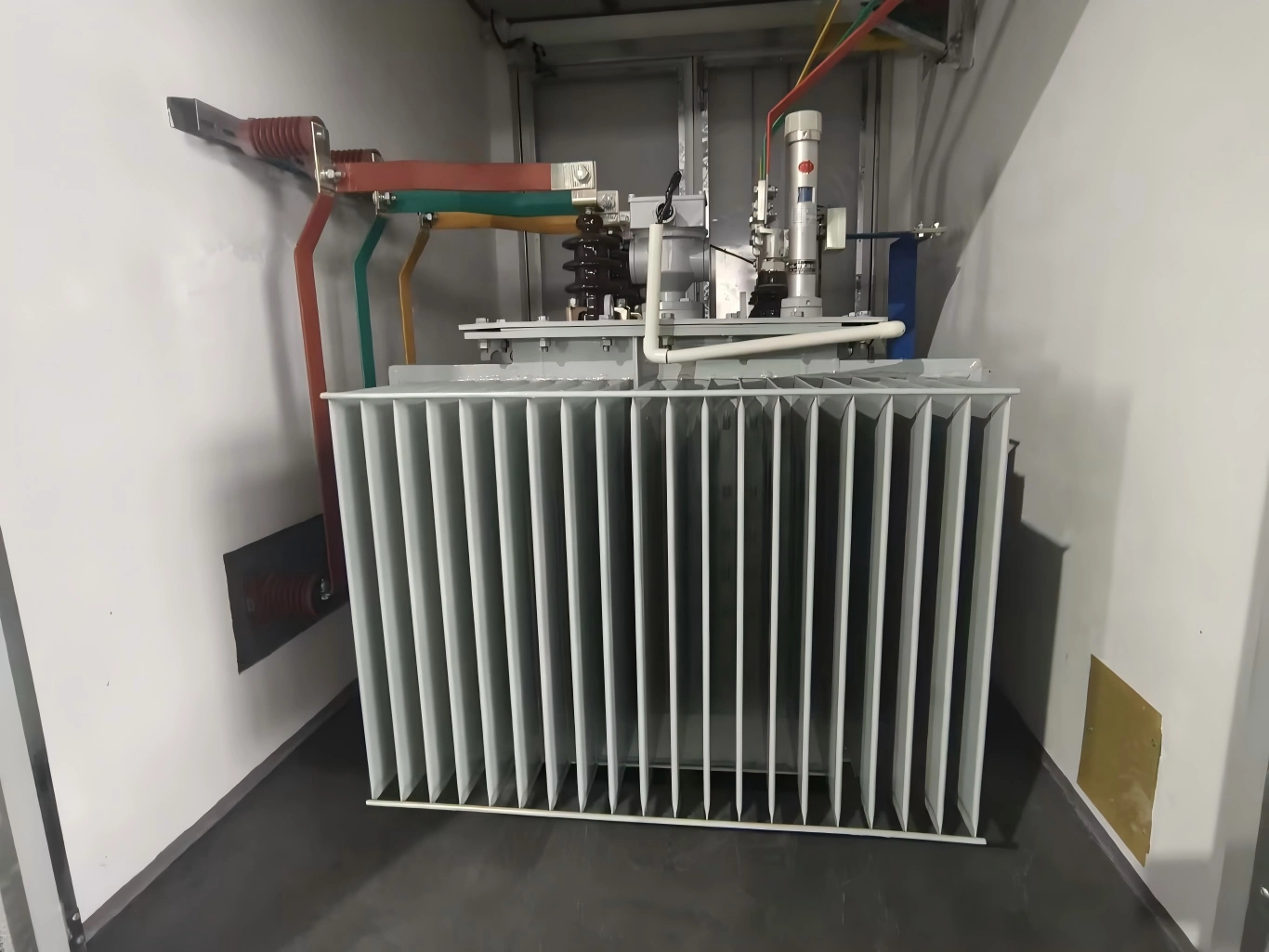
What Is the Difference Between Dry-Type and Oil-Immersed Transformers?
It comes down to how each one handles insulation and heat.
Dry-Type Transformers
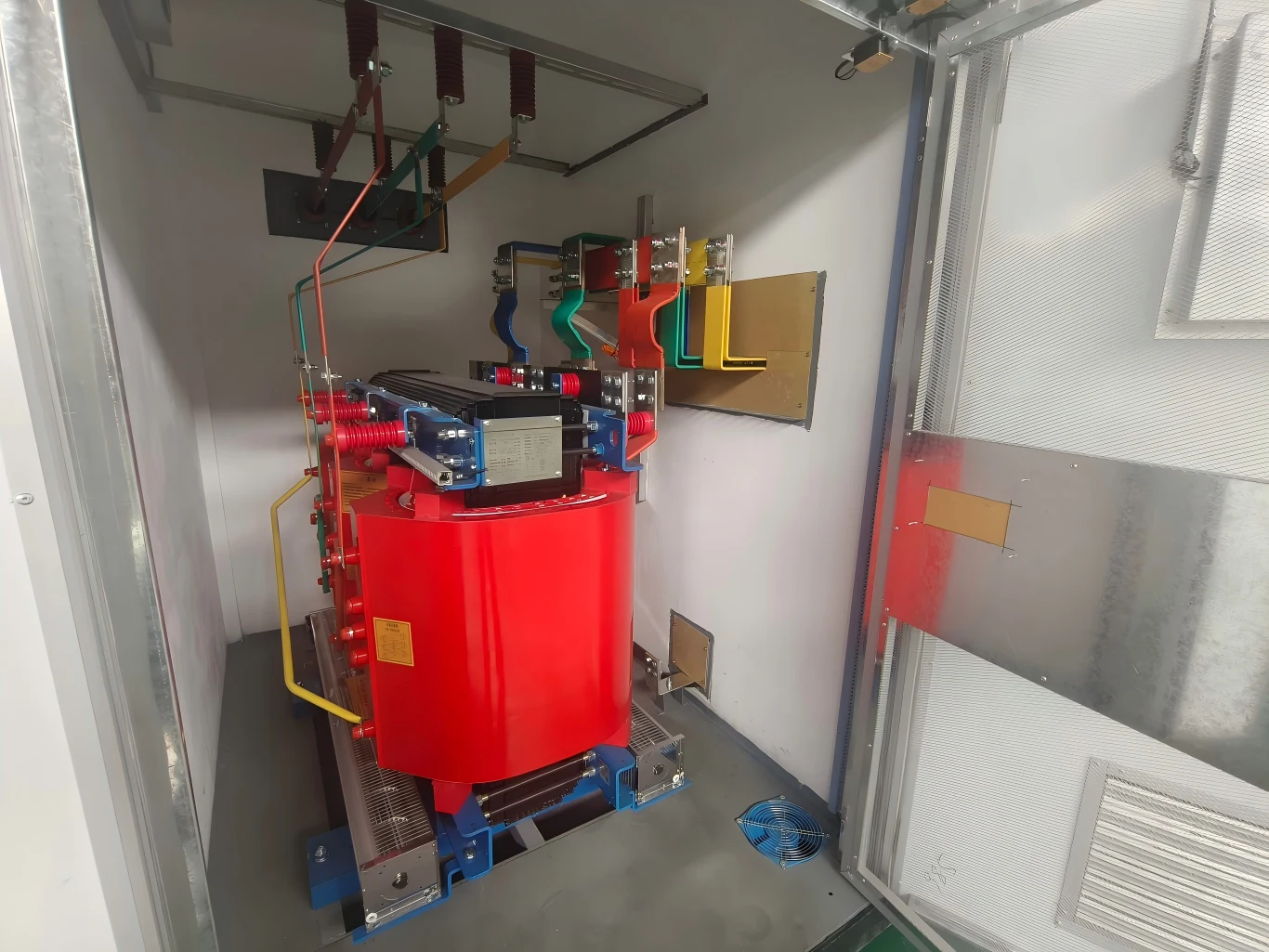
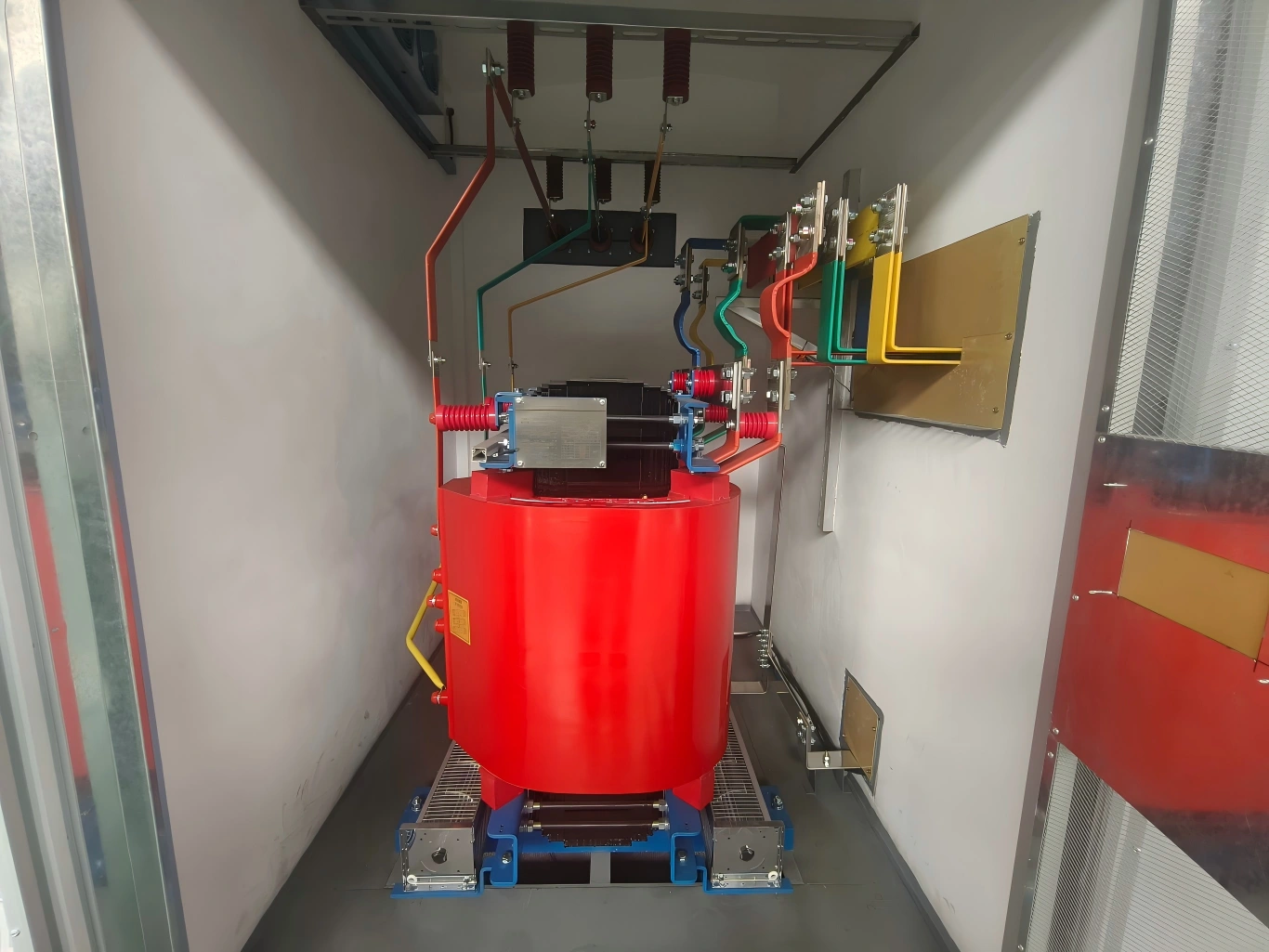
A dry-type transformer skips the liquid. Solid insulation and air handle the cooling. Some designs leave the windings exposed. Others wrap them in molded or cast insulation.
This works well in commercial buildings, industrial facilities, renewable energy projects, and other sites where avoiding transformer oil simplifies fire code compliance.
But here’s the catch. Heat has to go somewhere.
A compact enclosure with poor airflow will overheat during continuous operation. Ventilation isn’t an afterthought. It’s part of the transformer design itself.
Oil-Immersed Transformers
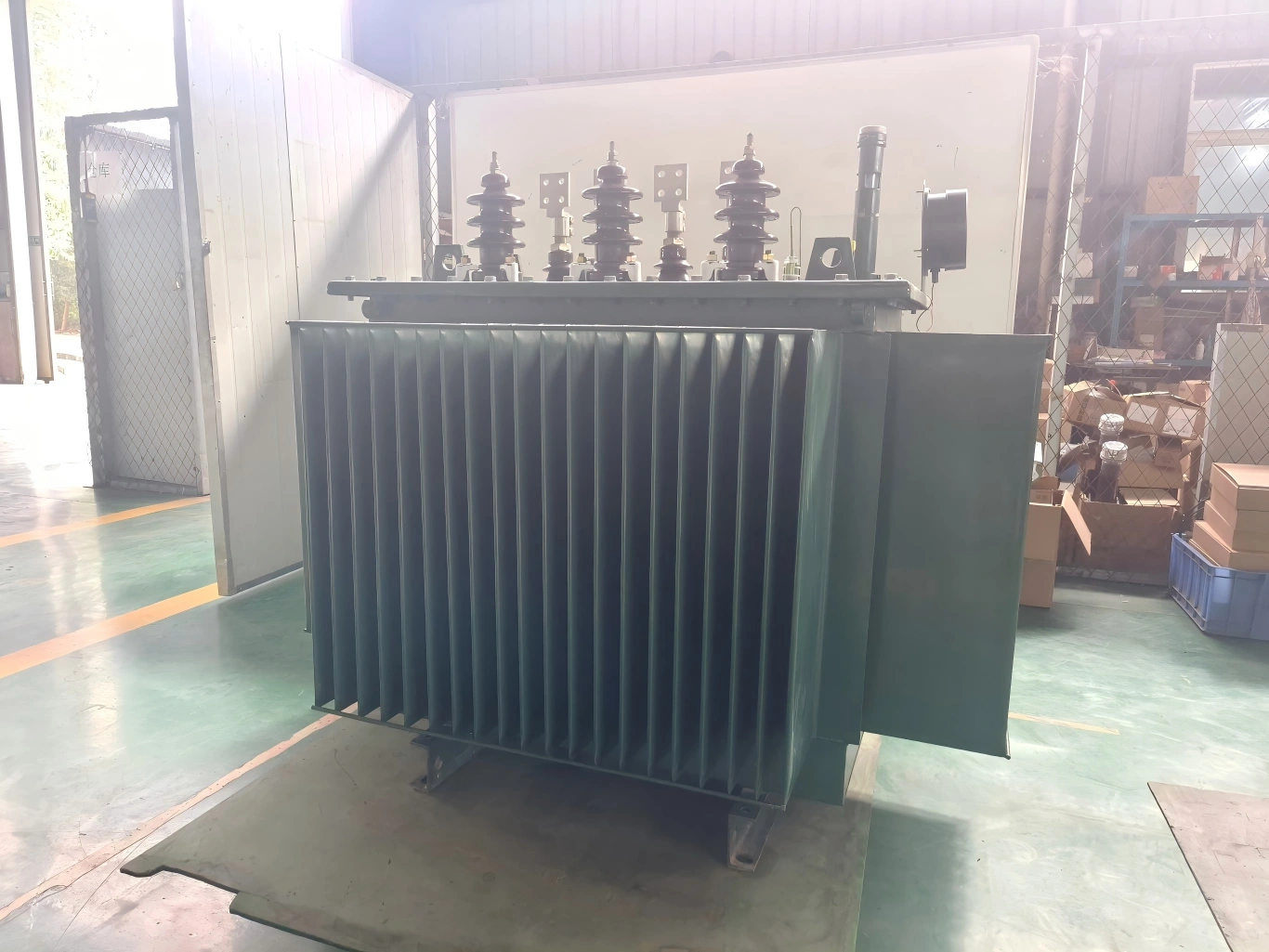
An oil-immersed transformer puts the core and windings inside a tank filled with insulating oil. The oil does double duty: electrical insulation and heat transfer away from the windings.
For outdoor substations, industrial facilities, utility projects, and many distribution applications, this technology remains the workhorse.
But oil brings its own baggage. Oil containment, leakage prevention, fire protection, environmental requirements. All of these need to be designed in, not bolted on later.
Why Does the Choice Matter in a Prefabricated Substation?
Space inside a prefabricated substation is tight. Every major component fights for room.
Transformer dimensions, ventilation, cable routing, maintenance access, and the position of MV and LV equipment all need to fit together.
A dry-type transformer may eliminate oil-related requirements but demand more ventilation. An oil-immersed transformer handles heat well, but the enclosure needs provisions for oil and fire protection.
So why do so many projects treat transformer selection as a separate purchasing decision? It should be part of the substation design from day one.
10 Factors to Consider When Choosing a Transformer
1. Installation Environment and Fire Safety
Where the substation sits determines a lot.
Commercial buildings, occupied facilities, and sites with strict fire-safety rules may not allow insulating oil at all. A dry-type transformer sidesteps the issue entirely because there’s no oil to manage.
Outdoor industrial sites tell a different story. An oil-immersed transformer can be the practical choice there, as long as the design includes leakage and fire protection.
But transformer type alone doesn’t guarantee compliance. Local regulations always have the final say.
2. Capacity and Voltage
Start with the actual electrical load, not the physical size of the substation.
You need: maximum expected load, normal operating load, future load growth, primary voltage, secondary voltage, and frequency. These numbers determine the transformer rating.
An 11 kV system feeding a 415 V network needs a different transformer than a 35 kV / 400 V setup. Obvious, but it gets overlooked.
Future demand matters too. Honestly, if your facility plans to add production lines in two years, build that capacity in now. Retrofitting a transformer into a prefab enclosure later is not fun.
3. Thermal Management
Inside a prefabricated enclosure, heat is the enemy.
Every transformer produces waste heat. Without enough dissipation, the enclosure temperature climbs, and so does the stress on every piece of electrical equipment inside it.
For dry-type units, airflow is critical. Natural ventilation might work for smaller ratings. Larger installations almost always need forced ventilation.
Oil-immersed transformers move heat through the oil and tank. But the surrounding enclosure still needs its own thermal design.
The lesson? Look at the transformer and the enclosure as one thermal system. Not two separate problems.
4. Short-Circuit and Protection Requirements
A transformer doesn’t work in isolation.
Its rated current, impedance, short-circuit withstand, and protection settings all need to match the surrounding gear. MV switchgear, LV switchboards, circuit breakers, relays, cables. They’re a chain.
The LV side might need a breaker sized for overload and short-circuit protection. The MV side might use a vacuum circuit breaker, a fuse, a relay, or a combination.
Hand over the single-line diagram during the quotation stage. It lets the supplier see the full picture, not just the transformer in isolation.
5. Environmental and Local Compliance
Technical specs alone don’t decide whether a transformer can be installed on a given project.
Local standards may cover electrical performance, efficiency, fire protection, environmental protection, noise, testing, and certification. Utility companies pile on their own requirements.
Projects in Australia and Southeast Asia, for example, may need compliance with national standards or utility-specific specs on top of IEC standards.
Before you place an order, confirm which standards apply to both the transformer and the complete prefabricated substation. Don’t assume. Ask.
6. Space and Installation
A containerized substation gives you less room for design changes than a conventional building. Standard 20-foot and 40-foot containers provide limited internal space, so every piece of equipment must fit within a carefully planned layout. This makes equipment selection and space allocation critical during the design stage.
The transformer has to fit while leaving space for cable connections, ventilation, inspection, and maintenance. Cable entry direction can also drive the layout.
With dry-type transformers, ventilation space can eat up a significant chunk of the footprint. Oil-immersed units may need room for oil containment and fire protection.
So comparing transformer dimensions alone is misleading. Compare the entire installation footprint.
7. Total Cost of Ownership
The quotation is just the down payment.
Transportation, installation, energy losses, ventilation, maintenance, monitoring, and eventual replacement all add up over the equipment’s life.
One transformer might have a lower purchase price but higher operating losses. Another costs more upfront but fits the project’s operating conditions better, saving money long-term.
A proper comparison looks at total cost of ownership. Not just the number on the quote.
8. Maintenance and Monitoring
Maintenance changes with transformer technology.
Dry-type units skip oil testing and oil replacement. But they still need regular inspection. Dust buildup, ventilation blockages, loose connections, insulation condition. All of these matter.
Oil-immersed transformers add oil-related checks: oil level, temperature, leakage, oil quality. The maintenance plan depends on the transformer design and operating conditions.
For remote substations, temperature sensors, protection relays, meters, and remote monitoring systems pay for themselves fast. You get operating data without sending someone to the site every week.
9. Noise
Noise becomes a real issue when the substation sits near offices, residential buildings, or other noise-sensitive areas.
Transformer noise depends on design, load, cooling equipment, enclosure construction, and installation. Neither dry-type nor oil-immersed is automatically quiet.
When a project has a defined noise limit, put the maximum acceptable sound level in the RFQ. Without a number, the supplier is guessing.
10. Future Expansion
Electrical demand changes after a project goes live.
Industrial plants add machinery. Commercial buildings increase their load. Renewable projects expand generation or storage.
Planning for this during the initial design saves major headaches later. That might mean selecting extra transformer capacity, reserving installation space, or designing the enclosure for future equipment.
How predictable is your future load? That’s the question that drives how much extra investment makes sense.
Standards and Local Approval Requirements
Transformer selection should follow the standards and approval requirements of the project location.
IEC 60076 is the key international standard series for power transformers. But it’s not the only one. Additional standards may apply to MV switchgear, LV assemblies, protection systems, enclosure construction, and the complete prefabricated substation.
Asking for an “IEC-compliant transformer” is not enough information for a complete quotation.
Before finalizing the spec, check: applicable transformer and switchgear standards, required routine or type tests, utility requirements, fire-safety rules, environmental conditions, and certification documents.
Site conditions matter too. Ambient temperature, altitude, humidity, corrosion exposure, and installation location all affect the final equipment specification.
Dry-Type vs Oil-Immersed Transformer: Comparison
| Factor | Dry-Type Transformer | Oil-Immersed Transformer |
|---|---|---|
| Insulation | Solid insulation and air | Insulating oil |
| Fire considerations | No transformer oil | Requires oil-related fire and leakage considerations |
| Cooling | Mainly air-based | Oil-based heat transfer |
| Maintenance | No oil maintenance | Includes oil-related inspection |
| Indoor applications | Often suitable | Depends on project requirements |
| Outdoor applications | Suitable with proper enclosure | Commonly used |
| Space | Ventilation affects layout | Oil containment may affect layout |
| High-capacity applications | Application-dependent | Widely used |
| Environmental concerns | No oil leakage | Oil leakage needs control |
| MonitoringXX | Temperature and electrical monitoring | Temperature, oil, and electrical monitoring |
This table works as a starting point. The final call should still follow the project’s electrical calculations and local requirements.
A Practical Transformer Selection Framework
For a new project, transformer selection gets easier when you follow a clear sequence.
- Start with the load. Calculate current and expected future electrical demand. That gives you the capacity starting point.
- Define the voltage system. Primary voltage, secondary voltage, frequency, phase, connection requirements. Lock these down.
- Review the installation environment. Indoors or outdoors? Near people, buildings, sensitive equipment, or environmentally restricted areas?
- Check the physical layout. Can the transformer fit the enclosure with enough room for cables, ventilation, inspection, and maintenance?
- Review protection and compliance. The transformer has to work with MV switchgear, LV system, protection devices, and applicable standards as one system.
- Compare the complete cost. Purchase price, installation, operation, maintenance, energy losses, future expansion. All of it.
This sequence prevents a common mistake: picking a transformer first and then trying to redesign the prefabricated substation around it.
Quick Selection Matrix
| Project condition | Key points to investigate |
|---|---|
| Indoor installation | Fire safety, ventilation, noise |
| Outdoor substation | Temperature, enclosure, corrosion protection |
| High capacity | Cooling, impedance, short-circuit performance |
| Limited space | Transformer dimensions and ventilation |
| Strict fire requirements | Oil containment and fire protection |
| Remote site | Monitoring and maintenance |
| Solar project | Load profile, harmonics, grid requirements |
| Industrial facility | Load growth, motor loads, protection |
| Commercial building | Noise, fire safety, indoor installation |
| Future expansion | Spare capacity and available space |
Use this during the early design stage. Once the project requirements are clear, the supplier can develop the detailed transformer and substation specification.
Transformer RFQ Checklist
A detailed RFQ gives suppliers enough to recommend the right configuration. A vague one gives them room to guess.
At minimum, provide: transformer type, rated capacity, primary and secondary voltage, frequency, phase, vector group, impedance, cooling method, and installation environment.
Site conditions too. Ambient temperature, altitude, humidity, corrosion exposure, enclosure requirements, noise limits. All of these affect the spec.
For projects with specific compliance requirements, state the applicable IEC or national standards. Identify required routine, type, or special tests.
Requesting a complete prefabricated substation? Include the single-line diagram whenever possible. The MV switchgear, LV distribution, protection scheme, cable entry, transformer position, and available enclosure dimensions can then be reviewed together.
The more complete the RFQ, the less room there is for assumptions. And assumptions are where projects go wrong.
FAQ s
1. Is a dry-type transformer better than an oil-immersed transformer?
Neither is universally better. Fire requirements, installation environment, capacity, cooling, maintenance, space, cost, and local regulations all factor in. The right question is: which one fits this specific project?
2. Can a dry-type transformer be used in a prefabricated substation?
Yes. Dry-type transformers integrate into prefabricated and containerized substations. Proper ventilation and thermal management are the critical design elements.
3. Can an oil-immersed transformer be installed in a containerized substation?
Yes. The design needs to address oil containment, fire safety, ventilation, maintenance access, and other project-specific requirements.
4. Which transformer requires more maintenance?
Different tasks, not more or less. Dry-type eliminates oil-related inspection. Oil-immersed requires attention to insulating oil, oil level, temperature, and possible leakage.
5. How do I choose transformer capacity?
Start with the calculated maximum load and expected load growth. The final rating should also consider operating conditions, loading requirements, and project specifications.
6. What information should I send to a transformer supplier?
Required capacity, voltage levels, frequency, installation environment, applicable standards, cooling requirements, site conditions, and protection requirements. For a complete prefabricated substation, a single-line diagram and layout drawing make the technical review far more accurate.
Conclusion
Selecting between dry-type and oil-immersed transformers in a prefabricated substation comes down to one principle: define the project requirements first, then choose the transformer.
Transformer type, capacity, voltage, cooling, fire safety, protection, installation space, maintenance, and local compliance all need to work together. Picking a transformer in isolation and hoping the rest fits is how projects stall.
If you have the basic project information already, voltage, transformer capacity, installation environment, site conditions, or a single-line diagram, send it to your electrical equipment supplier for a technical review. That way the transformer, MV/LV equipment, protection system, and enclosure layout get considered as one complete system.
Click here to get the latest pre-fabricated substation solutions and quotes for my project.