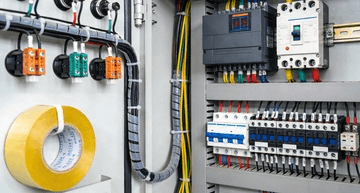

Cable glands, cable lugs, and terminal blocks serve different roles in cable connection, protection, and wiring organization.
1. Core functions
Cable glands fix the cable to the entrance of the distribution board or distribution box. They both firmly grip the cable’s outer sheath and block dust, moisture, and other dirt from entering the equipment.
Cable lugs connect the metal conductor at the end of the cable to the electrical equipment. They establish a solid, stable electrical connection between the cable and the equipment (such as a circuit breaker or busbar).
Terminal blocks have the task of organizing multiple wires according to certain rules and connecting them together, providing fixed connection points.
2. Installation location
Cable glands are typically installed at the cable entrance of distribution panels, distribution cabinets, or enclosures.
Cable lugs are installed at the very end of the cable, where the conductor needs to be directly connected to the equipment.
Terminal blocks are generally installed inside distribution panels or control cabinets.
3. Typical applications
Cable glands: commonly used in outdoor installations, places with vibration, or locations that require dust and moisture protection.
Cable lugs: typically used in high-current connections, especially when power cables must be directly connected to main electrical equipment.
Terminal blocks are common in control circuits or signal circuits with multiple wires, connecting a large number of wires together in an orderly manner.
FAQs
1. What is the main difference between cable glands, lugs, and terminals?
Cable glands secure and seal cables, lugs connect cables to equipment, and terminals provide electrical connection points. In the Wondon system design, we treat them as three parts of one complete connection process.
2. When should I use a cable gland in my project?
Use it when you need to fix the cable and protect it from dust, water, or pulling force. Wondon usually recommends cable glands for outdoor panels and industrial environments.
3. What is the function of a cable lug?
A cable lug connects the cable conductor securely to a breaker, busbar, or equipment terminal. In Wondon projects, proper lug selection is critical for avoiding overheating and loose connections.
4. What do electrical terminals actually do?
Terminals provide a safe and organized point where multiple wires can be connected or distributed. Wondon often uses them inside control panels to keep wiring clean and easy to maintain.
5. How do I choose the right combination for my project?
It depends on cable size, current load, and installation environment. Wondon usually checks the full connection system together to ensure safety, stability, and long-term reliability.