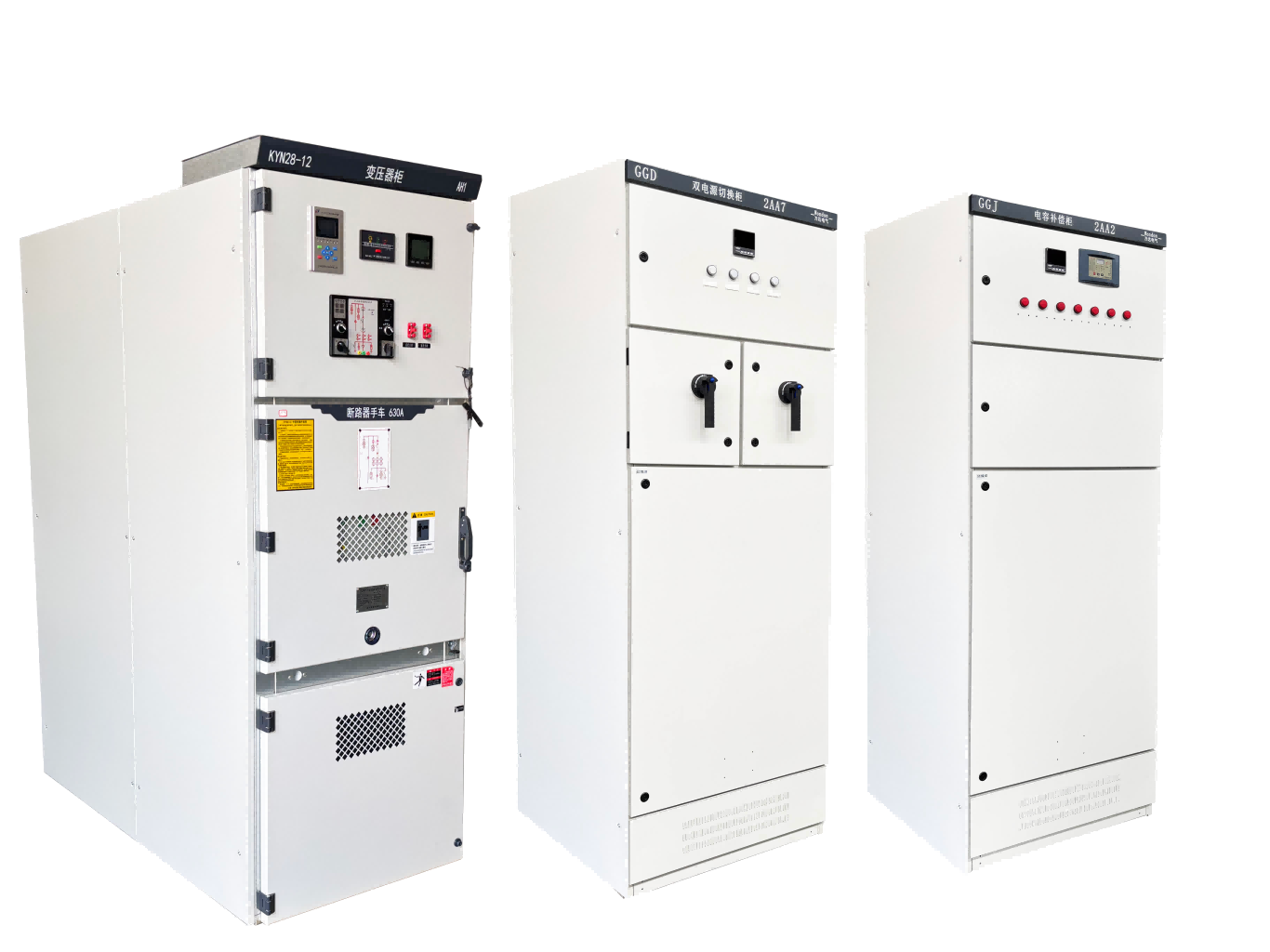

Switchgear is widely used in commercial buildings and is an important part of the power distribution system.
1. Function
In places such as office buildings, shopping malls, hotels, and hospitals, there are many types of electrical equipment. In addition to basic lighting, elevators, and central air conditioning, there are also various facilities such as security monitoring and office appliances. The overall electrical circuits are complex.Switchgear can uniformly manage and reasonably dispatch each power system, making every circuit standardized and controllable.
It can also provide electrical isolation between circuits, managing the circuits of different areas of the building separately. Even if a power failure occurs in one area, it will not affect the overall power supply, maximizing the normal operation of large commercial buildings around the clock and reducing the impact of power outages.
2. Installation
The equipment is generally installed between the power incoming end and the internal power distribution lines of the building, acting as the power hub of the entire building. Relying on the dispatch of the switchgear, electrical energy can be delivered to various floors and different functional areas as needed, achieving scientific distribution of electricity.
3. Application Value
Whether in office buildings, large commercial complexes, airports, hotels, or other public scenarios, switchgear is standard equipment. It has a practical structure, stable operation, and adapts to the power needs of various commercial buildings.
In summary, switchgear is an indispensable core facility for power distribution in commercial buildings. Relying on its reliable control and protection capabilities, it continuously safeguards the electrical safety inside the building, makes power transmission more stable and standardized, and builds a solid power foundation for daily operations and office life.
FAQs
1. What is the main function of switchgear in commercial buildings?
Switchgear is used to centrally manage and control electrical power in commercial buildings such as offices, malls, and hotels. It helps distribute electricity across lighting, HVAC, elevators, and security systems in a structured and safe way, ensuring stable operation of the overall power distribution system.
2. Where is switchgear typically installed in a building power system?
It is usually installed between the incoming power supply and the internal distribution network of the building. This position allows it to act as a central hub, efficiently directing electricity to different floors and functional areas based on demand.
3. Why is switchgear important for power reliability in large commercial spaces?
Switchgear improves system reliability by isolating faults and separating circuits by zones. If one area experiences a failure, other areas can continue operating normally, which is critical for 24/7 facilities like hospitals and airports.
4. How does Wondon support commercial switchgear solutions?
Wondon provides integrated electrical distribution solutions as an electrical equipment integrator, helping commercial projects configure switchgear systems that match load requirements, building scale, and safety standards. This ensures smoother system coordination and long-term operational stability.
5. What maintenance considerations are important for switchgear systems?
Regular inspection of connections, insulation condition, and protection devices is essential to ensure safe operation. A well-designed system—such as those supported by Wondon—helps reduce maintenance frequency by improving structural reliability and reducing fault risks in daily operation.