

In power distribution system design, power transformer sizing is one of the most critical decisions made during the early planning stage. While it does not directly generate revenue, it has a long-term impact on system reliability, energy efficiency, operating costs, and future expansion capability.
At Wondon, one of the most common questions we receive from customers is:
“What size power transformer does our project need?”
In reality, there is no universal answer. The right transformer capacity depends entirely on the specific requirements and operating conditions of the project.
To help you make informed purchasing decisions, this guide explains how to determine the appropriate transformer capacity and highlights key factors to evaluate before selecting a power transformer.
Why Power Transformer Sizing Matters
Choosing the wrong transformer capacity can create challenges throughout the entire lifecycle of a project.
An Undersized Power Transformer May:
- Overheat under high-load operating conditions
- Reduce equipment service life
- Cause voltage instability
- Increase the risk of unexpected downtime
An Oversized Power Transformer May:
- Increase unnecessary capital investment
- Result in higher no-load losses
- Reduce overall energy efficiency
For most industrial and commercial projects, the goal is not to select the largest transformer available. Instead, effective power transformer sizing means choosing a transformer that matches actual load requirements while allowing reasonable capacity for future growth.
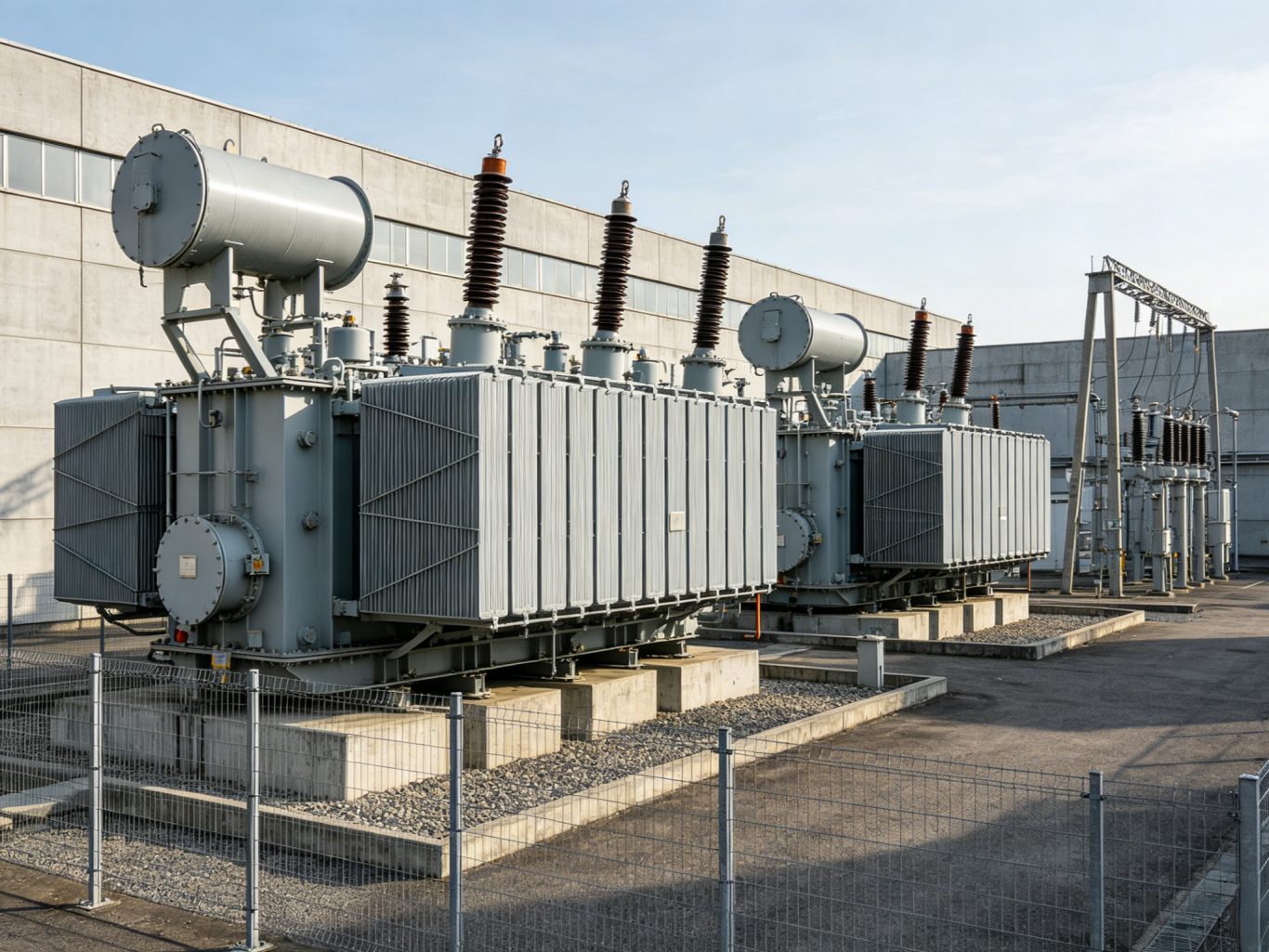
Key Factors That Determine Power Transformer Capacity
1. Total Load Demand
The first step in power transformer sizing is calculating the total connected load. You should identify the actual power consumption of all equipment operating within the project, including:
- Electric motors
- Production machinery
- HVAC systems
- Lighting loads
- Auxiliary equipment
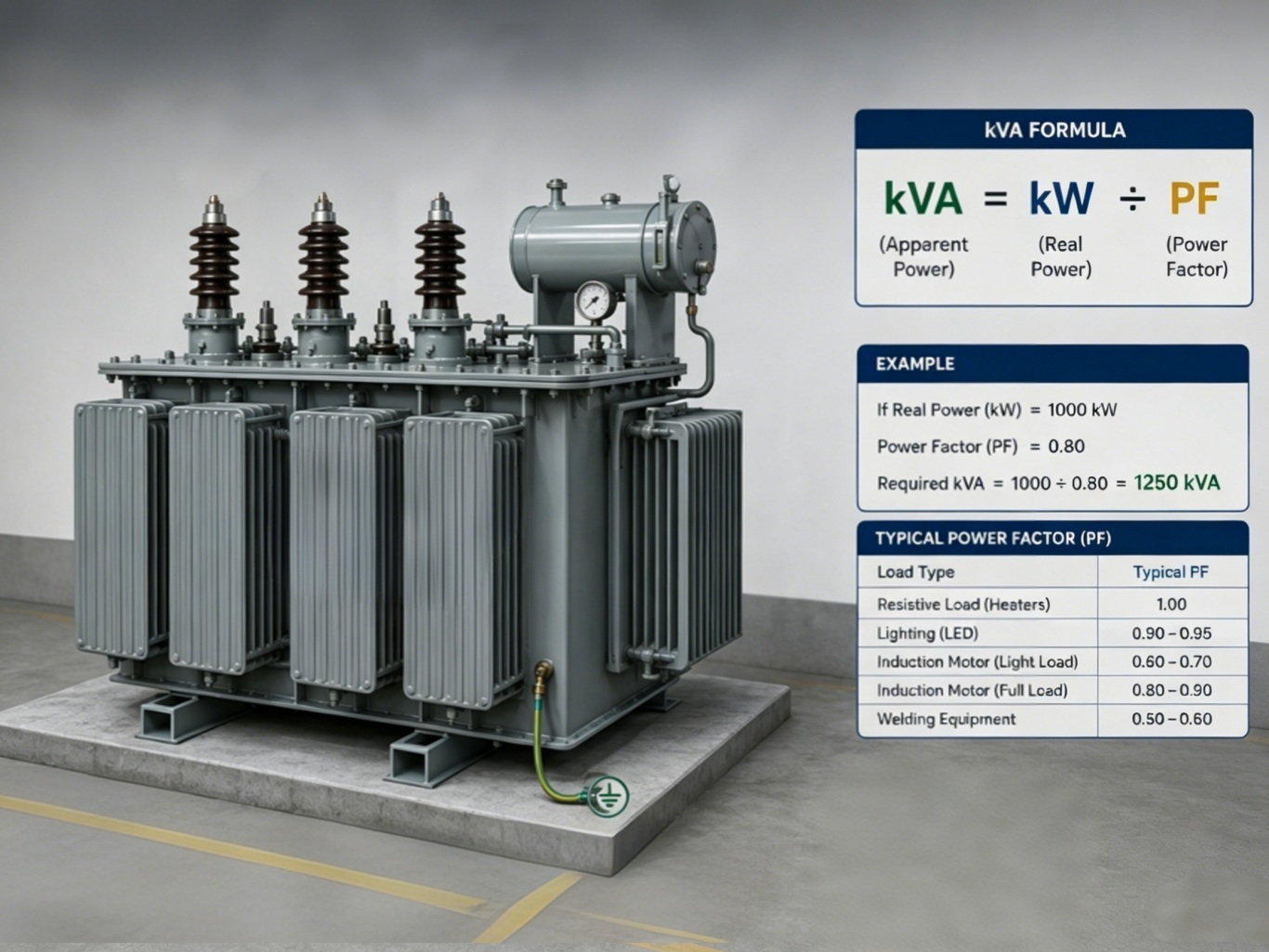
Total load is typically expressed in kilowatts (kW) and then converted to kilovolt-amperes (kVA) for transformer selection.
2. Voltage Requirements
Transformer capacity cannot be evaluated independently of voltage ratings.
Key questions include:
- What is the incoming utility voltage?
- What output voltage is required?
- Is the system medium voltage or low voltage?
- Is the application based on a single-phase or three-phase power system?
Different voltage configurations affect transformer design requirements and overall transformer selection.
3. Peak Load Conditions
Many facilities do not operate under constant load conditions.
For example:
- Manufacturing plants may experience motor starting surges
- Commercial buildings often have peak demand periods during business hours
- Renewable energy projects may encounter significant power fluctuations
If transformer sizing is based solely on average load, the selected transformer may not provide sufficient capacity during peak-demand periods.
4. Future Expansion Plans
Power transformers are typically expected to operate for several decades.
If production capacity or facility size is expected to increase in the coming years, a reasonable capacity margin should be included during the transformer sizing process. However, excessive oversizing can reduce efficiency and increase capital costs.
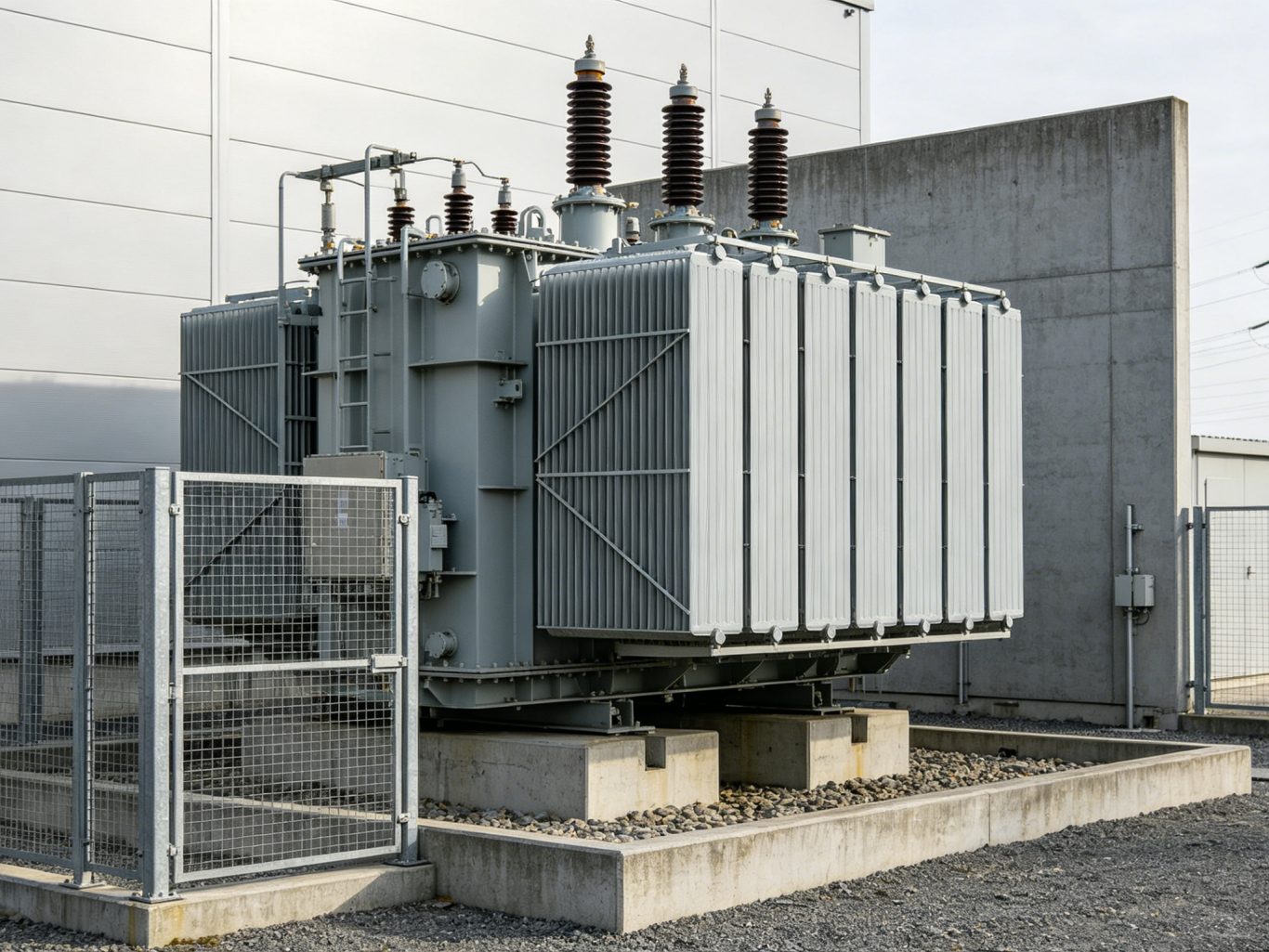
How to Calculate Required Transformer Capacity
For three-phase systems, a commonly used power transformer sizing formula is:
Transformer Capacity (kVA) = Load Power (kW) ÷ Power Factor
Example Calculation:
- Total load = 800 kW
- Power factor = 0.8
Required transformer capacity::800 ÷ 0.8 = 1000 kVA
In real-world engineering projects, an appropriate safety margin is typically added to accommodate load fluctuations and future growth.
Simplified Power Transformer Sizing Process
- Determine the total connected load
- Calculate peak load demand
- Confirm system voltage requirements
- Convert load from kW to kVA
- Consider future expansion needs
- Select the nearest standard transformer rating
Common Power Transformer Sizing Mistakes
During project planning, the following issues are frequently encountered.
Ignoring Power Factor
Many buyers focus only on kW values and overlook power factor, resulting in underestimated transformer capacity requirements.
Sizing Based Only on Current Load
Selecting a transformer solely according to current demand may lead to insufficient capacity when the facility expands.
Excessive Oversizing
Some projects assume that larger capacity automatically means greater reliability. In reality, excessive oversizing increases capital expenditure and creates higher no-load losses.
Overlooking Environmental Conditions
Ambient temperature, altitude, ventilation conditions, and installation location can all affect transformer performance and should be considered during the sizing process.
Case Study: Power Transformer Sizing for a Manufacturing Plant
A customer was planning a production line expansion for a medium-sized manufacturing facility.
Project Data
- Existing load: 600 kW
- Additional equipment load: 250 kW
- Expected future growth: 10%
- Power factor: 0.85
Transformer Capacity Calculation
(600 + 250) × 1.1 ÷ 0.85 ≈ 1100 kVA
After evaluating standard transformer ratings, Wondon’s engineering team recommended a 1,250 kVA power transformer.
This selection provided sufficient operating margin while avoiding unnecessary oversizing. The final solution achieved a balanced combination of reliability, efficiency, and future scalability.
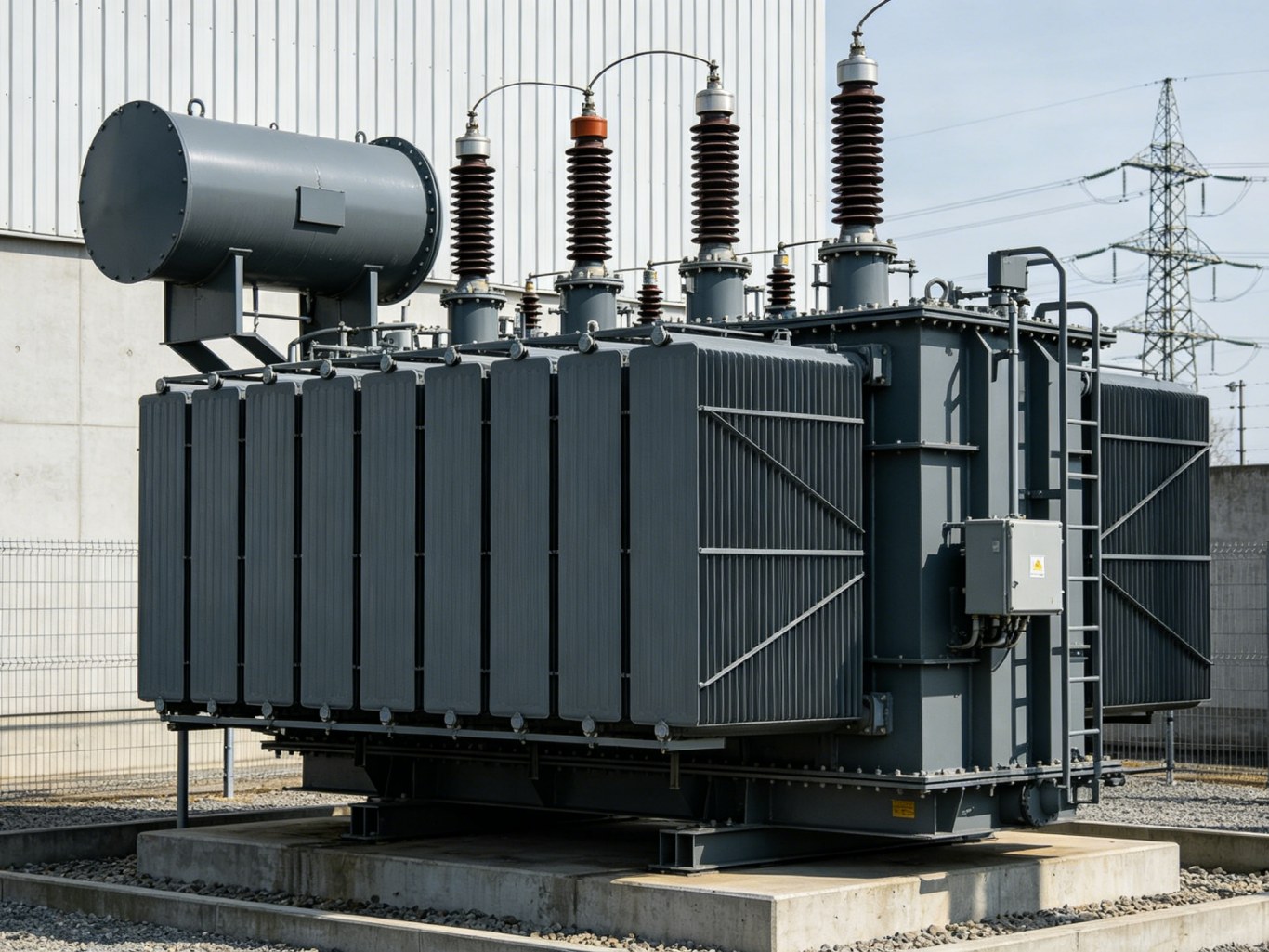
FAQs
1.What is the best way to determine the right power transformer size for my project?
Calculate the total connected load, consider voltage requirements, peak load conditions, and future expansion. Use the formula: Transformer Capacity (kVA) = Load (kW) ÷ Power Factor for accurate sizing.
2. What are the risks of undersized or oversized transformers?
Undersized transformers may overheat, reduce lifespan, and cause voltage instability. Oversized transformers increase costs, create higher no-load losses, and lower overall energy efficiency.
3. Should I consider future expansion when sizing a transformer?
Yes. Transformers can last decades, so planning for future growth ensures reliability. Include a reasonable margin without over-sizing to avoid efficiency loss and extra cost.
4. What factors affect power transformer sizing the most?
The main factors include total load demand, voltage level, peak load conditions, power factor, environmental conditions, and future expansion plans. All of these directly impact transformer capacity selection.
5. Why is power transformer sizing important in industrial and commercial projects?
Proper sizing ensures stable operation, improves energy efficiency, reduces operating costs, and prevents issues such as overheating, voltage instability, and unnecessary investment in oversized equipment.
Conclusion
There is no single answer to the question:
“What size power transformer do I need?”
Successful power transformer sizing requires a comprehensive evaluation of load demand, voltage requirements, operating conditions, power factor, and future expansion plans.
A structured sizing process can help:
- Reduce energy losses
- Improve system reliability
- Avoid costly future upgrades
- Optimize long-term investment returns
If you are evaluating a new project, providing basic load and voltage information is the best place to start. Wondon offers professional transformer sizing assessments for industrial, utility, and renewable energy applications, helping customers select the most suitable transformer based on real project requirements.
Contact Wondon today to discuss your project and receive a customized power transformer solution.