
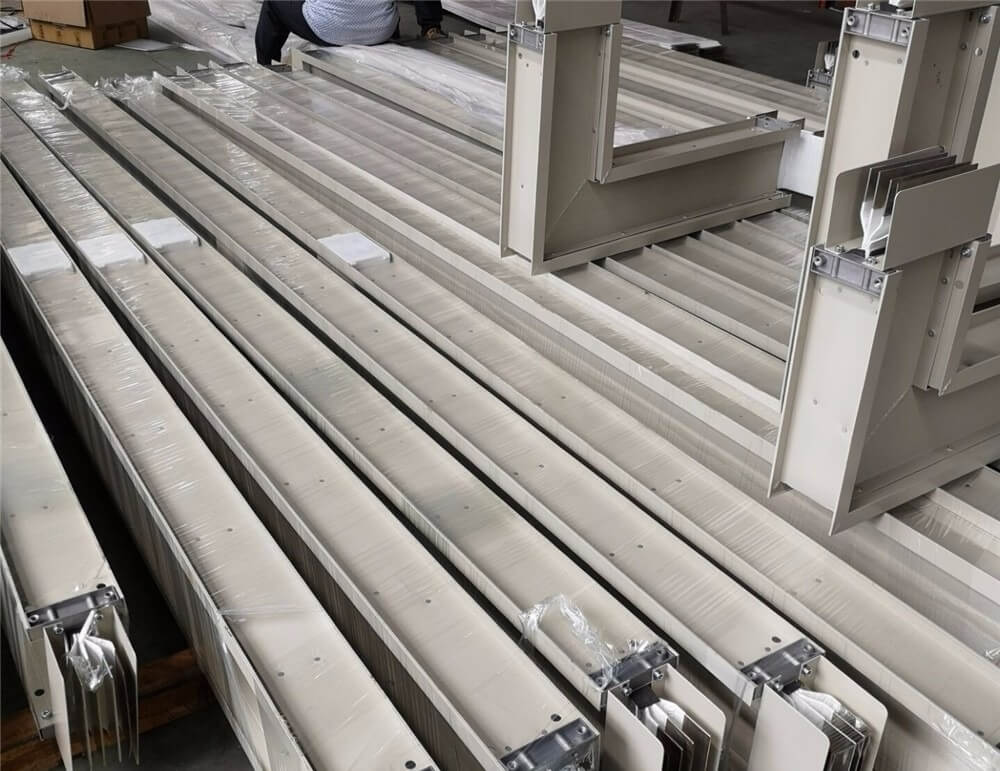
Low-voltage busbar trunking is a commonly utilized type of complete power transmission equipment within low-voltage power distribution systems. Featuring an entirely enclosed metal casing, they effectively block debris and prevent physical damage, thereby ensuring a high level of protection. Internally, power is transmitted via conductive busbars, resulting in a simple, orderly structure and stable operation.

Their applicable voltage range is clearly defined: an AC-rated voltage of up to 1000V and a DC voltage of up to 1500V. Their primary function is to safely and stably transmit and distribute electrical energy within low-voltage circuits, typically working together with low-voltage switchgear and power control cabinets to deliver power to different loads.

As standardized equipment dedicated to low-voltage power distribution, these systems eliminate the need for complex wiring, offer robust high-current carrying capacity, and facilitate convenient circuit branching and modification. Widely deployed across various architectural and industrial settings, they serve as a standard device for centralized power transmission and distributed power supply in modern low-voltage distribution applications.
FAQs

1.  If I’m planning a low-voltage distribution system, where does busbar trunking actually fit in?

 It replaces long cable runs and directly distributes power from the source to multiple loads in a safer, cleaner way.If your layout already feels “cable-heavy,” Wondon usually asks clients a simple question first: do you want to simplify wiring or keep it traditional?

2.  What kinds of projects usually end up using it?

 Factories, commercial buildings, data centers, and any project with multiple distribution zones.In practice, Wondon often sees clients switch to busbar systems when their project starts expanding and cable routing becomes hard to manage.

3.  Honestly, what makes it better than cables in real operation?

 It’s easier to organize, saves installation space, and supports future expansion much more smoothly.
Wondon usually compares it like this: cables are flexible at the start, but busbar trunking becomes easier when the system grows.

4.  How do I know if it can handle my project load?

 It is suitable for low-voltage systems up to 1000V AC with high current capacity options.If you’re unsure about sizing, Wondon typically helps clients map real load first before choosing any specification.

5.  Once installed, will I need to spend a lot of time maintaining it?

 Not really, because the fully enclosed structure reduces dust and external damage risks.Many Wondon customers actually switch for one reason: they want a system that doesn’t require constant attention after installation.

Low Voltage Busway for Reliable Power Distribution