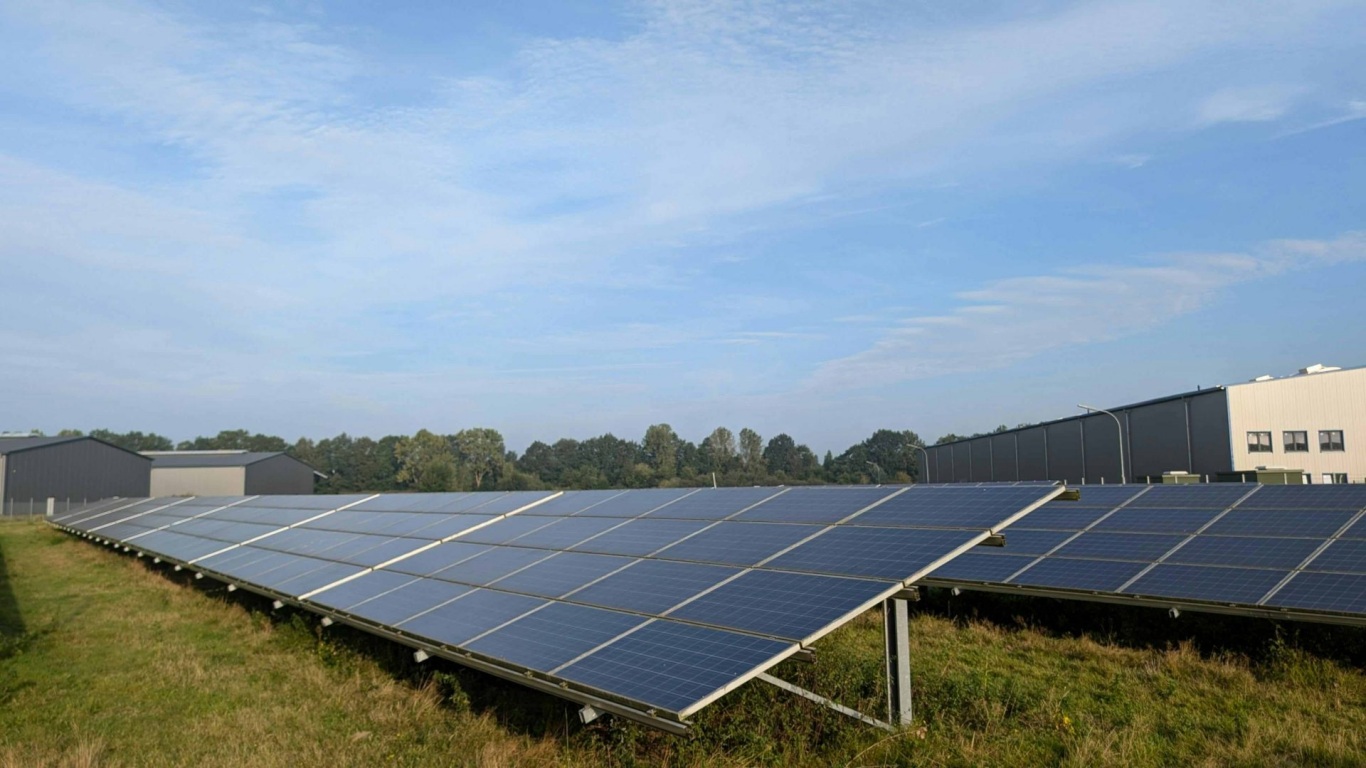

At its core, a photovoltaic panel serves to execute the entire process of converting light energy into electricity. By leveraging the unique properties of semiconductor materials and utilizing sunlight as an energy source, it sequentially facilitates electron excitation, charge separation, and current generation, ultimately transforming solar energy into usable electricity for daily consumption.
1. Sunlight Irradiation
Sunlight strikes the surface of the photovoltaic panel. The panel—centered around semiconductor materials, primarily silicon—directly absorbs the energy contained within the incoming solar radiation.
2. Electron Excitation
Upon absorbing solar energy, the silicon material within the panel causes electrons within its constituent atoms to become excited and dislodged. This process results in the separation of free electrons and positive holes, thereby generating charged particles.
3. Charge Separation
The photovoltaic cell is inherently structured with a built-in P-N junction, which naturally establishes an internal electric field. Under the influence of this electric field, the negatively charged electrons and positively charged holes separate and migrate in opposite, directional paths.
4. Current Generation
Once an external electrical circuit is connected, the separated electrons flow continuously and in an orderly fashion, thereby generating direct current (DC).
5. Electrical Output
The DC electricity generated by the photovoltaic panel is converted into standard alternating current (AC)—the form typically used in daily life—via an inverter. This converted electricity is then transmitted through power distribution equipment to meet the energy demands of households, industrial facilities, and the public power grid.
FAQs
1. If I install PV panels on my project site, what happens first?
Once sunlight reaches the panel surface, the solar cells begin generating electricity immediately. For many Wondon customers, the first concern is usually whether their site’s sunlight is stable enough to support long-term generation.
2. How is sunlight actually converted into power that my facility can use?
The solar cells create DC electricity by exciting electrons inside semiconductor materials. If you are planning an industrial or commercial project, this conversion efficiency directly affects your future energy return.
3. Why do I still need an inverter after installing PV panels?
Because your equipment and grid system typically use AC power, not DC power. That’s why Wondon usually designs the inverter and PV panels together instead of treating them as separate purchases.
4. Why does the same panel perform differently from one project to another?
Factors like shading, installation angle, and temperature all impact output. In real projects, Wondon often helps customers optimize layout first before increasing panel quantity.
5. From a project operation perspective, how does the whole system work together?
The panels generate electricity, the inverter converts it, and the power is distributed to loads or the grid. For most B-end customers, Wondon focuses on making the system easy to operate, stable to run, and simple to expand later.