

Power transformers are high-capacity electrical transformers used in generation plants, transmission networks, and primary substations.
The functions of power transformers in modern electrical power systems are essential for voltage conversion, long-distance power transmission, grid distribution, and electrical isolation. These core functions ensure the stable and efficient operation of high-voltage power networks.
What Is a Power Transformer?
A power transformer is a large-scale transformer used in high-voltage power systems to transfer electrical energy between circuits through electromagnetic induction.
Unlike distribution transformers, power transformers function are focused on grid-level energy transmission rather than end-user power supply.
- High voltage levels: typically 33 kV to 1000 kV systems
- Large power capacity (hundreds of MVA)
- Continuous operation in transmission and generation networks
Typical Voltage Levels
Power transformers are commonly used in systems such as:
- 500kV/ 400 kV / 330kV/ 220 kV / 110 kV transmission networks
- 66 kV sub-transmission systems
- 33 kV substation interfaces
- Generator step-up systems (10.5 kV / 20 kV to grid voltage)
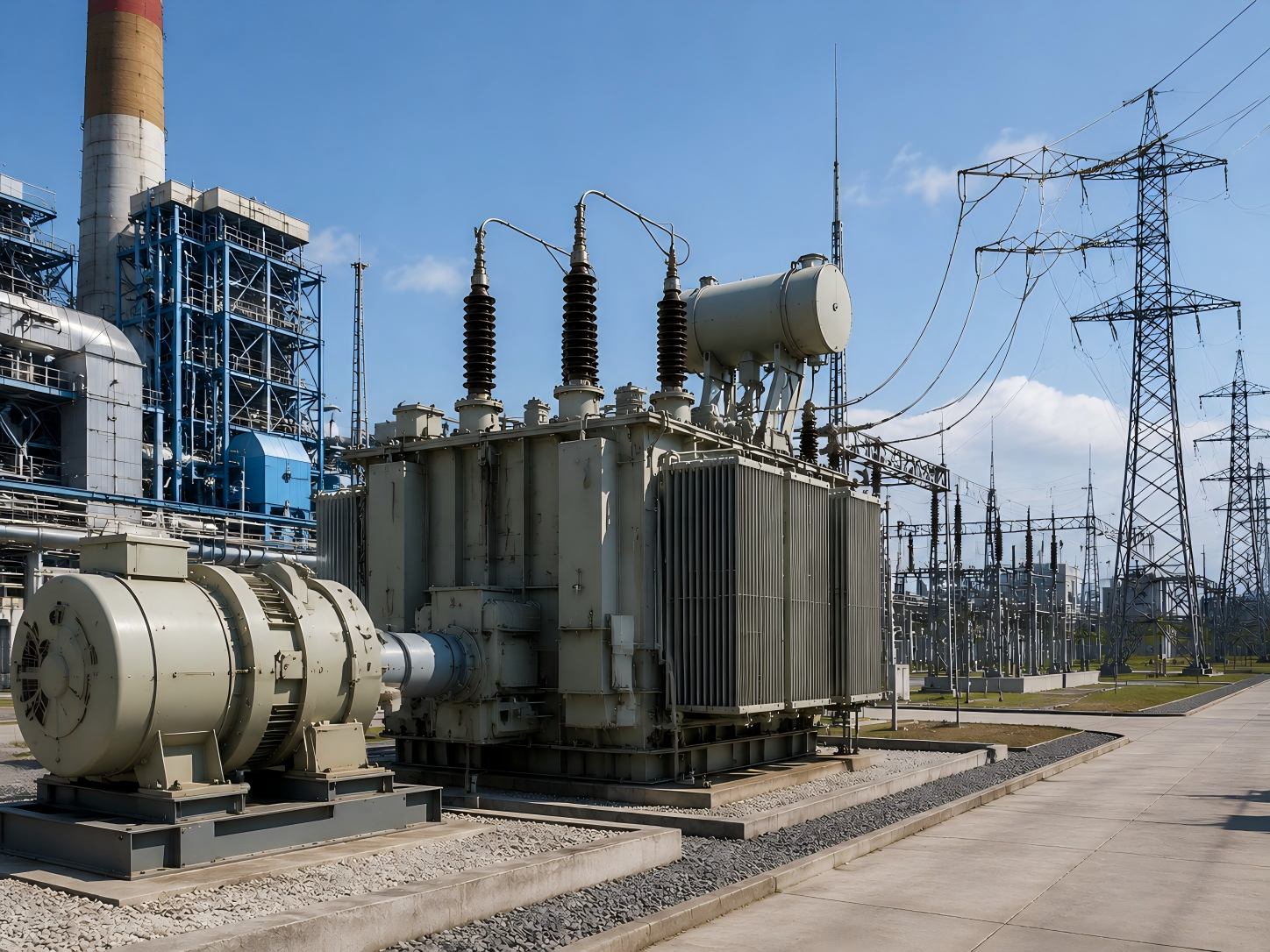
Core Power Transformer Functions in Power Systems
The functions of power transformers can be classified into three fundamental system-level roles in electrical networks.
Voltage Conversion Function (Primary Function)
Voltage conversion is the most important part of the power transformer functions.
In Power Generation Systems
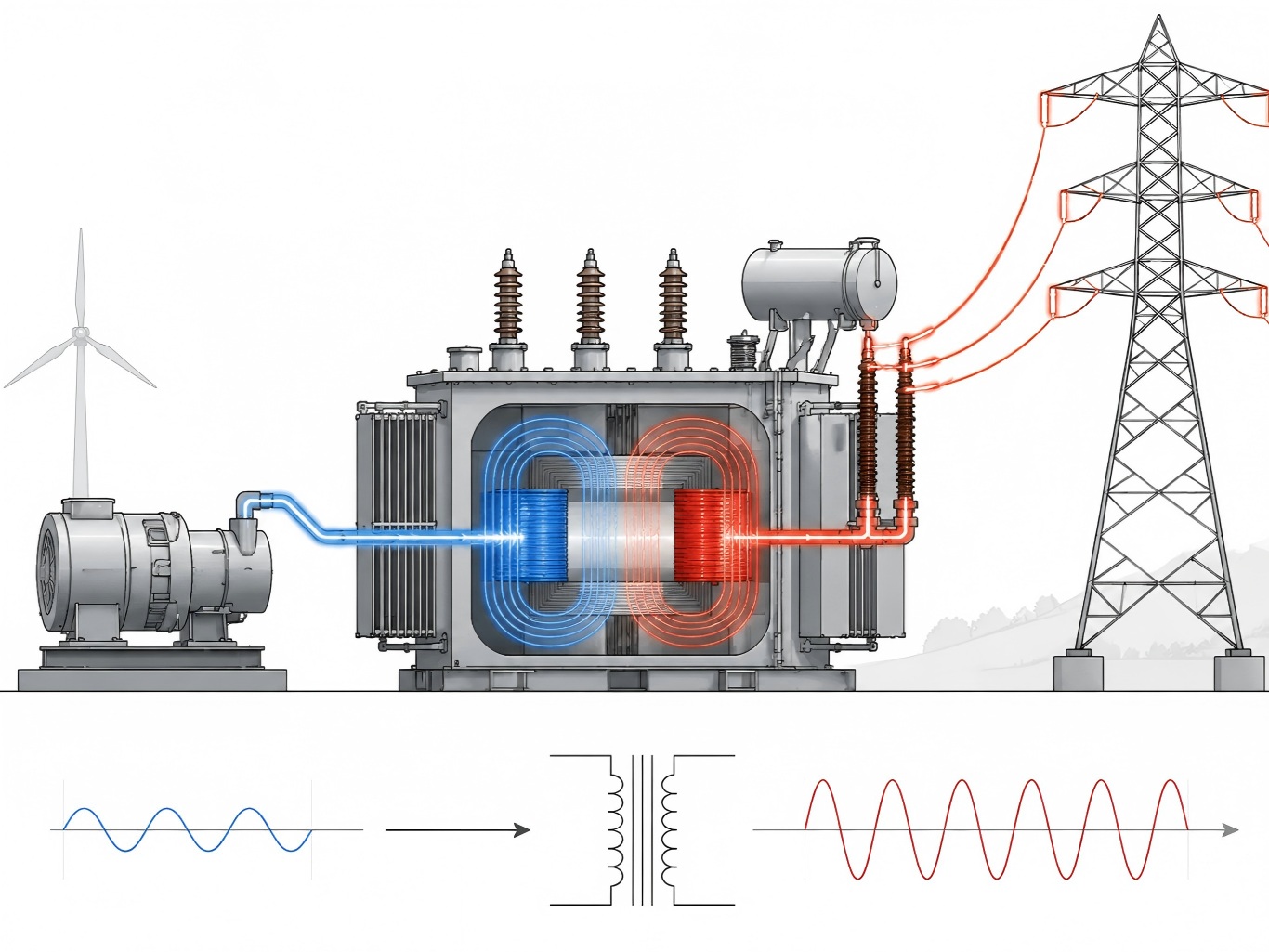
Electricity generated by power plants is typically at medium voltage levels (e.g., 10.5 kV or 20 kV).
A step-up power transformer increases this voltage to:
- 220 kV
- 500 kV
- 750 kV / 1000 kV (ultra-high voltage systems)
This significantly reduces current and minimizes transmission losses over long distances.
In Transmission and Distribution Interfaces
At load centers and substations, power transformers step voltage down in stages:
- 500 kV → 220 kV
- 220 kV → 110 kV
- 110 kV → 33 kV
- 33 kV → 10 kV
This staged voltage reduction ensures compatibility with regional grids and end-user systems.
Power Distribution and Grid Node Function
Another key power transformer function is acting as a grid distribution node.
- Receive power from multiple transmission lines
- Redistribute electricity across different voltage levels
- Balance regional load flow in interconnected grids
This makes them essential for grid topology stability and energy routing.
Electrical Isolation and System Safety
Power transformers provide galvanic isolation between primary and secondary circuits.
This means:
- No direct electrical connection between input and output windings
- Energy is transferred only through magnetic coupling
Key system benefits include:
- Improved operational safety
- Fault containment between grid segments
- Flexibility in grounding system design
- Reduced propagation of electrical disturbances
Main Types Supporting Power Transformer Functions
The effectiveness of power transformer functions depends on the cooling structure and design type.
Oil-Immersed Power Transformers (Mainstream Type)
Oil-immersed transformers are the dominant solution for high-capacity systems due to their strong performance in supporting power transformer functions under high thermal and electrical stress.
Structure
Core and windings are fully immersed in transformer oil inside a sealed tank.
Transformer oil acts as both an insulating and a cooling medium
Cooling Methods
| Cooling Method | Full Name | Cooling Principle | Key Characteristics | Typical Application |
|---|---|---|---|---|
| ONAN | Oil Natural Air Natural | Natural oil circulation + natural air cooling | No auxiliary equipment, simplest structure, low maintenance | Small to medium power transformers |
| ONAF | Oil Natural Air Forced | Natural oil circulation + fan-assisted air cooling | Improved heat dissipation with fans, widely used in substations | Transmission substations (medium to large capacity) |
| OFAF | Oil Forced Air Forced | Pump-driven oil circulation + forced air cooling | High cooling efficiency, suitable for large capacity units | Large power transformers in transmission systems |
| OFWF | Oil Forced Water Forced | Pump-driven oil circulation + water-based heat exchanger cooling | Highest cooling efficiency, used in extreme high-capacity scenarios | Ultra-large transformers, hydro power stations |
Advantages of Oil-Immersed Transformers
- Excellent insulation performance
- Strong heat dissipation capability
- Mature and widely adopted technology
- Suitable for ultra-high voltage and large MVA ratings
Limitations
- Fire risk (requires protection systems)
- Large physical size and weight
- Regular oil testing and maintenance required
Key Applications of Power Transformer Functions
Power transformers are used in all major segments of the power system.
Power Generation Plants
- Step-up voltage from generators to transmission levels
- Enable efficient grid injection of electricity
Transmission Substations
- Connect ultra-high voltage networks
- Manage bulk power flow across regions
Load Center Substations
- Step down voltage for regional distribution networks
- Balance industrial and urban power demand
Renewable Energy Integration
- Solar and wind farms
- Offshore and onshore wind substations
- Grid synchronization of variable generation sources
Technical Importance of Power Transformer Functions
The power transformer functions directly determine grid efficiency and reliability.
Reduction of Transmission Losses
High-voltage transmission reduces current flow, minimizing I²R losses in conductors.
Grid Stability and Power Flow Control
Power transformers enable controlled voltage levels across interconnected grid nodes, improving:
- Frequency stability
- Voltage regulation
- Power routing efficiency
System Reliability and Fault Management
Through isolation and impedance control, transformers help limit fault propagation across the grid.
FAQs
1. What is a power transformer in high-voltage systems?
A power transformer is a high-capacity transformer (typically above 200 MVA) used in transmission and generation systems to convert voltage levels between 3 kV and 1000 kV networks.
2. What is the main function of a power transformer?
Its main function is voltage conversion for efficient long-distance transmission and system-level grid integration.
3. Why are power transformers used in substations?
They serve as hub nodes that distribute power across different voltage levels and manage regional load flow.
4. What is the difference between ONAN, ONAF, and OFAF cooling?
They differ in cooling intensity:
- ONAN: natural cooling
- ONAF: fan-assisted cooling
- OFAF: forced oil + forced air cooling for large capacity systems
5. Where are power transformers commonly used?
They are used in power plants, transmission substations, load centers, and renewable energy grid integration systems.
Conclusion
The power transformer functions are fundamental to modern high-voltage power systems. They enable voltage conversion, electrical isolation, power distribution, and long-distance transmission across generation, transmission, and distribution networks.
Wondon’s power transformers offer outstanding technology and reliable performance. They are designed to ensure the efficient and safe transmission of electricity while maintaining system stability. Whether for industrial applications or renewable energy projects, Wondon provides solutions to meet your power needs.
Learn more about Wondon’s power transformers and how they can benefit your system by visiting our product page.