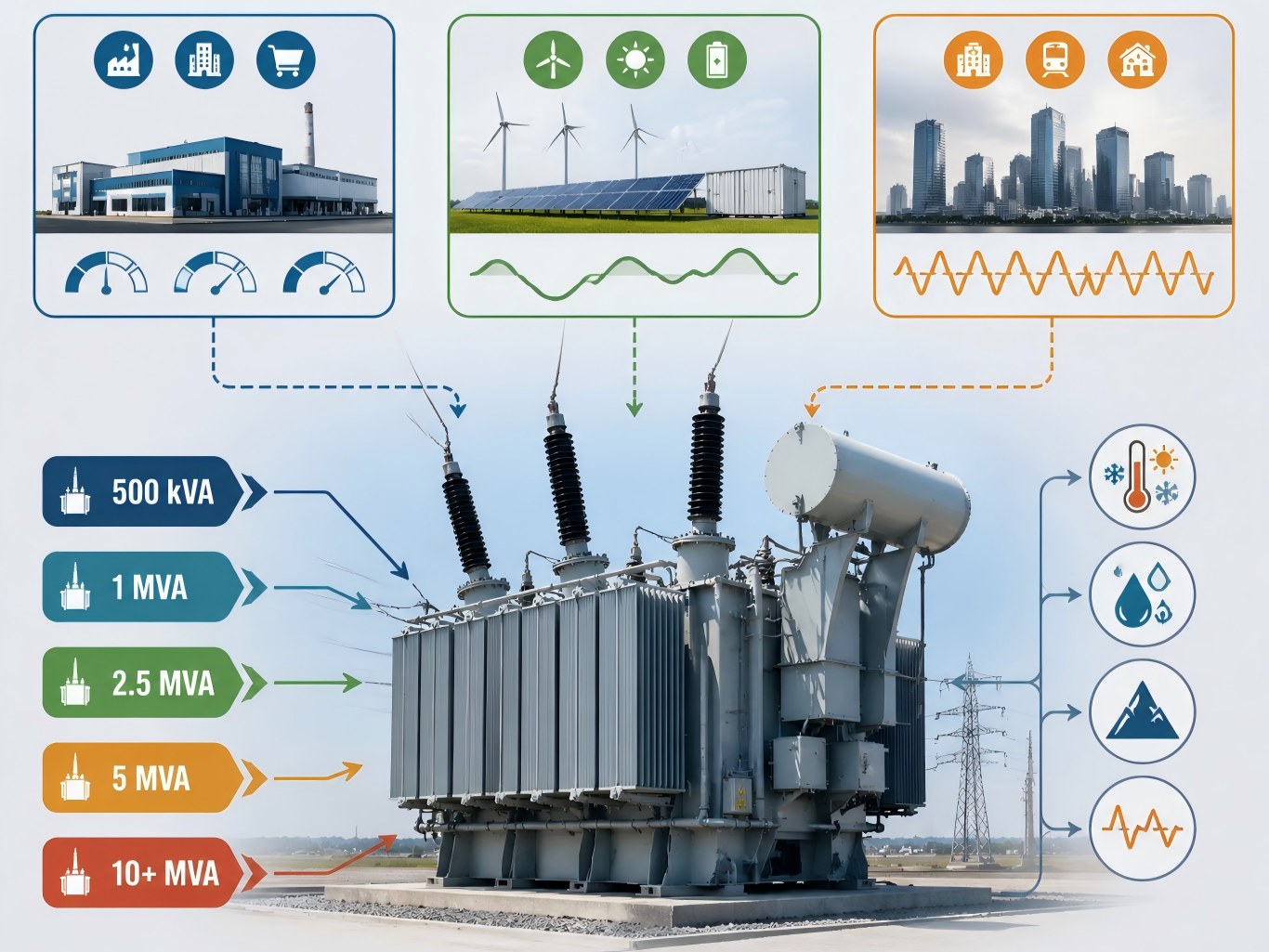

In an electrical system, power transformers play a crucial role in transmitting voltage between circuits. Their stability and efficiency directly affect the safety and reliability of the entire electrical grid. One of the key elements determining the performance, efficiency, and lifespan of a power transformer is its power rating. If you’re facing the challenge of selecting the right power transformer for your needs, or if you’re an electrical engineer, procurement manager, or project manager, understanding the power transformer power rating is essential. Selecting the right rating will not only ensure the stable operation of your electrical system but also maximize energy efficiency and minimize unnecessary costs.
If you’ve ever felt confused during the transformer selection process or are unsure how to choose the correct power transformer power rating, this article will provide clarity. We will explore the basic concepts behind power transformer power ratings and guide you on making an informed decision based on your unique needs, load conditions, and environmental factors. Let’s dive into how to evaluate and select the most suitable power transformer for your project.
What is a Power Transformer Power Rating?
The power transformer power rating refers to the maximum power that the transformer can continuously output under standard operating conditions. You may often see references to rated power or maximum power in various technical documents; these terms are central to the power rating concept. Rated power is the amount of power the transformer can continuously output in normal operating environments, while maximum power refers to the maximum load the transformer can handle, typically for short-term overload situations.
Common units for transformer power ratings include kilovolt-amperes (kVA) and megavolt-amperes (MVA), which represent the amount of electrical energy that a transformer can transmit. Understanding these units and ratings is critical when selecting a power transformer, as they determine whether the transformer can meet your electrical system’s requirements. If the wrong power transformer power rating is selected, it can result in reduced system efficiency or even equipment failure.
Factors Affecting Power Transformer Power Ratings
When choosing the power rating for your power transformer, several factors will influence your final decision:
1. Load Type
Different load types place different demands on power transformers. For example, linear loads tend to be stable, while non-linear loads such as computers or power electronics can cause transient current fluctuations. In such cases, you will need to select a power transformer with a higher power rating to accommodate these fluctuations.
2. Operating Environment
Environmental factors such as temperature, humidity, and altitude can all impact a power transformer’s power rating. In high-temperature or high-altitude areas, a transformer’s cooling efficiency may decrease. Therefore, in such environments, it is advisable to select a power transformer with a slightly higher power rating to ensure stable operation in challenging conditions.
3. Load Fluctuations in the Electrical System
In many applications, loads are not constant, particularly in industrial and commercial environments where fluctuations are common. To account for these fluctuations, it is advisable to leave an appropriate safety margin when selecting your power transformer. This ensures the power transformer can continue to operate under short-term overload conditions without failure.
How to Select the Right Power Transformer Power Rating?
When selecting a power transformer power rating, the first step is to evaluate your specific load requirements. You need to understand what the power demands are in your system, the maximum power requirements, the type of load, and whether there are plans for future electrical system expansions. Fully understanding these needs will help you make a more accurate selection.
In addition to load requirements, you should also factor in a safety margin. This margin is essential to prevent transformer overload due to load fluctuations or future load increases. If you select a power rating that is too high, the transformer might operate at low-load conditions for extended periods, which will reduce efficiency. On the other hand, a power transformer power rating that is too low could lead to transformer overload and disrupt system stability.
FAQs
1. What is a power transformer power rating?
A power transformer power rating is the maximum amount of electrical power a transformer can continuously deliver under normal operating conditions. It is typically expressed in kVA or MVA and determines the transformer’s load-carrying capacity.
2. How do I choose the right transformer power rating?
The correct transformer rating depends on load demand, load type, future expansion plans, and operating conditions. Wondon recommends including an appropriate safety margin to ensure reliable and efficient long-term operation.
3. What happens if a transformer is undersized?
An undersized transformer may experience overheating, reduced efficiency, voltage instability, and shortened service life. In severe cases, it can lead to equipment failure and system downtime.
4. What is the difference between kVA and MVA ratings?
kVA and MVA both measure transformer capacity. 1 MVA equals 1,000 kVA. Smaller distribution transformers are commonly rated in kVA, while larger power transformers are often rated in MVA.
5. Why should future load growth be considered when selecting a transformer?
Electrical demand often increases as facilities expand or add equipment. Selecting a transformer with sufficient capacity helps accommodate future growth, avoid costly upgrades, and maintain stable system performance. Wondon provides customized transformer solutions tailored to both current and future power requirements.
Conclusion
To sum up, selecting the right power transformer power rating is key to enhancing the efficiency of your electrical system, prolonging equipment lifespan, and reducing operational costs. Choosing the appropriate power transformer power rating is not just a technical decision—it’s essential for the safety and stability of your electrical system. We hope this article provides you with a deeper understanding of power transformer power ratings, and that you can now make the most suitable choice based on your actual needs and system characteristics.
If you have any questions or encounter difficulties during the selection process, feel free to contact us—we’re here to help you find the best solution for your power transformer needs.