
Power transformers play a crucial role in the power system. Not only do they regulate voltage, but they also ensure the stable and safe transmission of electricity. As a core component for the efficient and stable operation of the power system, the voltage regulation function of transformers is essential. By gaining a deeper understanding of the voltage regulation mechanism, you can better design, select, and maintain power transformers to ensure optimal performance of electrical equipment.
Basic Principles of Voltage Regulation in Power Transformers
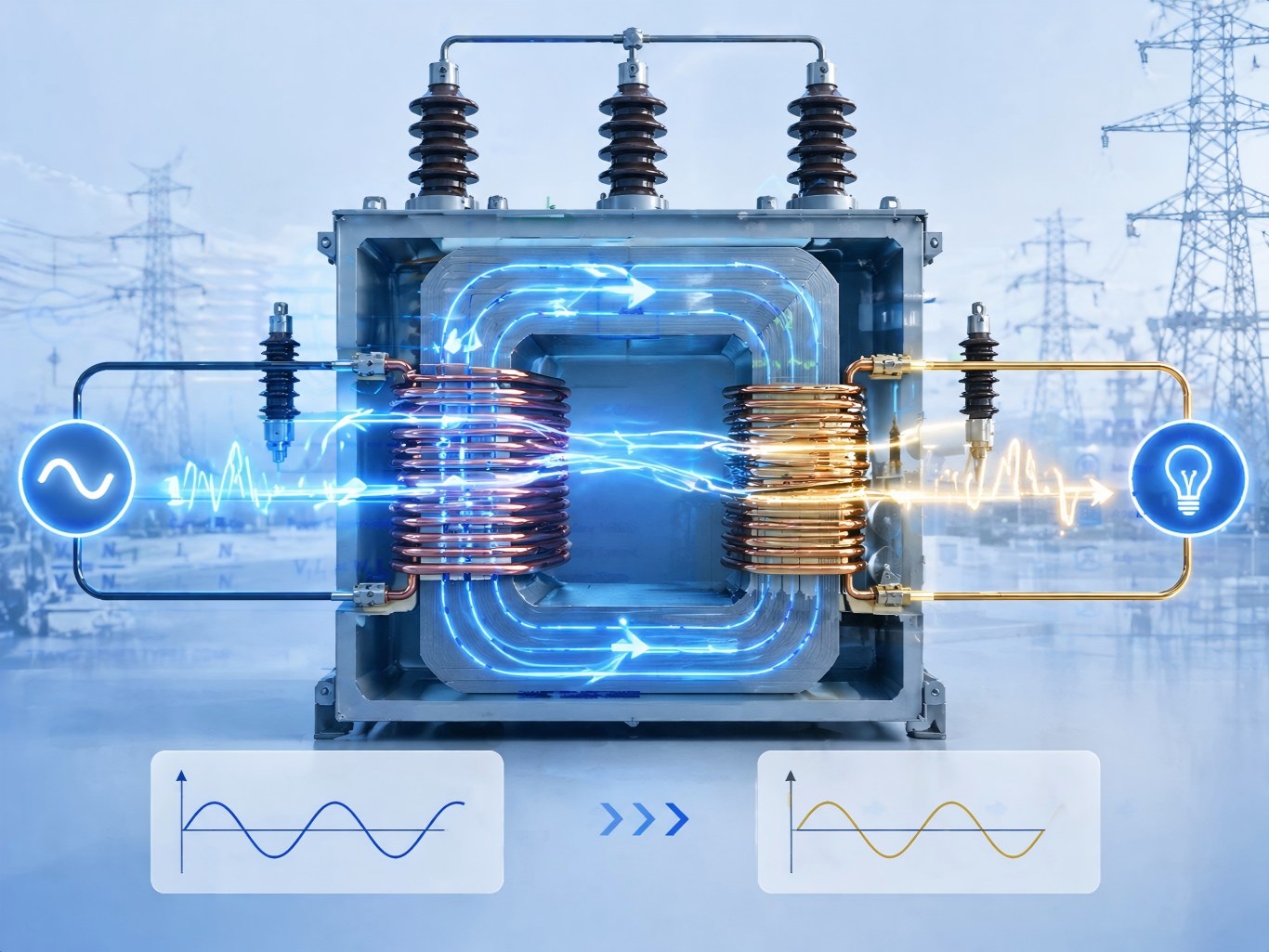
Power transformers regulate voltage through the principle of electromagnetic induction. When alternating current flows through the primary winding of a transformer, it generates a magnetic field, which induces a current in the secondary winding proportional to the primary current, thus transferring and converting the voltage. The operating principle of transformers is based on Faraday’s law of electromagnetic induction, which states that a changing magnetic field induces an electromotive force in the conductor.
The voltage relationship between the primary and secondary windings is determined by their turns ratio. In other words, the greater the turns ratio, the higher the output voltage. By properly designing the number of turns in the windings, transformers can effectively convert between different voltage levels.
Methods of Voltage Regulation in Power Transformers
There are several ways to regulate voltage in power transformers:
Voltage Ratio Regulation
By adjusting the turns ratio between the primary and secondary windings, you can regulate the voltage to either increase or decrease it. This method allows transformers to adjust the output voltage flexibly according to load demands.
Tap Selection
To meet the varying needs of different loads, power transformers can be equipped with multiple taps. By selecting different taps, you can switch between different voltage levels to meet varying power requirements.
Automatic Voltage Regulator (AVR)
An AVR is a device that automatically regulates voltage through a feedback mechanism. The AVR can monitor the voltage in the power grid in real time and automatically adjust the output of the transformer, ensuring that the voltage remains stable.
The Role of Voltage Regulation in Power Transformers for Different Applications
Voltage regulation by power transformers plays an important role in various applications:
Voltage Regulation in Power Transmission
Power transformers transfer high voltage over long distances and then use step-down transformers to adjust the voltage to an appropriate level, ensuring the stable transmission of electricity to various load points.
Voltage Regulation in Industrial Applications
Many industrial devices require stable voltage to operate. Power transformers regulate the voltage to ensure that equipment operates within the optimal voltage range, thus improving production efficiency and extending equipment lifespan.
Voltage Regulation in Substations
Substations are critical nodes in the power system, where power transformers regulate voltage to meet the demands of different regions, ensuring the efficient distribution of electricity.
Factors Affecting the Voltage Regulation Performance of Power Transformers
The performance of voltage regulation in power transformers can be influenced by several factors:
Load Variations
Fluctuations in load can directly impact the stability of the voltage. When the load increases, the voltage may drop, and vice versa. Therefore, power transformers need to have good load regulation capabilities to maintain stable voltage.
Temperature Effects
The operating temperature can affect the voltage regulation performance of the transformer. As the temperature increases, the efficiency and voltage regulation capabilities of the transformer may decrease.
Frequency Fluctuations
Fluctuations in the power grid frequency can also impact the voltage regulation performance of transformers, potentially causing instability in the output voltage.、
Future Development Trends
With the continuous advancement of technology, the voltage regulation technology in power transformers is also evolving:
Smart Power Transformers
Smart transformers are equipped with real-time monitoring systems that automatically adjust the voltage based on the real-time load and voltage conditions of the power grid. This dynamic regulation helps improve the stability and efficiency of the power system.
Environmental Adaptability and Energy Efficiency
Modern power transformers are increasingly designed to operate in various environmental conditions, such as extreme temperatures, humid or dusty environments. At the same time, new power transformers have made significant progress in terms of energy efficiency, helping to reduce energy losses.
FAQs
1. How does a power transformer regulate voltage?
A power transformer regulates voltage through electromagnetic induction and the turns ratio between its primary and secondary windings. By increasing or decreasing the voltage level, it ensures efficient and stable power transmission.
2. What is transformer voltage regulation?
Transformer voltage regulation refers to the ability of a transformer to maintain a stable output voltage as load conditions change. Good voltage regulation helps protect electrical equipment and improve system reliability.
3. What is the purpose of transformer tap changers?
Tap changers allow the transformer to adjust its turns ratio and output voltage. This helps compensate for voltage fluctuations and ensures that power is delivered at the required voltage level.
4. How does an Automatic Voltage Regulator (AVR) work with a transformer?
An AVR continuously monitors system voltage and automatically adjusts transformer output when voltage levels rise or fall. This helps maintain stable voltage and improve power quality.
5. What factors affect transformer voltage regulation performance?
The main factors include load variations, operating temperature, frequency fluctuations, and transformer design. Wondon power transformers are engineered to provide stable voltage regulation under a wide range of operating conditions.
Conclusion
The voltage regulation function of power transformers is vital to ensuring the stability and efficiency of power transmission. By understanding the operating principles and regulation methods of transformers, you can make more informed decisions when selecting and maintaining equipment, ensuring the stable and efficient operation of the power system.
As the technologies for smart and energy-efficient transformers continue to develop, Wondon’s power transformers will help you achieve more precise and efficient voltage regulation, providing more reliable support for the power system in the future. To learn more about Wondon’s power transformers, click here.