
Power transformers play a crucial role in power systems. They ensure the safe and efficient transmission of electricity to different areas by raising or lowering the voltage. Whether in power plants, substations, or industrial applications, transformers are core equipment ensuring stable power flow. This article will introduce common types of power transformers and help you select the appropriate transformer for your project.
Basic Classification of Power Transformers
Classification by Voltage Level
Power transformers are classified into high-voltage, medium-voltage, and low-voltage transformers based on their voltage levels.
- High-voltage transformers are typically used in power plants and large transmission networks to ensure efficient long-distance power transmission.
- Medium-voltage transformers are widely used in industrial and urban power distribution systems.
- Low-voltage transformers are commonly found in residential and small commercial facilities, responsible for converting voltage to a standard voltage suitable for use.
Classification by Cooling Method
Power transformers can also be classified by their cooling method, mainly into oil-immersed transformers and dry-type transformers.
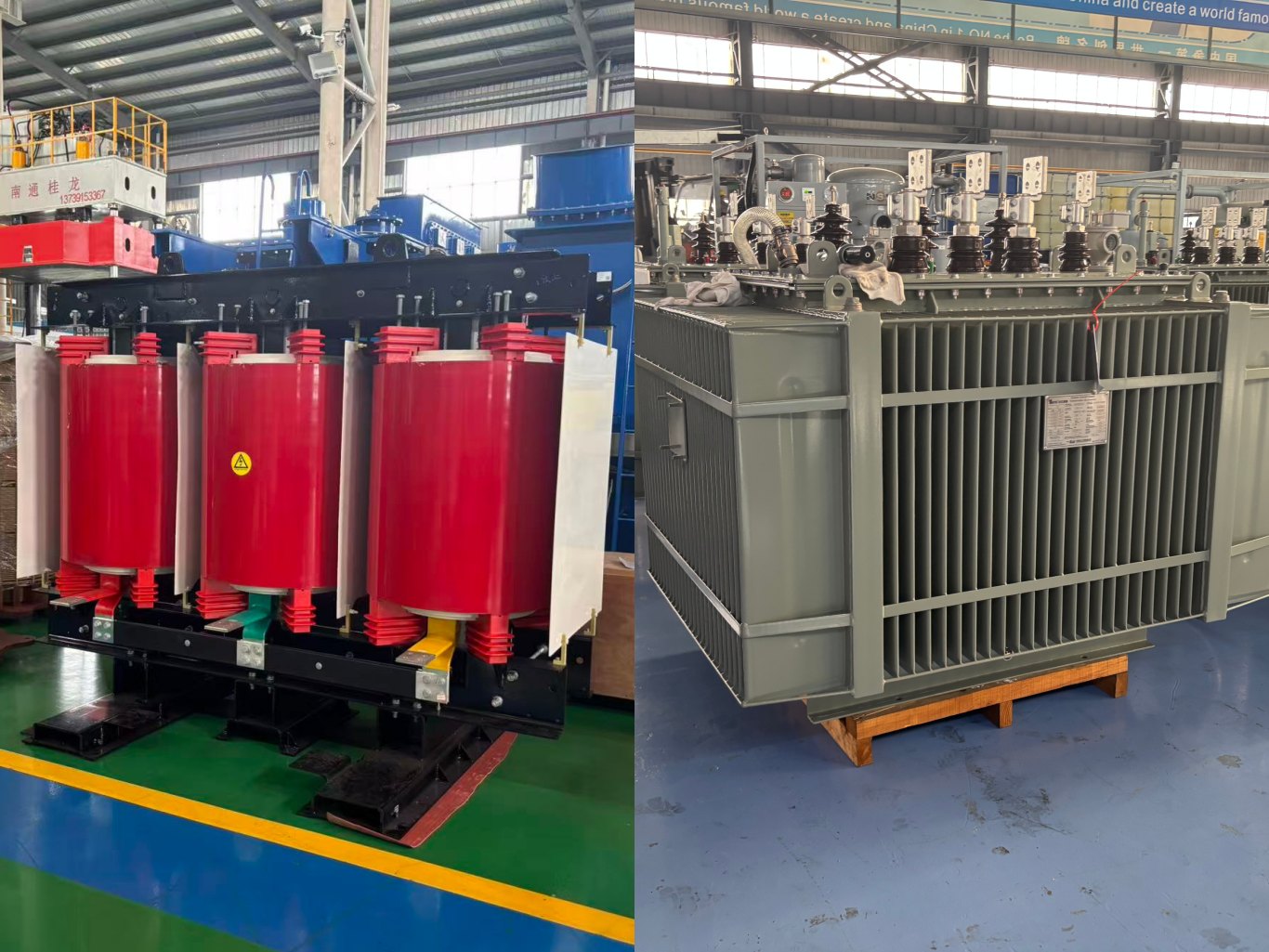
- Oil-immersed transformers dissipate heat through the natural circulation of oil and are suitable for high-power and long-term operation scenarios.
- Dry-type transformers use air cooling and are suitable for smaller loads or locations with high safety requirements, such as hospitals and high-rise buildings.
Common Types of Power Transformers
Oil-Immersed Transformers
Oil-immersed transformers operate by immersing themselves in insulating oil, effectively improving cooling efficiency. They are commonly used for large-scale power transmission. They are highly adaptable and can handle large power loads.
Dry-Type Transformers
Dry-type transformers are cooled by air, offering higher safety and are suitable for flammable or special environments. They are easy to maintain, and because they are oil-free, they have a lower fire risk, making them widely used in urban power distribution networks and commercial buildings.
Smart Transformers
Smart transformers integrate remote monitoring and automatic adjustment functions. They can automatically adjust voltage and current based on real-time grid conditions, enhancing the intelligent management of the power grid. They are typically used in smart grids and new energy projects, possessing a high degree of automation and remote management capabilities.
FAQs
1. What are power transformers and why are they important?
Power transformers are essential electrical devices that raise or lower voltage levels to ensure safe and efficient power transmission. They are critical in power plants, substations, and industrial systems, maintaining stable electricity flow and preventing equipment damage across the grid.
2. How are power transformers classified by voltage level?
Power transformers are classified as high-voltage, medium-voltage, and low-voltage based on their operating voltage. High-voltage transformers are used in long-distance transmission, medium-voltage transformers in industrial and urban distribution, and low-voltage transformers for residential or small commercial applications.
3. What is the difference between oil-immersed and dry-type transformers?
Oil-immersed transformers use insulating oil for cooling and are suitable for high-power and long-term operation, while dry-type transformers rely on air cooling, offering higher safety and lower fire risk. Dry-type transformers are often used in indoor or sensitive environments like hospitals and high-rise buildings.
4. What are smart transformers and how do they work?
Smart transformers integrate sensors, remote monitoring, and automatic voltage adjustment to respond to real-time grid conditions. They enhance grid reliability and efficiency, making them ideal for smart grids, renewable energy projects, and systems requiring advanced automation and remote management.
5. How should I choose the right type of transformer for my project?
Selecting the appropriate transformer depends on voltage requirements, load capacity, cooling needs, and installation environment. High-power, long-distance applications favor oil-immersed transformers, indoor or sensitive locations benefit from dry-type transformers, and projects requiring automation and monitoring may use smart transformers.
Conclusion
Power transformers are an indispensable and crucial component of power systems. Selecting the appropriate transformer type based on different application scenarios is essential for improving system efficiency and ensuring equipment operation. If you are unsure which type best suits your needs, we recommend consulting Wondon for the most suitable power transformer solution for your project.