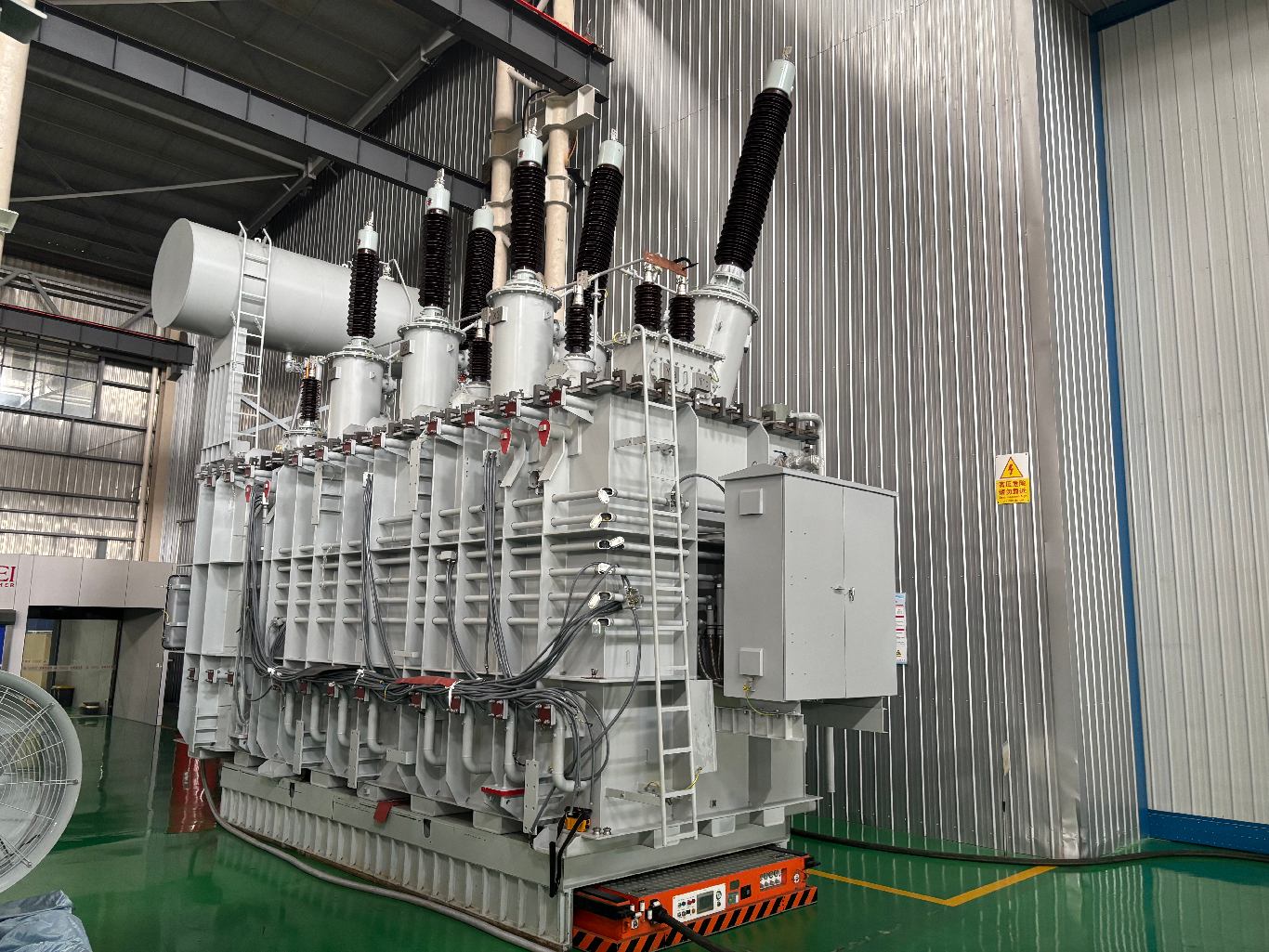

Power transformers play a crucial role in power transmission systems, raising or lowering voltage to ensure the safe and efficient distribution of electricity to different areas. As an electrical engineer, project manager, or even a decision-maker in the power system, understanding how transformers work is essential. It helps you better comprehend their operating mechanisms, thereby improving efficiency and preventing malfunctions.
What Is a Power Transformer?
What is a power transformer? A power transformer is a device that transmits voltage from one circuit to another using the principle of electromagnetic induction. Its core components are a primary coil and a secondary coil, which are wound around a magnetic iron core to improve the efficiency of electromagnetic induction. Transformers are widely used in power transmission, industrial facilities, and other applications requiring voltage regulation to help optimize power distribution.
The Working Principle of a Power Transformer
You can think of a power transformer as a voltage converter that uses electromagnetic induction to increase or decrease voltage. When current flows through the primary coil, the resulting magnetic field affects the secondary coil, thus generating current. The key to this process is the turns ratio between the primary and secondary coils. By adjusting this ratio, the transformer can effectively raise or lower the voltage to meet different power demands.
The Components of a Transformer
The key components of a transformer include the iron core, primary coil, secondary coil, and oil tank.
- The iron core is typically made of magnetically conductive material; its function is to concentrate the magnetic field and reduce energy loss.
- The primary coil is connected to a power source, generating a changing magnetic field, while the secondary coil transfers energy through electromagnetic induction.
- The oil tank is used for heat dissipation, ensuring the transformer maintains a suitable operating temperature.
Transformer Applications
Transformers play an indispensable role in power systems. High-voltage transformers reduce losses during long-distance power transmission, while low-voltage transformers step down the voltage to a safe range suitable for residential and industrial use. Transformers can be found in power plants, factories, commercial buildings, and residential power systems, playing a crucial role in ensuring the stability and security of power supply.
Factors Affecting Transformer Efficiency
As you may know, transformer efficiency is affected by a variety of factors. One of the most important is load conditions. When a transformer is overloaded, its efficiency can drop significantly, even affecting the lifespan of the equipment. Furthermore, environmental factors cannot be ignored; high temperature, humidity, and air quality all affect transformer performance, making it crucial to maintain a suitable working environment.
FAQs
1. What is a power transformer and what does it do?
A power transformer is an electrical device that transfers energy between circuits through electromagnetic induction. Its main function is to step up or step down voltage for efficient power transmission and distribution.
2. How does a power transformer work?
A power transformer works by creating a changing magnetic field in the primary winding, which induces voltage in the secondary winding. The voltage level depends on the turns ratio between the two windings.
3. What is the difference between a step-up and a step-down transformer?
A step-up transformer increases voltage for long-distance power transmission, while a step-down transformer reduces voltage to levels suitable for industrial, commercial, or residential use.
4. What are the main components of a power transformer?
The main components include the iron core, primary winding, secondary winding, insulation system, and cooling system. These components work together to ensure efficient and reliable power transfer.
5. What factors affect transformer efficiency?
Load conditions, core losses, copper losses, operating temperature, and maintenance practices influence transformer efficiency. Wondon transformers are designed to optimize efficiency, reduce energy loss, and support long-term system reliability.
Conclusion
Understanding how power transformers work not only helps you better understand power systems but also guides you in selecting and maintaining suitable equipment to ensure the efficient operation of power systems. By mastering these fundamentals, you can make more informed decisions, optimize electricity usage, and guarantee the stability and security of power systems. If you would like to learn more about power transformers, please feel free to contact us. The engineering team at Wondon is always ready to answer your questions.