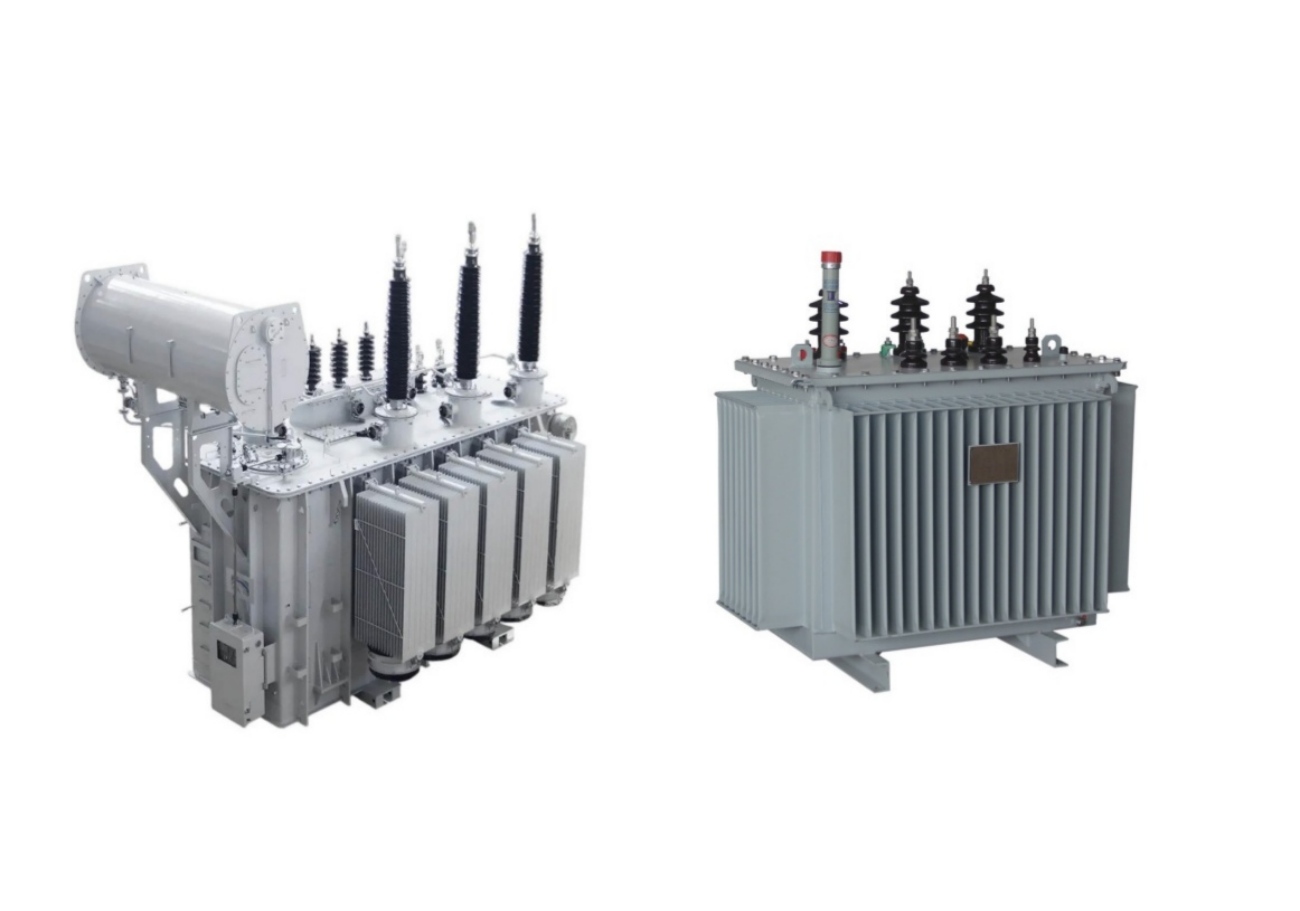

Power transformers and distribution transformers play different roles in the power system. Understanding the differences helps in selecting the right transformer based on specific project needs. The main differences are in the following aspects:
1. Application stage
Power transformers are used in the transmission stage, between large substations or in long‑distance power grids, responsible for the transmission of large amounts of electricity.
Distribution transformers are used in the “last mile” of power delivery, installed close to load centers, directly supplying power to residential areas, shopping malls, and small factories.
2. Capacity and voltage level
Power transformers are large in size and have high power capacity, handling high voltage and large current, suitable for long‑distance transmission.
Distribution transformers have relatively smaller capacity and are at medium or low voltage levels, used to meet the power needs of local areas.
3. Installation location
Power transformers are usually placed in large substations or major power facilities.
Distribution transformers are more down‑to‑earth, commonly seen on utility poles in residential areas, in ground‑mounted box substations, or near commercial buildings.
4. Load variation
Power transformers operate under relatively stable, high‑load conditions because the current in the main grid does not change much.
Distribution transformers have to face fluctuating power demand that goes up and down during the day — loads are different between day and night, weekdays and weekends.