

Almost every factory, hospital and data centre has the same equipment tucked away in a room somewhere: a row of grey panels standing between the incoming transformer and everything downstream. That row is MV switchgear. The choices made when it was specified decide how the site behaves for the next twenty years — how fast a fault gets cleared, how long a maintenance shutdown takes, and how painful it is to add one more feeder later.
We are the engineering team at Wondon, and we build this equipment at our factory in Zigong, China. Over the years we have watched the same handful of specification mistakes repeat on project after project. So there is no dictionary definition here. What follows is the working version: what the different types really are, what each number on the nameplate means, and what to ask a supplier before you sign anything.
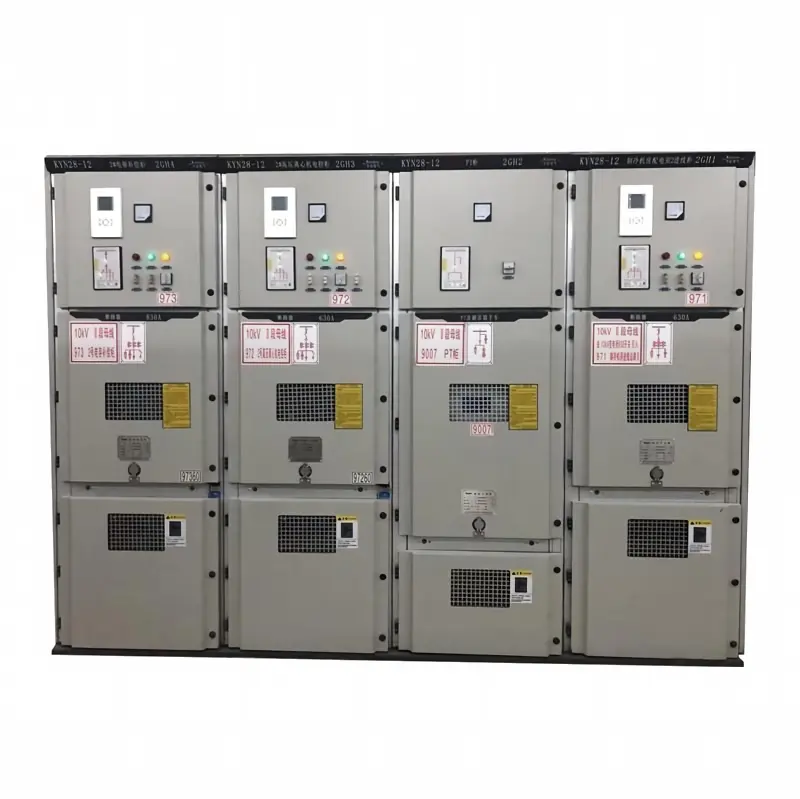
What Counts as MV Switchgear
Medium voltage switchgear is an assembly of switching, protection and measuring devices, mounted in a metal enclosure and used to control, protect and isolate a medium voltage circuit. The main components are circuit breakers, disconnectors, earthing switches, current and voltage transformers, busbars, protection relays and the control equipment that ties them together.
The awkward part is the word “medium”, because the boundaries move depending on which standard you follow:
- IEC and most of the world: 1 kV to 36 kV
- North America (IEEE/ANSI): 1 kV to 38 kV
- China (GB): 3.6 kV to 40.5 kV, where 12 kV and 40.5 kV do most of the work
So when someone says MV switchgear, they usually mean equipment rated at 12 kV, 24 kV, 36 kV or 40.5 kV. Below that range you are dealing with low voltage switchgear. Above it, you have crossed into high voltage territory and a different set of rules.
Where It Sits in the Distribution Chain
A utility line or a secondary winding of a distribution transformer delivers power at 10 kV or 35 kV. The MV switchgear takes that supply, splits it into outgoing feeders, and each feeder either feeds another transformer stepping down to 400 V or supplies a large motor directly. From there the low voltage switchgear distributes to the final loads.
That position in the chain is why MV switchgear matters so much. It is the last point where a single fault can shut down an entire plant before anything downstream has a chance to react.
The Four Ways MV Switchgear Is Classified
Catalogues get confusing because the same panel can be described four different ways at once: by insulation, by construction, by installation, and by safety class. Knowing which label answers which question is half the battle.
By Insulation Medium: Air, Gas or Solid
Air-insulated switchgear (AIS) uses ordinary air as the insulating medium, which makes it simple, cheap to maintain and easy to repair. The trade-off is size, because air is a poor insulator compared with gas. The panels need larger clearances, and the room has to stay clean and dry.
Gas-insulated switchgear (GIS) seals the live parts inside a pressurised tank, filled with SF6 or one of the newer SF6-free mixtures. The footprint drops dramatically, often by more than half compared with AIS, which is why GIS dominates in city centres, tunnels and tight industrial rooms. Gas compartments are sealed for life, so maintenance is minimal. You pay more up front, and you need a plan for gas handling at end of life.
Solid-insulated switchgear covers the live parts in cast epoxy. It sits between the other two: maintenance-free like GIS, without the gas, in a footprint much smaller than AIS.
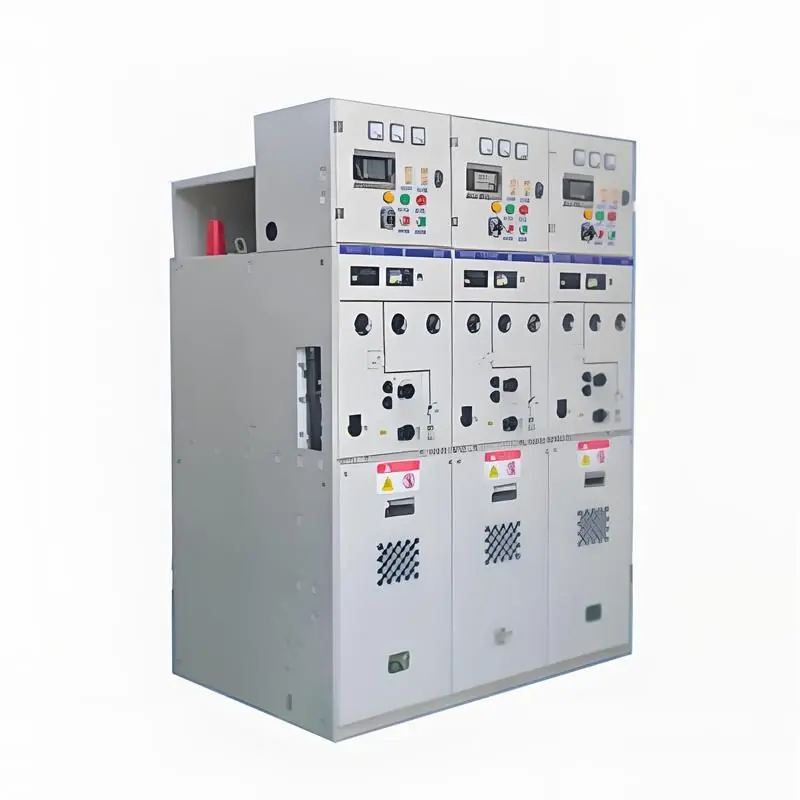
By Construction: Metal-Clad, Metal-Enclosed, Fixed or Withdrawable
This classification has the biggest effect on safety, on price, and on how long a repair takes.
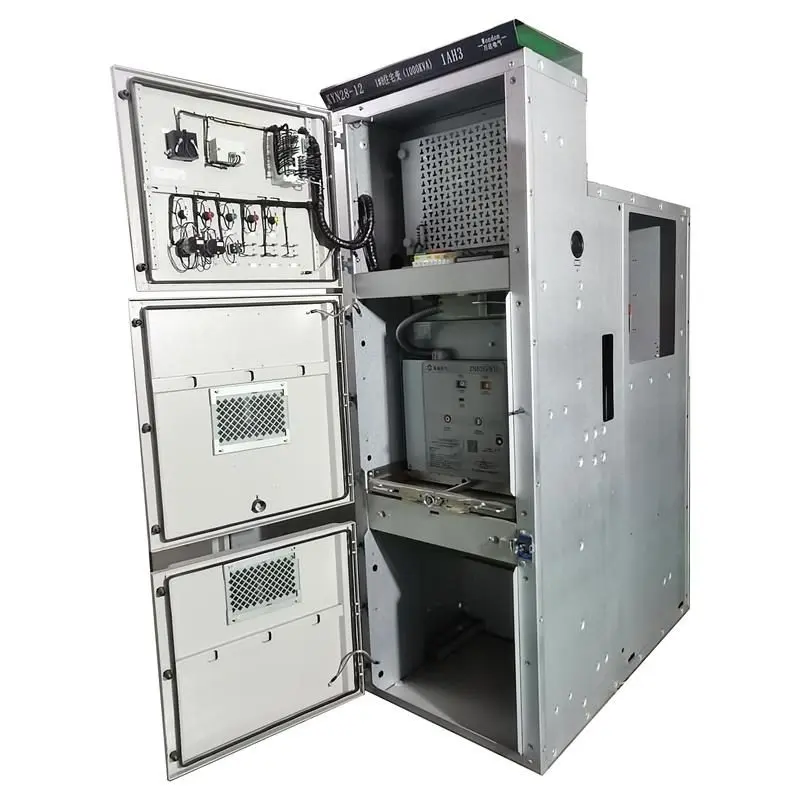
Metal-clad panels separate each functional compartment with earthed metal partitions: busbar, circuit breaker, cable, plus a dedicated low voltage compartment for protection and control. Because the partitions are earthed metal, you can open one compartment while the others stay live. This is the construction used in large and critical installations.
Metal-enclosed panels still have an enclosure and internal barriers, but those barriers may be insulating rather than earthed metal. Service continuity is lower and so is the price, and for many distribution duties that is perfectly adequate.
Fixed type means the circuit breaker is bolted in place. Withdrawable type means the breaker rides on a truck that you rack out to a test position, then withdraw completely — giving you a visible isolating gap without going near the busbar. Withdrawable panels cost more, but they turn a day-long breaker replacement into a half-hour job. Most MV installations above a certain criticality therefore choose metal-clad withdrawable switchgear.
By Installation: Indoor, Outdoor and Ring Main Units
Indoor equipment assumes a controlled environment: temperature inside the specified range, humidity under control, no direct rain, no heavy dust. Outdoor equipment adds weatherproofing, anti-condensation heaters and higher IP ratings. Buying indoor panels for a humid coastal site to save money is a classic false economy, and we have seen sites pay for it twice.
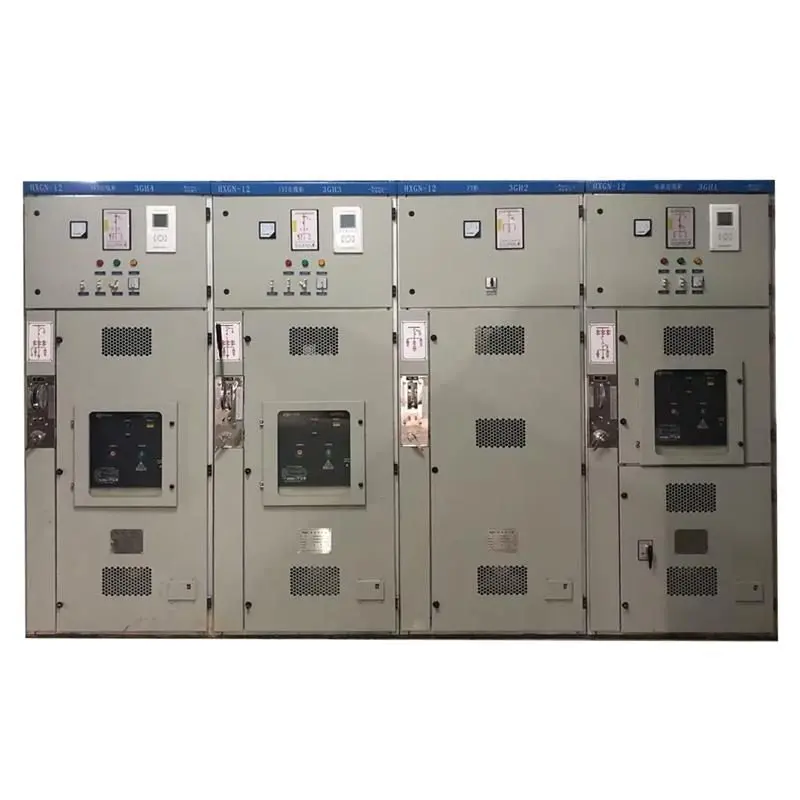
A ring main unit (RMU) is a compact switchgear assembly, usually two to four ways and rated around 630 A. It loops a distribution network so any section can be isolated from either side. RMUs are what you see in residential compounds, commercial parks and small substations.
The Two Nameplate Labels Most Buyers Ignore
Almost every data sheet lists LSC and IAC somewhere near the bottom, and almost nobody reads them. Both decide what happens during a fault and during maintenance.
LSC stands for loss of service continuity. It tells you how much of the switchgear stays live when you open a compartment:
- LSC 2A: the busbar stays energised, but the cable compartment and the busbar compartment share a partition
- LSC 2B: busbar, breaker and cable compartments are all separated by earthed metal, so work on one feeder does not disturb the others
IAC stands for internal arc classification. It tells you the enclosure has been type tested to withstand an internal arc fault. An AFLR rating means the arc was tested with the vent directing it away from the operator. Leave the IAC class blank in your specification and you will receive whatever is cheapest to build — not something you want to discover after the panels are on site.
The Ratings That Actually Decide Your Specification
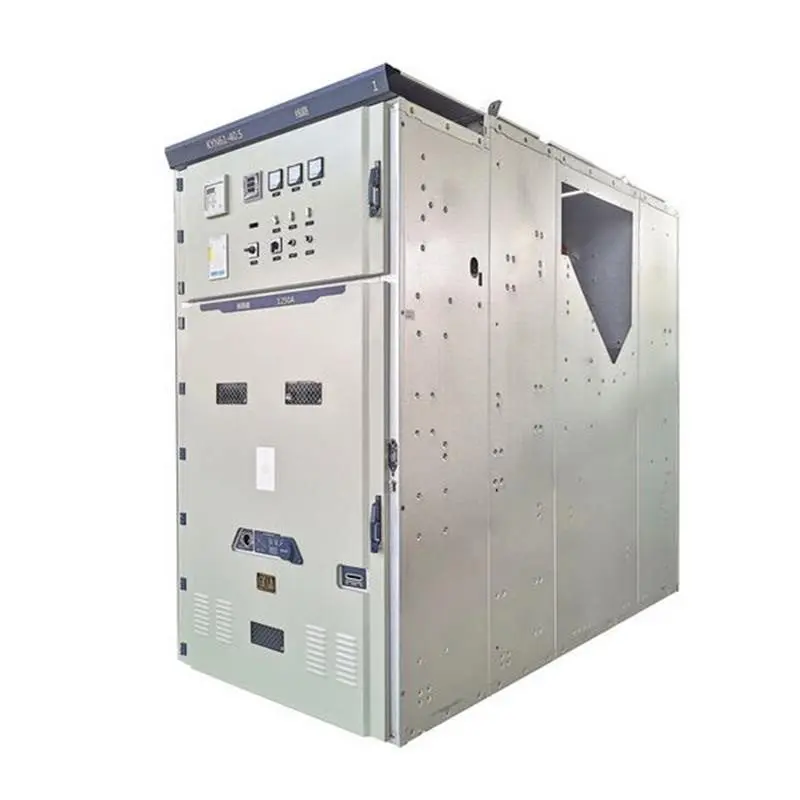
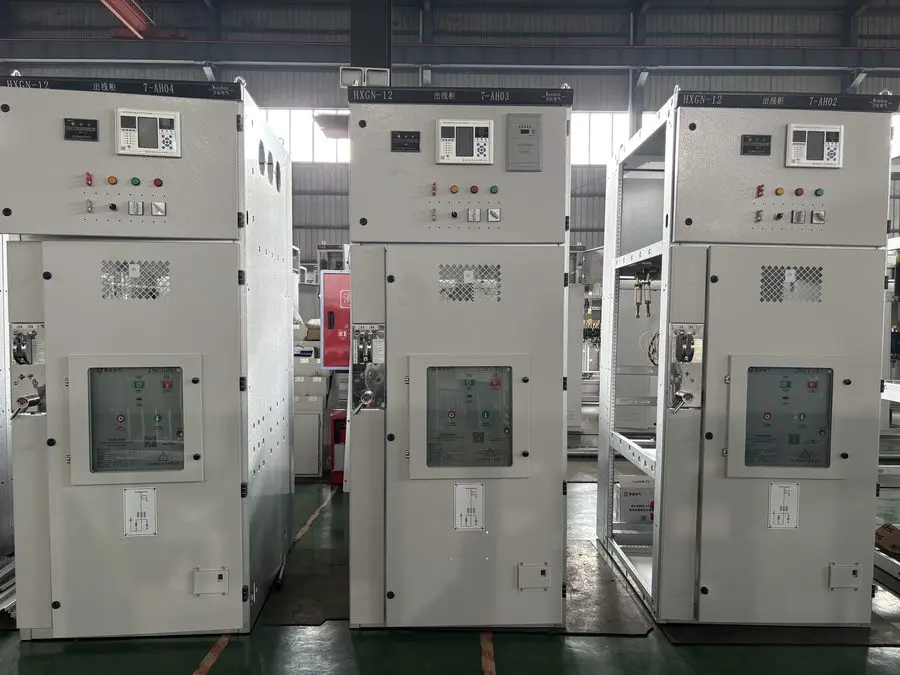
Here is how four panels from our current range compare. These are real, type-tested ratings, and they show clearly why “MV switchgear” on its own is not a specification.
| Parameter | KYN28-12 | HXGN-12 | WDSRM6-12 | KYN61-40.5 |
|---|---|---|---|---|
| Design type | Metal-clad withdrawable | Indoor ring main unit | Gas-insulated ring main unit | Metal-clad withdrawable |
| Rated voltage | 12 kV | 12 kV | 12 kV | 40.5 kV |
| Rated current | 1250 A | 630 A | 630 A | 1600 A |
| Short-time withstand current | 31.5 kA | 20 kA | 20 kA | 31.5 kA |
| Peak withstand current | 80 kA | per type test report | 50 kA | 80 kA |
| Power-frequency withstand | per type test report | 42 kV / 48 kV | 42 kV | 95 kV |
| Lightning impulse withstand | per type test report | 75 kV / 85 kV | 75 kV | 185 kV |
| Protection degree | IP4X (IP2X open) | IP4X | IPX7 / IP67 tank | IP4X |
| Typical use | Plant distribution | Commercial parks | Urban distribution | 35 kV utility work |
Rated Voltage and the Insulation Level Behind It
Rated voltage is the easy number. What actually protects the equipment is the insulation level: the power frequency withstand voltage and the lightning impulse withstand voltage. Two panels can both say “12 kV” and still behave very differently under a switching surge or a nearby lightning strike. Always compare the withstand figures, not just the nominal voltage, and remember that on equipment intended for 35 kV systems, 40.5 kV is the rated value on the nameplate.
Rated Current, Busbar Sizing and Ambient Derating
A panel marked 1250 A is rated at a defined ambient temperature, usually 40 °C, and the busbar, the breaker, the current transformers and the cable terminations all have to carry that current together. A 1250 A enclosure with a 630 A breaker inside is not a mistake, it is a design choice, and you should know which one you are buying.
Ambient derating matters in hot climates. Run above the rated ambient and temperature rise goes past the tested limit, which means the standard test conditions no longer apply. Altitude follows the same logic: above 1000 m, air insulation strength drops, so the equipment needs derating or a higher insulation level.
Short-Circuit Withstand: The Number That Picks the Breaker
The short-circuit withstand current, in kA, is the fault current the assembly can carry for a defined time without damage. Watch the duration. A panel rated 31.5 kA for 3 seconds and one rated 31.5 kA for 1 second are not the same product, and some utilities treat 3 seconds as mandatory. The peak withstand current, usually around 2.5 times the short-time value, is what the busbar supports and the breaker mechanics have to survive at the instant of a fault.
Then there is the IP rating, which describes protection against solid objects and water. IP4X is typical for indoor metal-clad gear, and IP2X with the door open is normal, because you cannot keep a panel sealed while working on it. Outdoor and flood-prone installations need a higher IP together with anti-condensation heaters. Condensation inside a panel causes more failures than overload does.
How to Read an MV Switchgear Spec Sheet
When a quotation lands on your desk, these are the lines worth checking before you compare prices.
- Rated voltage, and right next to it the insulation withstand levels. Nominal voltage alone tells you very little.
- Short-circuit withstand current and its duration, confirmed against what your utility requires in kA and seconds.
- Busbar rating against breaker rating, so the current reaching the breaker is the current you specified.
- Compartment separation and LSC class, which decide whether a feeder can be worked on while the rest of the board stays live.
- IAC class and the direction of arc venting, confirmed to release pressure away from any walkway.
- Protection and control scheme: relay type, CT and VT ratios, accuracy class, and whether it matches your utility’s protection coordination requirements.
- IP rating, ambient range and altitude limit, checked against real site conditions rather than the default.
- Dimensions, weight and cable entry direction, because these decide whether the room and the cable trench will work.
If you would rather have someone walk your single line diagram with you, our team covers the full selection process in how to choose the right medium voltage switchgear.
Standards and Type Tests: What to Ask a Supplier For
For metal-enclosed AC switchgear from 1 kV to 52 kV, IEC 62271-200 is the standard most international projects reference. It sits alongside IEC 62271-1 for common clauses, IEC 62271-100 for circuit breakers and IEC 62271-102 for disconnectors and earthing switches. Chinese domestic projects usually reference GB/T 3906, and North American projects work to IEEE C37.20.2.
Two documents matter more than the rest. A type test report proves the design has been tested by a recognised laboratory for short-circuit withstand, temperature rise and insulation. Routine test reports prove the individual panel you receive was tested before it left the factory. Ask for both, and ask for the report number. This is where certifications earn their keep, too: Wondon panels carry UL, CE, IEC and CQC certification, and those certificates only mean something when they can be matched to a specific model and a specific test report.
Four Specification Mistakes We See Repeatedly
Quoting kA for 1 second when the utility wants 3 seconds. The price looks better until the utility rejects the equipment at commissioning, and by then the panels have been built.
Matching the price and not the busbar. A 1250 A enclosure delivered with a 630 A breaker is not a defect. It simply will not carry the load you planned for.
Ordering indoor panels for a humid or dusty room. Condensation and dust cause more nuisance trips than any other single cause. Either specify a higher IP with heaters, or move to gas-insulated equipment.
Leaving LSC and IAC blank. Whatever you do not state, you will not receive, and both are expensive to retrofit once the switchboard is energised.
FAQs About MV Switchgear
1. What voltage range is MV switchgear?
Under IEC, medium voltage covers 1 kV to 36 kV. In China the range is normally described as 3.6 kV to 40.5 kV. In practice, MV switchgear is rated at 12 kV, 24 kV, 36 kV or 40.5 kV, with 12 kV and 40.5 kV accounting for most installations.
2. What is the difference between metal-clad and metal-enclosed switchgear?
In metal-clad switchgear the barriers between compartments are earthed metal, which allows work on one compartment while the others remain live. That gives LSC 2B service continuity. Metal-enclosed switchgear may use insulating barriers instead, so service continuity is lower and the equipment usually costs less.
3. Is gas-insulated switchgear better than air-insulated switchgear?
Not universally. GIS is more compact, sealed against the environment and almost maintenance-free, which makes it the right answer for city centres, tunnels, coastal sites and tight rooms. AIS is simpler, cheaper to buy and easier to repair, which makes it the right answer wherever there is space and a reasonably clean electrical room.
4. What does 31.5 kA mean on an MV switchgear nameplate?
It is the rated short-time withstand current, meaning the fault current the assembly can carry without damage for the specified duration, usually 1, 2 or 3 seconds. It sets the minimum interrupting capacity of the circuit breakers inside.
5. How much space does MV switchgear need?
A single metal-clad panel is usually around 800 mm wide, 1400 to 1500 mm deep and 2300 mm high, and the room needs roughly another metre of working space in front of the board. Gas-insulated ring main units can be less than half that width, which often settles the question in urban and retrofit projects.
Final Word
MV switchgear is one of those purchases where the specification matters more than the quotation. Voltage class, insulation level, short-circuit withstand, compartment separation and arc classification are the five decisions that will still be with you in twenty years, long after the price difference has been forgotten.
If you are working on a project and want a second opinion on a specification, or you need a panel built to a scheme you have already designed, our engineers at Wondon are happy to look at your single line diagram and tell you honestly what fits. Contact us and we will come back to you within one working day.