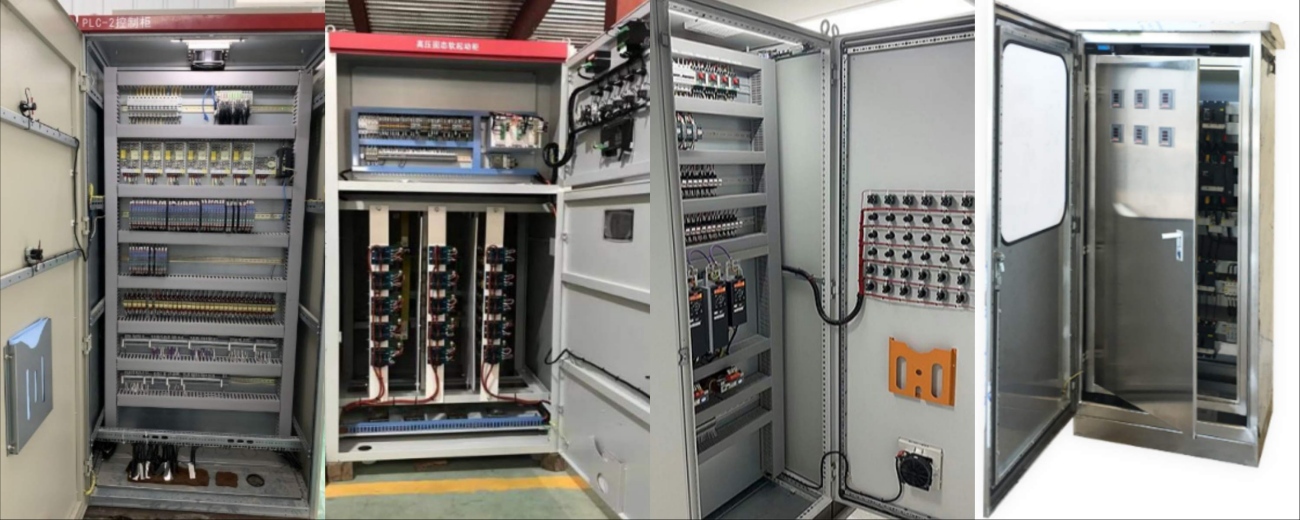

By focusing on equipment requirements, installation conditions, maintenance convenience, and future expandability, when selecting an electrical control panel for industrial applications, the key points are stability, safety, and durability, to be able to meet production needs and flexibly respond to future changes.
1. Understand application requirements
The first step in selecting an electrical control panel is to clearly understand what it will be used for and the number of devices that the electrical control panel will manage.
2. Determine power and load capacity
Accurately calculate the load to prevent overheating, equipment damage, or frequent shutdowns later. If the load is underestimated, the panel will have to operate under continuous stress, affecting its service life.
In addition, it is recommended to reserve extra capacity for future expansion.
3. Consider the installation environment
The installation location of the control panel directly affects its performance and durability. Checking the site conditions in advance ensures that the selected panel will be reliable over the long term.
4. Pay attention to safety and protection functions
The protection functions of an electrical control panel can prevent electrical faults, reduce the risk of damage, and also protect the safety of operators. Protection against overload, short circuit, and abnormal operation is essential for safe system operation.
5. Evaluate control and monitoring needs
Many systems rely on monitoring and automation to improve efficiency and reduce manual operations. An electrical control panel may include monitoring devices. With these monitoring functions, performance issues can be detected early, and overall system management will be better.
6. Plan for maintenance and ease of use
During the selection process of an electrical control panel, ease of maintenance is often overlooked, but it plays a critical role in long-term performance. If components are arranged clearly and wiring is laid out reasonably, troubleshooting becomes easier, and maintenance efficiency is improved.
FAQs
1. When choosing a control panel, what should I clarify first?
Start with what equipment it will control and how many loads it needs to manage. Wondon helps turn these basics into a clear system design.
2. How do I make sure the panel won’t overload in real operation?
You need to calculate the total load accurately and leave space for future expansion. Wondon designs panels with safe capacity margins to avoid overload risk.
3. Does the installation environment really affect panel performance?
Yes, more than many expect. Temperature, dust, humidity, and space all impact stability. Wondon matches design to real site conditions for long-term reliability.
4. What safety functions should I never ignore?
Overload, short-circuit, and abnormal operation protection are essential. Wondon focuses on built-in protection to keep both equipment and operators safe.
5. If I want monitoring or automation, can that be included?
Yes. Many modern systems need it. Wondon integrates monitoring and control functions to help you detect issues early and improve efficiency.